Instant Pot vs Pressure Cooker: Which Should You Choose? (November 2026)
Choose an Instant Pot for automatic electric cooking and extra functions, or choose a stovetop pressure cooker for direct heat control. Your best choice depends on counter space, batch size, cooking habits and how much automation you want.
On this page (9 sections)
- Instant Pot vs pressure cooker: what is the main difference?
- Is an Instant Pot a pressure cooker?
- Which cooker is easier to use?
- Which option gives you more cooking functions?
- Which size works for your household?
- Which product fits each cooking style?
- How does cleanup compare?
- Should you choose an Instant Pot or a stovetop pressure cooker?
- Final choice for instant pot vs pressure cooker
Choose an Instant Pot for automatic electric cooking and extra functions, or choose a traditional stovetop pressure cooker for direct heat control.
This choice affects daily cooking, not just the name on the box. Your kitchen space, batch size and preferred cooking style should guide the decision.
An Instant Pot is an electric pressure cooker that also handles slow cooking, steaming, rice cooking, sautéing and warming. Those extra functions can replace separate appliances, but they add more programs to learn.
A traditional pressure cooker usually sits on a burner, so you control heat at the stove instead of through an electric program. That suits cooks who like to adjust heat by feel and feel comfortable at the stove.
Electric cooking makes routines easier in another way. You set a program, let the cooker manage the cycle, and use the time for other tasks at home.
You watch for pressure cues, adjust the burner as needed, and decide when to release steam.
Capacity should match your normal meals rather than your largest occasional batch. A 6-quart cooker handles family meals more comfortably, while a 3-quart cooker fits smaller portions and side dishes with less counter space.
Counter space matters for electric models because they often stay out during regular use. Check the height, width and depth of the space, and leave room to open the lid safely.
Storage matters too, especially for larger electric cookers that are heavy to move in and out of cabinets. A model you can reach easily is more likely to be used often and cleaned well after meals.
Care also differs between the two approaches. Electric models may have removable pots and lids that simplify washing, while stovetop models need care around the burner, lid, seal and valve as described in their manuals.
This comparison also includes a rice cooker alternative. The Aroma Housewares model does not pressure cook, but it may fit better if your main goal is large rice batches and steaming.
That alternative suits households where rice appears several times a week. It can also suit cooks who want steaming and slow cooking without adding pressure cooking to the routine.
The right choice comes down to how you already cook and what you want the appliance to do for you. Electric models support automation and multitasking, while stovetop models support direct heat control and a focused pressure-cooking routine.
 Best for small households
Instant Pot Duo 7-in-1 Mini Electric Pressure
Instant Pot vs pressure cooker: what is the main difference?
An Instant Pot uses automatic electric controls, while a traditional stovetop pressure cooker relies on burner heat.
Both approaches can pressure cook, but they suit different routines. An electric model stays on the counter and uses buttons or touch controls.
The Instant Pot Duo Mini has 11 one-touch smart programs, while the 6-quart Instant Pot Duo has 13 one-touch options. Those programs help with repeatable results for everyday meals.
You select a function, confirm the settings, and let the cooker manage the cooking cycle. That makes electric cooking easier for cooks who want set programs rather than constant burner adjustments.
A stovetop pressure cooker gives you a more direct connection to the burner. That can suit cooks who already understand heat changes and want to manage the cooking process at the stove.
Direct control also means more attention during cooking. You need to notice how the burner responds and adjust heat to maintain steady pressure.
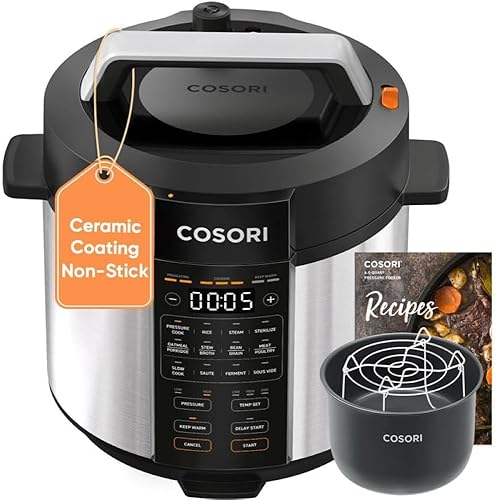
If you want a broader appliance, an electric model may do more than pressure cooking. The Cosori Pressure Cooker 6QT includes 9-in-1 cooking functions, including pressure cook, rice, steam, slow cook, sauté, ferment and sous vide.
That wider function set suits cooks who want one countertop appliance for several methods. It works best when you will actually use those extra functions rather than relying on tools you already own.
The trade-off is setup and care. Electric models need counter space, an outlet and regular cleaning of removable parts, while stovetop models need space at the stove and careful handling of hot parts.
Is an Instant Pot a pressure cooker?
Yes, an Instant Pot is a pressure cooker when you use its pressure-cook setting. The name also covers a wider group of electric multicookers that combine pressure cooking with other functions.
The Instant Pot Duo 7-in-1 Mini has pressure cook, slow cook, sauté, steam, rice, yogurt and warm functions. Its 3-quart capacity suits small households and side dishes.
For another compact Instant Pot, read the Instant Pot RIO Mini review.
The Instant Pot Duo 6 Qt 7-in-1 Electric offers the same broad function group in a 5.68-liter cooker. It also has a stainless steel inner pot with a tri-ply bottom and a 1000-watt power rating.
Compare the model choices in Instant Pot Duo vs RIO.
The term “Instant Pot” does not mean every model has the same size or functions. Check the exact capacity and controls before you choose.
Which cooker is easier to use?
An Instant Pot is usually easier for repeatable countertop cooking because its controls automate the cooking cycle. A stovetop pressure cooker requires more attention to the burner and heat level.
Electric controls can make the setup more predictable for cooks who want to select a program and let the appliance manage the cooking process. The Instant Pot models here use touch controls and push buttons.
A stovetop cooker can still be simple once you know its pressure signals and heat changes. The trade-off is that you need to stay more aware of the burner and adjust it as the cooker reaches and maintains pressure.
Read the manual for the exact model before cooking. Pay close attention to the lid, sealing position, steam release and instructions for opening after pressure drops.
For electric model sizing and controls, use this electric pressure cooker buying guide. It can help you compare capacity, functions and counter space before you buy.
Which option gives you more cooking functions?
Electric Instant Pots offer more built-in functions than a basic stovetop pressure cooker. Choose one if you want one appliance to cover several cooking methods.
The Cosori includes 9-in-1 cooking functions and 13-in-1 cooking presets. Its listed functions include pressure cooking, rice, steam, sterilize, oatmeal or porridge, stew or broth, bean or grain, meat or poultry, slow cook, sauté, ferment and sous vide.
The Instant Pot Duo models focus on 7 functions. They pressure cook, slow cook, sauté, steam, make rice, make yogurt and keep food warm.
A stovetop pressure cooker may be the better fit if you only want pressure cooking and already own separate tools for rice, slow cooking or steaming. Fewer functions can also mean fewer controls to learn and less countertop equipment.
If your main need is a different kind of multicooker, compare this decision with pressure cooker vs multi cooker.
Which size works for your household?
Choose 3 quarts for small portions and side dishes, then move to about 6 quarts for regular family meals. Capacity matters more than brand when you often cook batches.
The Instant Pot Duo Mini holds 3 quarts. Its compact size makes it suitable for smaller households, but it limits how much soup, rice or stew you can prepare at once.
The Cosori has a 6-quart capacity. The Instant Pot Duo 6 Qt has a 5.68-liter capacity, which is in the same everyday cooking range.
The Aroma is much larger for rice, with 4 to 20 cups of cooked capacity and a 10-cup uncooked capacity. It also works as a 4-quart slow cooker, but it is not a pressure cooker.
Think about your largest normal meal, not an occasional feast. A larger pot needs more storage space, while a small pot may force you to cook in batches.
For frequent food-service cooking, compare commercial electric pressure cooker use.
Which product fits each cooking style?
The Cosori suits the widest electric cooking routine, while the Instant Pot Duo Mini suits small households and the larger Duo suits everyday family meals. The Aroma is the right alternative only when rice and steaming lead your priorities.
The Cosori Pressure Cooker 6QT has a stainless steel housing, a ceramic coating inner pot and 1100 watts of power. Its included components are a 6-quart pressure cooker, inner pot, recipe book, steam rack and user manual.
Its listed cooking functions cover more than the Instant Pot Duo models, including ferment and sous vide. The 6-quart capacity suits family-size meals, but measure your counter and storage area before choosing a full-size electric cooker.
The lid uses orange alignment dots for closing and securing it. The design also includes a steam release switch, a double-layer anti-scalding lid and overheat protection.
The Instant Pot Duo 7-in-1 Mini has 700 watts of power and a 3-quart capacity. It includes a stainless steel steamer rack, and its dishwasher-safe lid and inner pot support simpler cleanup.
This model fits small households, side dishes and kitchens where a larger cooker would be hard to store. Its smaller capacity is the clear trade-off, so it is less suitable for large batches.
The model has over 10 safety mechanisms, including overheat protection and an easy seal safety lid lock. Use its pressure function when you need pressure cooking, then use the other programs when you want a slower or more specialized method.
The Instant Pot Duo 6 Qt 7-in-1 Electric has a 1000-watt power rating and a stainless steel inner pot. Its functions include pressure cook, slow cook, sauté, steam, rice, yogurt and warm.
The 5.68-liter size gives you more room than the 3-quart mini for regular meals. Its easy-release steam switch is designed for fast, simple steam release, but you should still follow the manual's safety directions.
This is a practical middle choice for someone who wants familiar Instant Pot controls without moving to the smaller mini. It also includes an app with recipes, as described in the product information.
The Aroma Housewares Professional Plus ARC-5000SB is a digital rice cooker, food steamer and slow cooker. It cooks 4 to 20 cups of rice, includes a steam tray, and uses a nonstick pot with a stainless exterior.
Its 500-watt power rating is lower than the electric pressure cookers here because it serves a different purpose. The cooker has specialized white and brown rice functions, a quick rice function, a 15-hour delay timer and automatic keep-warm operation.
Choose it when rice is the center of your meal planning. Skip it if you specifically need pressure cooking, since this model is not a pressure cooker.
How does cleanup compare?
Electric models can make cleanup easier when their removable parts are dishwasher-safe, while stovetop care depends on the exact cooker and its manual. Check which parts can be washed before you buy.
The Cosori has a dishwasher-safe lid, ceramic coating inner pot and accessories. Its stainless steel, fingerprint-resistant housing and widened pot gap are also designed around easier cleaning.
The Instant Pot Duo Mini has a dishwasher-safe lid and inner pot. The larger Instant Pot Duo has a stainless steel inner pot, so follow the care directions for that model.
The Aroma has a nonstick pot and hand-wash care instructions. Its pot needs a gentler routine than a dishwasher-safe part, especially when you want to protect the nonstick surface.
For the stovetop option, remove pressure, cool the cooker as directed and clean the lid, seal and valve according to its manual. Never force a lid open while pressure remains.
Should you choose an Instant Pot or a stovetop pressure cooker?
Choose an Instant Pot if you want electric controls, multiple cooking functions and less burner monitoring. Choose a stovetop pressure cooker if direct heat control and a single-purpose pressure-cooking routine matter more.
The 3-quart Instant Pot Duo Mini is the clearest choice for small households. The 6-quart-class Instant Pot Duo and the 6-quart Cosori fit larger everyday meals, with the Cosori offering the broader listed function set.
Choose the Aroma only when rice, steaming and slow cooking matter more than pressure cooking. For a wider comparison of cooking speed and meal texture, see pressure cooker vs slow cooker.
If you want a traditional stovetop model, review these best stovetop pressure cooker options before deciding. If you are comparing deals, use the best pressure cooker on sale guide without choosing by price alone.
Final choice for instant pot vs pressure cooker
Pick an Instant Pot for automatic electric cooking and a stovetop pressure cooker for direct burner control. Pick the Cosori for the broadest listed electric function set, the Instant Pot Mini for small portions, or the larger Instant Pot Duo for everyday family meals.
The Aroma belongs in a different category. It is a large rice cooker, steamer and slow cooker, so it makes sense when those jobs matter more than pressure cooking.
If your decision is really between countertop appliances, compare Is It Better to Buy an Air Fryer or an Instant Pot? and How Do I Choose Between an Air Fryer and an Air Fryer Oven?. Our score weighs specs, features and buyer feedback against what you're shopping for.
Frequently asked questions
Is an Instant Pot a pressure cooker?
Yes, an Instant Pot is an electric pressure cooker when you use its pressure-cook function. It also combines other functions such as slow cooking, rice cooking, steaming, sautéing, yogurt making and warming, depending on the model.
What is the difference between an Instant Pot and a pressure cooker?
An Instant Pot is a brand of electric pressure cooker with automatic controls and extra cooking functions. A traditional stovetop pressure cooker sits on a burner and uses the cooker's heat control.
Electric models add convenience, while stovetop models give direct burner control.
Is an Instant Pot better than a stovetop pressure cooker?
An Instant Pot is better for automatic timing, one-touch programs and multi-function cooking. A stovetop pressure cooker is better if you prefer direct heat control and do not want another electric appliance.
Neither choice fits every kitchen or cooking routine.
Can an Instant Pot replace a pressure cooker?
An Instant Pot can replace a traditional pressure cooker for many home recipes because it pressure cooks in an electric countertop appliance. It may not replace the exact size, heat response or cooking style of a stovetop model, so compare capacity and controls before choosing.
Which Instant Pot size should you choose?
Choose the 3-quart Instant Pot Duo Mini for small households and side dishes. A 5.68-liter, 6-quart-class Instant Pot suits larger everyday meals.
A 6-quart Cosori offers similar meal capacity with more listed cooking functions, including sous vide and ferment.


