Pressure Cooker vs Slow Cooker: Which Should You Choose? (November 2026)
Choose a pressure cooker for faster meals and a slow cooker for gentle, hands-off cooking. Your best choice depends on timing, texture, batch size and how you plan meals.
On this page (10 sections)
- Pressure cooker vs slow cooker: which is faster?
- Which cooker fits your meal planning?
- Does a pressure cooker or slow cooker make better food?
- Which cooker is easier to use?
- Which one is better for family-size meals?
- Which cooker is easier to clean?
- Are pressure cookers safe to use?
- Can you replace a slow cooker with a pressure cooker?
- What should you choose for special cooking needs?
- Pressure cooker or slow cooker: which should you buy?
Choose a pressure cooker for faster meals and a slow cooker for gentle, hands-off cooking.
The pressure cooker vs slow cooker decision depends on your schedule, preferred texture, meal size and willingness to manage steam release.
Think about when you usually start dinner.
If you often begin cooking after work, speed may matter more.
If you can prepare food in the morning, a longer cooking window may suit you better.
A pressure cooker uses sealed cooking to shorten many recipes.
Steam stays inside the pot while pressure builds.
That sealed method can help tenderize ingredients in less time.
A slow cooker uses low, steady heat over a longer period.
It suits meals you start before work or several hours before dinner.
It also suits meals you want to serve without close attention.
This difference affects more than cooking time.
It affects texture, planning and how much effort each meal needs.
A slow cooker can work while you handle other tasks.
A pressure cooker can rescue a late start on a busy day.
Neither choice is right for every kitchen.
Your routine, your recipes and your available time should guide you.
Meal size matters too.
A large family meal may need a bigger pot.
A smaller household may prefer a more compact cooker.
Texture matters as well.
Some meals benefit from a gradual, gentle cook.
Others benefit from a shorter, sealed cook.
Steam release is another factor to consider.
A pressure cooker needs a safe release step before opening.
That step takes time and attention.
A slow cooker has a simpler serving rhythm.
You add ingredients, choose a setting and wait.
For a model example, read the Instant Pot RIO review.
That example can help you picture one style of electric cooker.
Compare its purpose with the slower method described here.
We compared cooking speed, texture, convenience, capacity and meal planning.
Our score weighs specs, features and buyer feedback against what you are shopping for.
We also looked at controls and cleanup.
Simple controls can make daily use easier.
Extra functions can add variety but may need more learning.
Capacity affects batch cooking and leftovers.
A larger pot can suit roasts and family portions.
A smaller pot may suit everyday meals with less storage space.
Cleanup affects how often you will use the cooker.
Dishwasher-safe parts can reduce hand washing.
Fewer pots and inserts can also help.
Meal planning ties these factors together.
A cooker you will use often is the better buy.
Match the cooking style to your habits first.
Then check size, controls and care needs.
That order helps you avoid buying speed you do not need.
It also helps you avoid buying capacity you cannot store.

Pressure cooker vs slow cooker: which is faster?
A pressure cooker is usually the better choice when dinner needs to be ready sooner.
It can shorten cooking for many recipes, while a slow cooker is built for a longer cooking window.
The Instant Pot Duo 6 Qt 7-in-1 Electric claims it can cook up to 70% faster than slow cooking methods.
That does not mean every recipe takes 70% less time, since the cooker still needs time to build and release pressure.
Preparation still takes time before cooking starts.
Pressurizing adds a further stage to the process.
Cooking time itself depends on the recipe and ingredients.
Steam release then adds time at the end.
A pressure cooker also needs a safe steam-release step before you open the lid.
The total time includes preparation, pressurizing, cooking and pressure release.
A slow cooker has a simpler rhythm.
Add the ingredients, choose high or low, and use the warm setting when the meal is ready to wait for serving.
That rhythm suits a planned dinner window.
It suits days when you can start early and serve later.
A pressure cooker suits days when the start time is late.
Choose based on your real schedule, not an ideal one.
Which cooker fits your meal planning?
Choose a slow cooker if you can start meals hours ahead, and choose a pressure cooker if your cooking time changes often. Both can support meal planning, but they solve different timing problems.
A slow cooker suits a planned dinner window. You can prepare ingredients early and let the cooker work while you handle other tasks.
The manual Crock-Pot 7-Quart Manual Slow Cooker has high, low and warm settings. Its 7-quart capacity is designed for large meals, and its removable stoneware can go in the microwave or an oven up to 400°F.
A programmable slow cooker helps when your start time is predictable but your serving time may shift. The Crock-Pot Design Series 7-Quart Programmable Slow Cooker has a 30-minute to 20-hour countdown control and an auto warm setting.
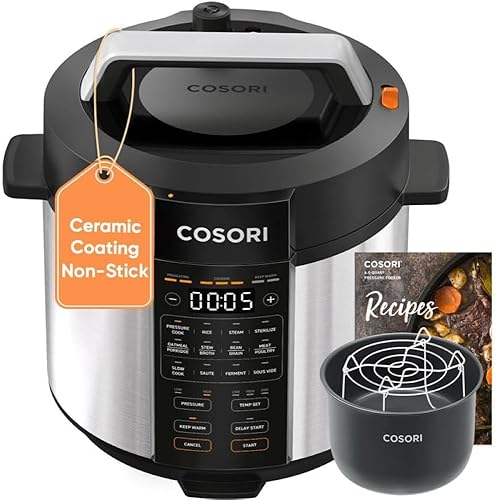
If your schedule changes, a pressure cooker gives you more options after work. The Cosori Pressure Cooker 6QT includes pressure cook, slow cook, rice, steam, sauté and other functions.
For a broader look at electric models, use this electric pressure cooker buying guide. It can help you compare capacity, controls, cooking modes and cleanup needs.
Does a pressure cooker or slow cooker make better food?
A slow cooker suits gradual cooking and soft textures, while a pressure cooker suits tender meals made on a shorter schedule. Neither appliance is automatically better for every ingredient or recipe.
Slow cooking works well for meals that benefit from a long, gentle cooking period. It also gives you a wide serving window because the warm setting can hold the food after cooking.
Pressure cooking traps steam inside the pot and raises the cooking temperature. That can help tenderize ingredients faster, but you need to follow pressure-cooking recipes because liquid levels and cooking times differ from slow-cooker recipes.
The pressure-release method also affects the result. The Cosori data advises natural release for some recipes with more liquid, such as soups and stews, to reduce splattering.
The Instant Pot Duo 6 Qt 7-in-1 Electric includes pressure cook, slow cook, sauté, steam, rice, yogurt and warm functions. Its stainless steel pot has a tri-ply bottom for searing and sautéing.
Compare the two electric models in Instant Pot Pro vs Duo.
Use the Instant Pot vs pressure cooker comparison if you want to separate the Instant Pot name from the wider pressure-cooker category.
Which cooker is easier to use?
A slow cooker is easier to start, while a pressure cooker offers more functions but needs more steps. Your choice depends on whether simplicity or flexibility matters more.
A manual slow cooker has a short setup routine. Add the ingredients, choose high or low, place the lid, and plan when the food should be ready.
A programmable slow cooker adds time control without changing the basic cooking method. The Crock-Pot Design Series has a digital countdown display and large carry handles.
A pressure cooker needs closer attention to the lid, seal and steam release. The Cosori uses orange alignment dots to help secure the lid, and its steam release design places the seal and vent controls apart.
Pressure cooking is not difficult, but you should learn the controls before making a full meal. Never force the lid open, and wait until the pressure indicator has dropped according to the manual.
For step-by-step guidance, see Presto cooker instructions.
For another multi-function comparison, read pressure cooker vs multi cooker. The terms overlap, but the cooking modes and controls can differ by model.
Which one is better for family-size meals?
Choose a 7-quart slow cooker for the largest batch capacity here, or a 6-quart pressure cooker when a slightly smaller pot suits your routine. The right size depends on both serving needs and available storage.
The Crock-Pot manual model and the Crock-Pot Design Series model each hold 7 quarts. Their product information describes them as suitable for meals serving 9 or more people.
The Cosori holds 6 quarts, while the Instant Pot Duo holds 5.68 liters. These sizes can suit family meals, but they leave less room than the 7-quart slow cookers for especially large batches.
Don't fill any cooker beyond the level allowed by its manual. Pressure cooking also needs space for steam, and foods that expand may have special fill limits.
Measure your counter and storage area before choosing. The Cosori measures 13.4 in wide, 12.6 in deep and 12.5 in high.
The Instant Pot Duo measures 13.38 in wide, 12.2 in deep and 12.48 in high.
Which cooker is easier to clean?
Both types can simplify cleanup, but the removable parts and cooking method determine the daily work. Look for dishwasher-safe parts if you want fewer hand-washing steps.
The Crock-Pot manual model has a removable stoneware insert and dishwasher-safe lid and stoneware. Its one-pot design can reduce the number of cooking dishes.
The Crock-Pot Design Series has a removable stoneware bowl and glass lid that are dishwasher-safe. The bowl is oven-safe up to 400°F, which can help with some serving and preparation routines.
The Cosori has a dishwasher-safe lid, ceramic-coated inner pot and accessories. Its stainless steel housing is fingerprint-resistant, and the wider pot gap is designed to make cleaning easier.
The Instant Pot Duo uses a stainless steel cooking pot. Follow each manual for cleaning the lid, sealing parts and any components that should not go in the dishwasher.
Are pressure cookers safe to use?
Pressure cookers are safe to use when you follow the manual's fill, locking and steam-release instructions. The sealed pot makes pressure control part of the cooking process, so rushing the lid or vent steps is a poor fit.
The Cosori Pressure Cooker 6QT has 12 safety features, including a double-layer anti-scalding lid and overheat protection. Its steam-release control is designed to keep your hand away from the valve.
The Instant Pot Duo has an easy-release steam switch. Even with a designed release control, keep your face and hands away from escaping steam.
Use recipes written for pressure cookers when pressure cooking. The USDA guidance on pressure cooking is a useful reference for safe food handling, but your appliance manual controls the cooker-specific steps.
Can you replace a slow cooker with a pressure cooker?
You can replace some slow-cooker tasks with a pressure cooker that includes a slow-cook function, but the experience won't be identical. A dedicated slow cooker has a simpler control layout and a cooking bowl designed around long cooking.
The Cosori and Instant Pot Duo both include slow cooking. That makes them useful if you want one appliance for pressure cooking and slower meals.
A dedicated slow cooker may suit you better if you rarely need pressure cooking and want the simplest possible routine. The 7-quart Crock-Pot models also give you more capacity than the 6-quart pressure cookers here.
If you already own a pressure cooker, try its slow-cook setting with a recipe written for that mode. Check the manual for temperature behavior, timing and any limits before treating it as a full replacement.
Don't assume an air fryer can fill the same role. Read Can You Use An Air Fryer As A Slow Cooker? before choosing one appliance to replace another.
What should you choose for special cooking needs?
Choose a multi-function pressure cooker for variety, and choose a slow cooker for large, scheduled meals. The best match changes when you add needs such as canning, travel or another appliance.
The Cosori includes pressure cooking, slow cooking, rice, steam, sterilize, oatmeal or porridge, stew or broth, bean or grain, meat or poultry, sauté, ferment, sous vide and keep warm functions. Its included components include a steam rack, recipe book and user manual.
The Instant Pot Duo includes 7 cooking functions and 13 one-touch programs. It also supports yogurt, rice, steaming, sautéing and warming.
For pressure canning, don't assume an electric pressure cooker is a pressure canner. Start with this guide to the best electric pressure cooker for canning and check the exact appliance instructions.
For larger kitchens or food service, see the guide to choosing a commercial electric pressure cooker. Commercial needs can involve different capacity, workflow and safety requirements than home cooking.
If you are comparing air-fryer formats instead, this guide to choosing between an air fryer and an air fryer oven covers a different appliance decision.
Pressure cooker or slow cooker: which should you buy?
Pick a pressure cooker if you need speed, several cooking modes or flexible weeknight meals. Pick a slow cooker if you want simple controls, large batches and a long hands-off cooking window.
Choose the Cosori Pressure Cooker 6QT when pressure cooking and broad function coverage matter. Choose the Instant Pot Duo when you want 7 cooking functions, 13 one-touch programs and a stainless steel pot.
Choose the Crock-Pot 7-Quart Manual Slow Cooker for a straightforward large-capacity cooker. Choose the Crock-Pot Design Series 7-Quart Programmable Slow Cooker when timed cooking and a digital countdown fit your routine.
The best pressure cooker vs slow cooker choice is the one you will use on your busiest days. Match the appliance to your real cooking window, then confirm the size, controls and cleaning steps before ordering.
Frequently asked questions
Is a pressure cooker better than a slow cooker?
A pressure cooker is better when you need dinner sooner or want several cooking modes in one appliance. A slow cooker is better when you can start early and want gentle, hands-off cooking.
Compare your usual meal timing, preferred texture and available counter space before choosing.
Is a pressure cooker a slow cooker?
Some electric pressure cookers include a slow-cook function, but they are not identical to dedicated slow cookers. The Cosori Pressure Cooker 6QT and Instant Pot Duo both include slow cooking, while the Crock-Pot models are designed around slow cooking with large stoneware bowls.
Does a pressure cooker make food tender faster?
Pressure cooking can shorten the cooking time for many foods compared with slow cooking, but the exact time depends on the recipe and ingredients. The Instant Pot Duo claims cooking up to 70% faster than slow cooking methods.
Always follow a recipe suited to pressure cooking.
Which gives better texture, a pressure cooker or slow cooker?
A slow cooker often suits meals where you want gradual cooking and a soft, steady texture. A pressure cooker can also produce tender food faster, but the sealed cooking process and release method affect the result.
Choose the appliance that matches the texture your recipe needs.
Can you slow cook in a pressure cooker?
Yes, some electric pressure cookers have a slow-cook setting. The Cosori Pressure Cooker 6QT and Instant Pot Duo both include slow cooking among their functions.
The capacity, controls and cooking behavior may differ from a dedicated slow cooker, so follow the appliance manual and recipe instructions.


