
How Do I Adjust Oven Recipes for Air Fryer Time and Temp?
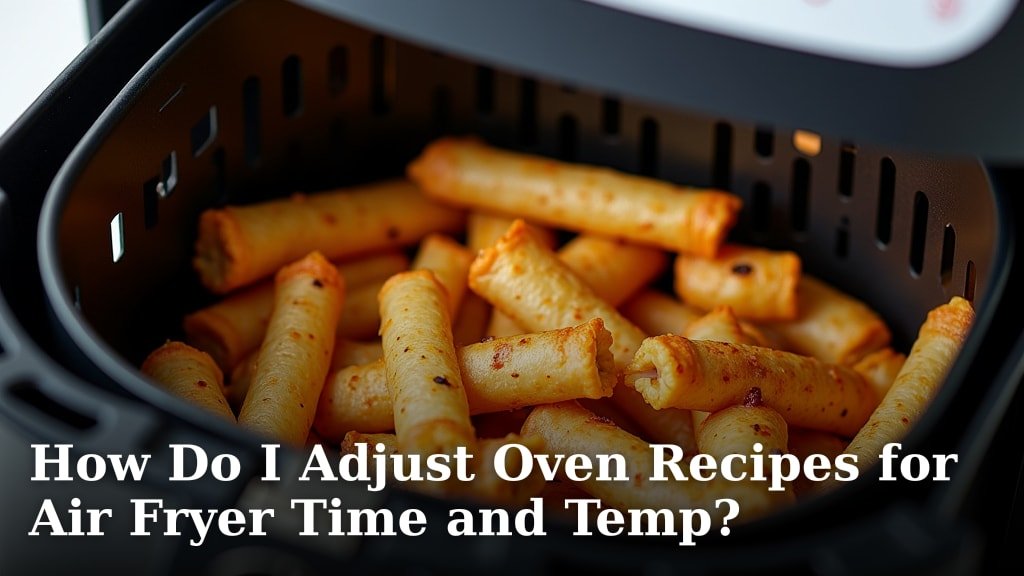
To adjust oven recipes for air fryer time and temp, generally you should reduce the temperature by 25-50 degrees Fahrenheit and cut the cooking time by about 20-30%. This helps prevent burning and ensures even cooking in your air fryer. Air fryers cook food much faster than conventional ovens.
You might be wondering if you can really cook everything in an air fryer. We found that most oven recipes can be successfully adapted, but it requires some understanding of how your air fryer works. Its powerful, concentrated heat means you’ll get crispy results faster, but you need to pay close attention to avoid overcooking. How can you know the right settings?
- Air fryers cook faster and hotter.
- Reduce oven temp by 25-50°F.
- Decrease cooking time by 20-30%.
- Always check food for doneness earlier.
- Small batches work best.
Let’s walk through exactly how to make these adjustments so your favorite oven dishes turn out perfectly in your air fryer.
Mastering Air Fryer Adjustments for Oven Recipes
You can certainly adapt most of your favorite oven recipes for your air fryer. It just takes a little understanding of how these powerful appliances work their magic. We’ll guide you through the process step-by-step.
Understanding Your Air Fryer’s Power
Air fryers are basically miniature, powerful convection ovens. They circulate hot air around your food at high speed. This concentrated heat cooks food much faster and often makes things incredibly crispy. Think of it like a tiny tornado of heat! That’s why you need to make adjustments.
Why Air Fryers Cook Differently
The main differences are size and airflow. A conventional oven is a large, open space. An air fryer is compact, forcing that hot air to hit every surface of your food. This means faster cooking and more browning.
- Faster Heat Transfer: Hot air constantly surrounds the food.
- Smaller Space: Heat is more concentrated.
- Direct Contact: More surface area gets crisped.
The Golden Rules for Temperature Adjustments
This is where many people get tripped up. Should you lower the temperature a little or a lot? We found a good general rule that works for most recipes.
General Temperature Reduction Guide
For most oven recipes, you’ll want to reduce the temperature by 25-50 degrees Fahrenheit. If an oven recipe calls for 400°F, start with 375°F or 350°F in your air fryer. Why the range? It depends on what you’re cooking.
- Delicate foods: (like baked goods or fish) might need a 50°F reduction.
- Hearty foods: (like chicken or potatoes) might only need a 25°F reduction.
We found that starting with a 25°F reduction is a safe bet for many dishes. You can always increase it slightly if needed after checking.
Cutting Down on Cooking Time
Because air fryers cook so much faster, you absolutely need to reduce the cooking time. If you don’t, you’ll end up with burnt food!
General Time Reduction Guide
A good starting point is to reduce the cooking time by about 20-30% of the original oven recipe. So, if an oven recipe says 30 minutes, you’d aim for about 21-24 minutes in your air fryer.
This isn’t an exact science, so think of it as a guideline. Many experts recommend checking your food halfway through the original cooking time (USDA).
- Start checking early: Don’t just set it and forget it.
- Shake or flip: Most air fryer recipes benefit from shaking the basket or flipping the food halfway through. This promotes even cooking and crispiness.
Practical Application: Your Air Fryer Adjustment Checklist
Ready to try converting an oven recipe? Here’s a simple checklist to keep you on track.
- Step 1: Reduce Temperature: Subtract 25-50°F from the oven temperature.
- Step 2: Calculate New Time: Multiply the oven time by 0.7 or 0.8 (for 30% or 20% reduction).
- Step 3: Preheat Your Air Fryer: Most air fryers need a quick preheat (3-5 minutes).
- Step 4: Don’t Overcrowd: Cook in single layers or small batches for best results.
- Step 5: Check Frequently: Look for doneness 5-7 minutes before your new calculated time.
- Step 6: Shake/Flip: Mid-cook, give your food a shake or flip it over.
Special Considerations for Specific Foods
Not all foods behave the same way in an air fryer. Some need a bit more finessing. We’ve found that paying attention to these details makes a big difference.
Baked Goods and Breaded Items
Baked goods can dry out quickly. Use the lower end of the temperature reduction (50°F) and keep a close eye on them. For breaded foods like chicken tenders or fish fillets, air fryers are fantastic! They get super crispy. You might even find you need slightly less oil than the oven version, if any.
Vegetables and Meats
Vegetables like broccoli or potatoes roast beautifully. Meats like chicken wings or steak also thrive. Just remember the basic temp and time reductions. For larger cuts of meat, make sure to use a meat thermometer to ensure safe internal temperatures (FDA guidelines).
Foods to Be Cautious With
Wet batters (like for pancakes or certain tempura) don’t always do well because the strong airflow can blow the batter off. Very cheesy dishes can also be tricky; the cheese might melt too quickly and burn before the rest of the dish is cooked. Always use parchment paper or foil when cooking messy items to simplify cleanup and prevent dripping.
The Importance of Small Batches
This is a big one. You might be tempted to load up your air fryer basket, but resist the urge! Overcrowding is the enemy of crispy, evenly cooked food. We’ve seen many people make this mistake.
When you pack too much food into the basket, the hot air can’t circulate properly. This leads to steamed food instead of crispy food. Think about it: if the air can’t get all around each piece, it can’t crisp it up. It’s like trying to get a tan in a crowded elevator – it just doesn’t work!
Cook in a single layer whenever possible. If you need to cook a lot of something, do it in batches. Yes, it takes a little longer overall, but the results are worth it.
Monitoring and Fine-Tuning Your Air Fryer Cooking
Even with all the guidelines, every air fryer is a little different. Your specific model might run hotter or cooler than average. This means your first few attempts at converting recipes will involve some observation and fine-tuning.
Use your senses! Look, smell, and even listen to your food. Is it browning too fast? Does it smell burnt? These are signs to adjust. Don’t be afraid to pull the basket out and check. That’s the beauty of an air fryer – quick access to your food.
| Food Type | Temp Adjustment (vs. Oven) | Time Adjustment (vs. Oven) | Tips for Air Frying |
|---|---|---|---|
| Frozen Fries/Tots | Same or -25°F | -30% to -40% | Shake frequently for even crispness. |
| Chicken (pieces) | -25°F | -25% to -30% | Flip halfway; check internal temp. |
| Vegetables (Roasted) | -25°F to -50°F | -20% to -30% | Don’t overcrowd; a little oil helps. |
| Baked Goods (e.g., Muffins) | -50°F | -20% to -25% | Use small ramekins/liners; check early. |
| Breaded Fish/Chicken | -25°F | -25% to -35% | Achieves excellent crispiness. |
You’re not just cooking; you’re becoming an air fryer alchemist! With each recipe you convert, you’ll get a better feel for your appliance. It’s a learning process, and every perfectly crispy dish is a win.
Conclusion
You now have the tools to confidently convert your favorite oven recipes for air fryer cooking. Remember to reduce temperature by 25-50°F and cut cooking time by 20-30%. Always preheat, don’t overcrowd, and check your food often. With each successful dish, you’ll gain more intuition for your specific air fryer.
Don’t be afraid to experiment a little, always starting with conservative adjustments. Your air fryer is waiting to transform your meals with crispy, delicious results. Go ahead, give it a try tonight!
Frequently Asked Questions
Can I use aluminum foil or parchment paper in my air fryer?
Yes, you can use aluminum foil or parchment paper in your air fryer. Just make sure to secure them so they don’t fly around and block the airflow or touch the heating element. It’s great for easier cleanup, especially with messy foods.
Why does my air fryer food burn so quickly?
Food in an air fryer can burn quickly if the temperature is too high or the cooking time is too long. The concentrated heat cooks much faster than a conventional oven. Always reduce the oven’s recommended temperature and time when air frying.
Do I need to preheat my air fryer?
Yes, preheating your air fryer is generally a good idea. We found that 3-5 minutes at your desired cooking temperature helps ensure even cooking and better crisping. It’s like preheating a regular oven for consistent results.
What if my food isn’t getting crispy in the air fryer?
If your food isn’t getting crispy, you’re likely overcrowding the basket. Hot air needs to circulate around each piece of food to crisp it up. Try cooking in smaller batches, in a single layer, for optimal results.
Should I add oil when air frying a recipe that calls for oil in the oven?
You often need less oil, or even no oil at all, when air frying. Air fryers are designed to crisp food using hot air. If the recipe calls for oil, use a light mist of cooking spray or toss with just a teaspoon or two.
