How to Choose a Commercial Electric Pressure Cooker
Choose a commercial electric pressure cooker by batch size, daily workload, controls, cleaning needs and available counter space. A home appliance may suit light prep, but a busy kitchen needs capacity and recovery that match its service volume.
On this page (8 sections)
- What should you check first in a commercial electric pressure cooker?
- How much capacity do you need?
- Which controls fit a busy kitchen?
- Which products help with related commercial cooking tasks?
- How should you plan steam, heat and counter space?
- What cleaning and care tasks should you compare?
- How do you decide between one cooker and several?
- What is the best choice for your kitchen?
A commercial electric pressure cooker should match your largest routine batch, daily workload and kitchen space. Start with capacity, then check controls, cleaning, electrical fit and whether the appliance suits the pace of your service.
Capacity comes first because it shapes everything that follows. A cooker that is too small will force repeat batches, add loading and cleaning time, and may slow prep during a busy period.
A cooker that is too large can create different problems. It may take counter space needed for other tasks and hold more food than you plan to serve in one cycle.
Workload matters as much as size. Think about how many batches you need each day, how long each cycle lasts, and how quickly the cooker must be emptied, cleaned or reset for the next use.
Controls should fit the people using the appliance. Programmable options can help with repeat recipes, while simpler controls may suit staff who need clear settings and easy supervision.
Cleaning needs should be checked early. A model that cooks well but takes too long to wash between batches may not keep pace with service.
Electrical fit should be confirmed before you choose a spot. Voltage, outlet location and circuit load can all affect whether an appliance suits a particular work area.
Kitchen space includes more than the footprint. You also need room to load food, release steam, move the pot safely and reach the controls without crowding another station.
This guide explains the buying decisions that matter before you place an appliance in a commercial kitchen. It compares capacity, controls, cleaning, counter space and workload so you can match the cooker to your menu and service rhythm.
What should you check first in a commercial electric pressure cooker?
Check batch capacity and workload first. Features matter only after the cooker can handle the amount of food you need without creating a bottleneck.
Write down your busiest service period and the foods you plan to cook under pressure. For meal ideas, see electric pressure cooker recipes.
Include soups, beans, grains, braised foods and other recipes that benefit from a sealed cooking environment.
Then estimate how many batches you need during that period. A cooker that handles one batch at a time may be suitable for prep, but it may not be enough when several orders depend on it.
Capacity also affects handling. More food means more weight, more steam and more time for loading, cooking, releasing pressure and cleaning.
For broader appliance comparisons, read our electric pressure cooker buying guide. It covers the same core decisions from capacity to controls.
How much capacity do you need?
Choose capacity based on your largest planned batch with working room around the cooker. Do not treat the full stated capacity as usable food volume, because pressure cookers need space for safe operation.
A small operation may need a compact cooker for prep tasks, grains or limited portions. A larger kitchen may need multiple appliances or a model with enough capacity to reduce repeated cycles.
Think in terms of service flow:
| Work pattern | Capacity decision |
|---|---|
| Occasional prep or staff meals | A smaller appliance may be enough |
| Regular sauces, grains or soups | Choose a size that limits repeat batches |
| Large batch cooking | Compare the largest suitable capacity with counter space |
| Multiple menu items at once | Consider more than one appliance or a wider equipment plan |
Check the physical dimensions before ordering. The Instant Pot Duo measures 12.2 in deep, 13.38 in wide and 12.48 in high, while the AROMA Digital Rice Cooker measures 8.63 in deep, 9.25 in wide and 8.5 in high.
The Crock-Pot 7-Quart Manual Slow Cooker measures 16.9 in deep, 11.8 in wide and 10.4 in high. It is a slow cooker rather than a pressure cooker, so it can help with low-and-slow production but does not replace pressure cooking.
Which controls fit a busy kitchen?
Choose controls that reduce repeated manual steps without making the workflow harder to supervise. Digital programs can help with repeatable cooking, while manual controls may be simpler for staff who only need basic settings.
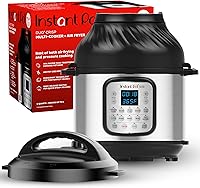
The Instant Pot Duo 6 Qt 7-in-1 Electric has automatic operation, push-button controls, programmable functions and 13 one-touch options. Its functions include pressure cooking, slow cooking, sautéing, steaming, rice cooking, yogurt making and warming.
The AROMA Digital Rice Cooker has programmable digital controls, automatic Keep Warm and settings for White Rice, Brown Rice, Steam and Flash Rice. It is a rice cooker and food steamer, not a pressure cooker.
The Crock-Pot uses manual control with high, low and warm settings. That makes it suited to slow cooking schedules rather than rapid pressure-cooking cycles.
Compare pressure cooker vs slow cooker if your menu includes both fast batch cooking and long unattended cooking. If you need several cooking modes, our pressure cooker vs multi cooker comparison can help separate useful functions from extras.
What does the Instant Pot Duo offer?
The Instant Pot Duo is the closest match here for a commercial electric pressure cooker because it is a 6 Qt electric pressure cooker with 7 cooking functions. Its stainless steel cooking pot has an 18/8 construction with a tri-ply bottom.
Its functions can help a small operation handle pressure cooking alongside slow cooking, sautéing, steaming, rice, yogurt and warming. The 1000-watt unit uses 120 volts, so confirm that the kitchen's electrical setup matches before assigning it to a work area.
The appliance weighs 14.6 lb. Plan a stable counter position with room for the 12.2 in by 13.38 in footprint and 12.48 in height.
Instant Pot describes the cooker as working up to 70% faster than slow cooking methods. Treat that as a brand claim, not a promise for every recipe or service schedule.
For a direct comparison with another pressure-cooking format, see instant pot vs pressure cooker.
Which products help with related commercial cooking tasks?
These 3 appliances do not serve the same role. The Instant Pot is the pressure-cooking option, while the AROMA handles rice and steaming, and the Crock-Pot supports slow cooking and warming.
Crock-Pot 7-Quart Manual Slow Cooker
The Crock-Pot has a 7-quart capacity and can serve 9+ people or fit a 7-pound roast. Its high, low and warm settings suit food that needs a longer cooking period and a holding setting.
The removable stoneware insert and lid are dishwasher safe. The insert can also be used in a microwave or an oven up to 400°F, which gives the kitchen more handling options within those stated limits.
Its stainless steel exterior has black accents and plastic handles. At 16.9 in deep, it may need more front-to-back counter space than a compact prep appliance.
Choose it when your menu benefits from slow cooking and warm holding. Do not choose it as a substitute for pressure cooking.
AROMA Digital Rice Cooker
The AROMA Digital Rice Cooker has a 2-quart capacity and prepares 2 to 8 cups of cooked rice or grains. It includes a steam tray, rice measuring cup and serving spatula.
Its White Rice, Brown Rice, Steam and Flash Rice functions suit a kitchen that needs repeatable rice and grain preparation. The steam tray lets meat and vegetables cook while rice cooks below.
The cooker uses 120 volts and has a stainless steel exterior. It measures 8.63 in deep, 9.25 in wide and 8.5 in high, so it may fit where a larger cooker cannot.
The AROMA requires hand washing according to its care instructions. That cleaning requirement should be part of the kitchen's closing routine.
For a different appliance category, see How Do I Choose Between an Air Fryer and an Air Fryer Oven?.
How should you plan steam, heat and counter space?
Plan clear space around the cooker for steam release, loading and staff movement. Do not place it where steam can damage cabinets, block a walkway or force staff to work over another hot station.
Steam needs a safe path upward and away from nearby surfaces. Cabinets, shelves and low overhead storage should stay clear unless the manual confirms a safe distance.
Loading also needs room. Staff should be able to lift a full pot, set it down and move it to a sink without turning across a walkway or reaching over another heat source.
The control area should stay accessible during cooking. A cooker pushed too far back can make settings hard to read or a cycle hard to start quickly.
Heat affects the surrounding work area. Ingredients, paper goods, packaging and small electronics should not sit close to a station that releases steam or holds hot surfaces.
Cleaning routes should be planned at the same time. A clear path to a sink helps staff move pots safely and keeps dirty items away from ready to eat food and clean equipment.
Exact clearance depends on the model. Read the manual before installation and keep the control area accessible.
Electrical fit matters too. The Instant Pot, AROMA and Crock-Pot all use 120 volts, but each still needs its own suitable outlet plan.
Avoid assuming the kitchen outlet arrangement will suit every appliance. Shared circuits, extension leads and distant outlets can cause problems during service.
Counter depth should be checked before the appliance arrives. The Instant Pot Duo measures 12.2 inches deep by 13.38 inches wide by 12.48 inches high.
The AROMA Digital Rice Cooker measures 8.63 inches deep by 9.25 inches wide by 8.5 inches high. That smaller footprint may fit a prep corner where a larger cooker would not.
The Crock-Pot 7-Quart Manual Slow Cooker measures 16.9 inches deep by 11.8 inches wide by 10.4 inches high. Its depth can push the back close to a wall or backsplash.
Weight should also shape placement. The Instant Pot weighs 14.6 pounds, the AROMA weighs 4.2 pounds and the Crock-Pot weighs 12.6 pounds.
Storage should be part of the plan as well. An appliance that is hard to move or store after service may create clutter and delays during closing.
What cleaning and care tasks should you compare?
Compare the parts that need washing, the material of the cooking vessel and the time required between batches. Easy cleanup can matter as much as cooking speed when the appliance runs through several cycles.
The cooking vessel affects daily care. Stainless steel pots can suit searing and sautéing, while stoneware inserts suit slow cooking and serving from the same dish in some kitchens.
The Crock-Pot has removable stoneware and a dishwasher safe lid. That design reduces hand washing for the parts that contact food and makes one pot cooking easier to manage after service.
The Crock-Pot insert can also be used in a microwave or an oven up to 400 degrees Fahrenheit. That flexibility may help with reheating or finishing, but it does not change the need to follow the manual for each use.
The AROMA has a stainless steel exterior and hand wash care instructions. Hand washing should be built into the routine, especially when the cooker is used for rice, grains, steaming or one pot meals.
The Instant Pot has a stainless steel cooking pot. Its 18/8 stainless steel construction and tri-ply bottom suit searing and sautéing, and the pot material should be checked against the cleaning methods the manufacturer allows.
Build cleaning into the workflow rather than waiting until the end of service. Remove food promptly, follow the manufacturer's care directions and inspect seals, lids, controls and power cords as part of routine upkeep.
Seals and lids deserve regular checks because they affect safe operation. Worn, damaged or poorly seated parts should be dealt with before the appliance is used for another batch.
Controls and cords should also be inspected. Food residue, moisture and rough handling can make controls harder to use and cords harder to keep safe in a busy kitchen.
Do not use a commercial dishwasher, abrasive cleaner or harsh process unless the manufacturer permits it. The goal is repeatable sanitation without damaging parts that affect safe operation.
Time between batches should be measured in real service. Loading, cooking, releasing pressure or steam, serving, washing and resetting all add up across a shift.
Set up cleaning supplies near the appliance station. That keeps staff from leaving the area for long periods and helps them clean parts before residue becomes harder to remove.
Assign responsibility for cleaning during service. If everyone assumes someone else will wash the pot, delays can build and the next batch may start later than planned.
The goal is a routine that fits the menu. A cooker that cleans quickly and predictably will support busy service better than one that needs extra steps after every use.
How do you decide between one cooker and several?
Choose one cooker when its capacity, cycle time and menu role fit the service plan. Choose several appliances when separate foods, cooking methods or service periods would otherwise compete for one station.
A pressure cooker can handle pressure-based recipes, but it may not solve a rice, slow-cooking or holding need. The AROMA and Crock-Pot show why a kitchen may need different appliance roles even when all 3 sit on a counter.
More appliances require more counter space, outlets, cleaning time and staff training. Before adding equipment, map each appliance to a specific menu task and service period.
Review best pressure cooker on sale and best electric pressure cooker on sale when you are ready to compare current options. If slow cooking is the better fit, see the slow cooker electric guide.
What is the best choice for your kitchen?
Choose the Instant Pot Duo 6 Qt 7-in-1 Electric when you need an electric pressure cooker with programmable controls, multiple cooking functions and a stainless steel pot. Its 120-volt, 1000-watt setup still needs to fit your kitchen's electrical plan and workload.
The Instant Pot Duo suits a kitchen that needs pressure cooking as the main task. It also offers slow cooking, sautéing, steaming, rice cooking, yogurt making and warming in one appliance.
Its push-button controls and automatic operation can help with repeatable recipes. The 13 one-touch options may suit staff who need clear programs for soups, grains or other regular menu items.
Choose the AROMA Digital Rice Cooker for rice, grains and steaming when pressure cooking is not the main task. It prepares 2 to 8 cups of cooked rice or grains and includes a steam tray for meat and vegetables.
The AROMA suits a kitchen with a steady need for rice and grain prep. Its White Rice, Brown Rice, Steam and Flash Rice functions support repeatable cooking, and automatic Keep Warm helps with holding after each cycle.
Choose the Crock-Pot 7-Quart Manual Slow Cooker for longer cooking schedules, high or low settings and warm holding. It fits a 7-pound roast and serves 9 or more people, so it suits family style batches and slow production.
The Crock-Pot suits foods that benefit from several hours of gentle cooking. Its removable stoneware and dishwasher safe lid also suit kitchens that want simple cleanup after long cooking periods.
The right commercial electric pressure cooker is the one that matches your largest routine batch, available counter space and staff workflow. If the appliance cannot keep up with service or cannot be cleaned and stored safely, a larger capacity alone will not solve the problem.
Start with the menu task, then confirm capacity, controls, cleaning and electrical fit. That order will help you choose the appliance that supports your kitchen instead of adding another item to manage.
Frequently asked questions
What size commercial electric pressure cooker do I need?
Choose capacity from your largest normal batch, not your average serving. A smaller cooker may suit sauces, grains or limited prep, while a larger one can reduce the number of batches.
Leave room for safe operation and avoid filling beyond the appliance's marked limit.
Can I use a home electric pressure cooker in a commercial kitchen?
A home electric pressure cooker may suit light prep, staff meals or a small food operation, but it may not match the volume, duty cycle or compliance needs of a busy commercial kitchen. Confirm local rules, electrical requirements and the manufacturer's intended use before relying on one.
What features matter most in a commercial pressure cooker?
Prioritize capacity, programmable controls, steam-release handling, pot material, cleaning steps and the space around the appliance. A cooker that fits your batch size but slows service or creates difficult cleanup may be a poor equipment choice.
Is a multi-cooker the same as an electric pressure cooker?
A multi-cooker may include pressure cooking along with slow cooking, steaming, sautéing, rice cooking or warming. An electric pressure cooker can focus more directly on pressure cooking.
Compare the functions you will use because extra modes do not automatically improve commercial output.