Rice Cooker vs Microwave: Which Is Better for Cooking Rice? (November 2026)
Choose a rice cooker for repeatable results and hands-off cooking, or use a microwave for quick small batches. Your best choice depends on serving size, counter space and how much monitoring you want.
On this page (10 sections)
- Rice cooker vs microwave: which method is easier?
- Which method gives more consistent rice?
- Which option is better for small servings?
- Which method is better for texture?
- Which method is easier to clean?
- Can a rice cooker do more than a microwave?
- Which rice cooker fits the microwave alternative?
- How does a rice cooker compare with other stovetop options?
- How should you choose between a rice cooker and microwave?
- Rice cooker vs microwave: the final decision
Choose a rice cooker for repeatable results and hands-off cooking, or use a microwave for quick small batches. The rice cooker vs microwave choice depends on how much rice you make, how closely you want to watch it and whether you have room for another appliance.
A microwave needs a suitable bowl, water, rice and a way to manage hot steam. A rice cooker adds a dedicated appliance, but it can control the cooking cycle and switch to Keep Warm when the rice finishes.
This comparison looks at effort, consistency, serving size, cleanup, flexibility and daily convenience. We compared the cooking methods with 2 rice cookers that suit different household routines.

Rice cooker vs microwave: which method is easier?
A rice cooker is easier for repeated batches because it handles the cooking cycle and switches to Keep Warm automatically. A microwave can be easy for one small batch, but you usually need to measure, stir or check the rice during cooking.
With a microwave, you choose a microwave-safe bowl, add rice and water, cover it in a suitable way and set the cooking time. The exact method varies by rice type and microwave power, so you may need to adjust the time or water after a few attempts.
A rice cooker gives you a dedicated bowl and controls for a more repeatable routine. Measure the rice with the correct cup, add water according to the rice type and start the cycle.
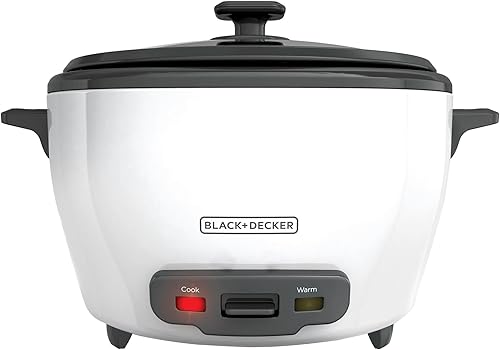
The BLACK+DECKER Rice Cooker 6-Cup uses an included ¾-cup rice measuring cup. It handles 1 to 6 cups of cooked rice and switches to Keep Warm after cooking.
The AROMA Digital Rice Cooker has programmable controls, White Rice and Brown Rice functions, Steam and Flash Rice settings, plus automatic Keep Warm. It handles 2 to 8 cups of cooked rice.
Rice cooker vs microwave for busy weeknight meals
The rice cooker suits a routine where you want to start the rice and work on other food. The microwave suits a meal where a small portion needs to be ready soon and you are already nearby.
A microwave does not require a dedicated rice appliance, so it can be the better choice in a small kitchen. It also avoids adding another corded appliance to a crowded counter.
A rice cooker can reduce active attention once the cycle starts. That matters if you are preparing vegetables, fish or another part of dinner at the same time.
The automatic rice cooker buying guide explains which controls and capacity choices matter when you want less daily monitoring.
Which method gives more consistent rice?
A rice cooker generally makes consistency easier because it uses a dedicated cooking cycle and temperature control. Microwave results can also be consistent, but the bowl, water ratio, rice type and microwave power all matter.
The microwave method has more variables outside the rice itself. A shallow bowl, a narrow bowl and a covered container can produce different results even when the dry rice amount stays the same.
Rice type changes the water needs too. White rice, brown rice and other grains may need different ratios and cooking times, so use the instructions for the rice you have.
The BLACK+DECKER manual guidance covers rice-to-water ratios by type. More water can make rice softer, while less water can make it firmer.
The AROMA ARC-914SBD uses Sensor Logic Technology to control internal temperature during the cooking cycle. It also has separate White Rice and Brown Rice functions.
Neither appliance removes the need to measure carefully. Use the cup that comes with the rice cooker because a rice cup and a standard kitchen cup are not always the same size.
Which option is better for small servings?
A microwave is often the simplest choice for one small serving, while the BLACK+DECKER rice cooker starts at 1 cup of cooked rice. Choose the rice cooker when you want a repeatable small batch without using a microwave bowl.
The BLACK+DECKER model handles 1 to 6 cups of cooked rice. Its compact dimensions are 10 in wide, 9 in high and 5.5 in deep, so measure your counter before choosing a permanent spot.
The AROMA model handles 2 to 8 cups of cooked rice. Its dimensions are 9.25 in wide, 8.5 in high and 8.63 in deep, so it suits a household that usually makes larger batches or wants more digital control.
A microwave can avoid appliance storage when you only make rice now and then. You still need a bowl large enough to prevent boiling liquid from spilling over, plus room to handle hot steam safely.
For a dedicated microwave option, see our guide to the best rice cooker for microwave cooking. It helps separate microwave-safe cooking tools from electric rice cookers designed to run their own cycle.
Which method is better for texture?
A rice cooker is the easier choice when you want the same texture from batch to batch. A microwave can work well, but you may need more adjustment when changing rice type, portion size or container.
Rice texture depends on the water ratio, cooking time and how long the rice rests after heating. Softer rice usually needs more water, while firmer rice usually needs less.
A rice cooker can make those adjustments easier to repeat because the cooking bowl and program stay the same. You can still change the ratio for the rice type and your preferred texture.
Microwave cooking gives you direct control over time, but that control requires more attention. If the rice is undercooked, you may need to add water and continue heating.
If it is overcooked, the texture cannot be reversed.
Do not judge either method by one batch alone. Write down the rice type, dry amount, water amount and cooking time until you find a repeatable combination.
Which method is easier to clean?
A microwave usually has fewer parts to wash, but a rice cooker can make cleanup simple when its inner bowl is removable. Your best choice depends on whether you prefer wiping one container or washing a dedicated cooking bowl and accessories.
The BLACK+DECKER has a removable non-stick rice pot that is dishwasher safe, along with a tempered glass lid. Its serving spoon is designed to protect the non-stick pot.
The AROMA model has a stainless steel exterior and a hand-wash care instruction. It includes an inner pot, steam tray, rice measuring cup and serving spatula.
Microwave cleanup usually means washing the bowl, cover and any utensil used to stir or serve the rice. Keep steam burns in mind when removing a covered bowl, and let hot cookware cool enough to handle safely.
For either method, clean starch residue before it dries hard. Avoid scraping a non-stick bowl with sharp tools, and follow the care instructions for the exact appliance or container.
Can a rice cooker do more than a microwave?
A rice cooker offers more dedicated cooking functions, while a microwave remains more flexible for reheating and quick heating. Choose based on which tasks you will use every week.
The BLACK+DECKER includes a steaming basket for vegetables, fish and more. Its product description also names soups, stews and oatmeal as possible uses.
The AROMA includes a steam tray for meat and vegetables while rice cooks below. It also supports soups, chili, jambalaya, oatmeal and other one-pot meals.
Microwaves can heat leftovers, soften ingredients and cook many foods in suitable containers. Their wider range of uses can matter more than rice consistency if you already rely on the microwave for most meals.
An electric rice cooker is more focused. If rice, grains and steamed food appear often in your meals, the dedicated controls may earn the counter space.
If you are comparing countertop appliances more broadly, our guide on whether an air fryer can work as a microwave explains why those appliances serve different cooking roles.
Which rice cooker fits the microwave alternative?
Pick the BLACK+DECKER for straightforward portions and the AROMA for digital settings, larger batches and meal planning. Both give you more automatic control than a bowl-based microwave method.
BLACK+DECKER Rice Cooker 6-Cup
The BLACK+DECKER is the simpler fit for households that want a dedicated rice cooker without a long list of digital programs. Its 1 to 6-cup cooked capacity covers small portions and family-size batches.
The included ¾-cup measuring cup helps you portion dry rice correctly. The cooker uses 300W at 120V, and its dimensions are 10 x 9.0 x 5.5 in.
The removable non-stick pot supports dishwasher cleanup, while the included serving spoon helps protect the cooking surface. The steaming basket adds a second use for vegetables, fish and more.
Choose this model when you want easy portions and automatic Keep Warm. Skip it if you need a delay timer, dedicated Brown Rice control or a cooked capacity above 6 cups.
AROMA Digital Rice Cooker
The AROMA suits a household that wants more control over the cooking cycle. Its digital functions include White Rice, Brown Rice, Steam and Flash Rice, with automatic Keep Warm after each cycle.
The 2 to 8-cup cooked capacity works for larger batches, and the 15-hour Delay Timer supports flexible meal planning. Flash Rice can cut cooking time by up to 50%.
The steam tray lets you cook meat or vegetables while rice cooks below. The unit measures 9.25 x 8.5 x 8.63 in and has a stainless steel exterior.
Choose it when preset programs and planning features matter. Skip it if you usually make less than 2 cups of cooked rice or want the simplest possible controls.
How does a rice cooker compare with other stovetop options?
A rice cooker trades some flexibility for automatic cooking and Keep Warm. A pot gives you direct control and no dedicated appliance, while a pressure cooker may suit people who want faster multi-use cooking.
Our rice cooker vs pot comparison covers the trade-off between a dedicated appliance and a regular cooking pot. A pot can be useful when storage space is limited, but it usually needs more attention at the stove.
If you are choosing between countertop appliances, read our rice cooker vs pressure cooker guide. The better fit depends on which meals you make beyond rice and how much control you want over the cooking process.
For healthy meal planning, our guide to the best air fryer for healthy cooking covers a different appliance category. An air fryer does not replace a microwave or rice cooker for every task.
How should you choose between a rice cooker and microwave?
Choose the microwave for occasional small servings and the rice cooker for regular batches with less active monitoring. Then choose the rice cooker model that matches your usual portion size and control needs.
Pick the BLACK+DECKER when you want 1 to 6 cups of cooked rice, automatic Keep Warm, a removable non-stick bowl and a steaming basket.
Pick the AROMA when you want 2 to 8 cups of cooked rice, programmable controls, White Rice and Brown Rice settings, a delay timer and Flash Rice.
Use a microwave when counter space is tight or rice is only a small part of your cooking routine. Use a rice cooker when consistent portions, hands-off cooking and warm holding matter more than appliance storage.
Our score weighs specs, features and buyer feedback against what you're shopping for. Our assessment is based on the stated capacities, controls, cooking functions and care details.
Rice cooker vs microwave: the final decision
Choose a rice cooker if you make rice often and want repeatable cooking with automatic Keep Warm. Choose the microwave if you make small portions occasionally and want to avoid another appliance.
The BLACK+DECKER is the better match for simple 1 to 6-cup batches. The AROMA is the better match for larger batches, preset rice functions and flexible meal timing.
Measure your counter, think about your normal serving size and decide how much monitoring you want. That decision will usually matter more than choosing between 1 cooking method and another.
Frequently asked questions
Is a rice cooker better than a microwave for rice?
A rice cooker is better for repeatable batches, automatic keep warm and less active monitoring. A microwave can be better for a small serving when you already have a microwave-safe bowl and want to avoid storing another appliance.
Choose based on batch size, texture needs and available counter space.
Does microwave rice taste the same as rice cooker rice?
Microwave rice can taste good, but texture depends more on the rice type, water ratio, bowl size and cooking time. A rice cooker controls its cooking cycle and can switch to keep warm, which makes repeatable texture easier when you cook rice often.
Which method is faster, a rice cooker or microwave?
A microwave may be faster for a small serving because it heats the water and rice in the same bowl. Rice cooker timing varies by rice type and model, while the AROMA ARC-914SBD includes a Flash Rice function that can cut cooking time by up to 50%.
Can you cook brown rice in a microwave?
Yes, but brown rice usually needs a different water ratio and longer cooking time than white rice. Check the instructions for your rice and microwave-safe container, and use a rice cooker with a Brown Rice function if you want a preset option.
Can a rice cooker keep rice warm?
Yes. Both rice cookers in this comparison automatically switch to Keep Warm after cooking.
That helps when dinner is not ready at the exact moment the rice finishes, but follow the manual for safe holding and storage guidance.