Ceramic vs Stainless Steel Rice Cookers: Which to Choose? (November 2026)
Choose ceramic for easier release and a coated cooking surface, or stainless steel for a bare-metal pot with fewer coating concerns. The best rice cooker ceramic or stainless steel choice depends on cleanup, capacity and how you cook.
On this page (11 sections)
- Rice cooker ceramic or stainless steel: which surface is better?
- Which material is easier to clean?
- Which material lasts longer?
- How do ceramic and stainless steel affect sticking?
- Which cooker fits a small kitchen?
- Which ceramic cooker fits larger batches?
- What helps if you choose stainless steel?
- Is a stainless steel exterior the same as a stainless steel pot?
- Which material should you choose for your cooking habits?
- More guides on this topic
- Final choice: rice cooker ceramic or stainless steel?
Choose ceramic for easier release and a coated cooking surface, or stainless steel for a bare-metal pot with fewer coating concerns.
Your choice depends on how you clean, serve and cook, plus how often you cook and how many people you feed.
Ceramic and stainless steel can describe different parts of the same appliance, from the exterior and inner pot to a steaming basket.
That distinction matters because the outside finish does not tell you how the surface your food touches is made.
Check the inner pot listing, the care instructions and the included parts before you judge a model by its material label.
This comparison focuses on the cooking surface first, then cleanup, durability, capacity and the difference between a stainless steel body and a stainless steel inner pot.
For daily rice, a coated pot can make serving feel easier, with loosened rice lifting out in neat portions after only a short soak.
A bare metal pot has a different appeal, since there is no cooking coating to protect from scratches during rinsing and wiping.
Neither option removes the need for the right water ratio, because too much water makes rice soft and too little leaves grains hard or dry.
Resting time also matters, as many cookers work better when you let rice sit briefly after cooking and then loosen it gently before serving.
Capacity should shape your choice from the start, since a small cooker can suit one person well while a larger model reduces repeat batches for a household.
Cleanup habits should guide the decision too, because a metal pot may be simple if you wash it right away but dried rice can still cling if it sits in the pot.
If you prefer less scraping after meals, ceramic may fit better, and a removable pot can make serving at the table simpler without filling another bowl.
Utensils affect long term care, because a coated surface usually calls for a softer paddle while a bare metal surface gives more freedom during serving.
What else you cook matters as well, since oatmeal, quinoa and other grains can behave differently from plain white rice on each surface.
Steaming baskets and lids add another layer, because a cooker can include a stainless steel basket even when the inner pot uses a ceramic coating.
Check each part on its own, as a metal shell can look durable and modern while the pot inside remains nonstick, ceramic coated or bare metal.

Rice cooker ceramic or stainless steel: which surface is better?
Ceramic is the simpler choice for low-stick serving, while bare stainless steel is the simpler choice for avoiding a coated cooking surface. Neither material removes the need for the right water ratio and regular cleaning.
A ceramic rice cooker often has a coating over a metal base. That coating helps food release and can make the pot easier to wipe after rice, grains or oatmeal.
Bare stainless steel has no nonstick coating on the cooking surface. It can suit cooks who prefer a durable metal pot, but cooked rice may need more soaking or careful scraping during cleanup.
The word ceramic also needs care. Some products describe the inner pot as ceramic coated, while others describe a ceramic cooking surface or ceramic material.
Check which part uses ceramic before deciding.
Ceramic rice cooker inner pots
Ceramic works well when your main concern is serving rice without leaving a thick layer behind. The coating can also help with foods such as oatmeal, quinoa and other grains.
Coated surfaces need gentle tools. Use the included paddle when available, and avoid treating the pot like a bare stainless steel bowl.
Our guide to the best ceramic rice cooker compares ceramic-focused options for different kitchen sizes and cooking needs.
Stainless steel rice cooker inner pots
Stainless steel suits buyers who want a metal cooking surface and do not want to manage a nonstick coating. It also tends to be easy to rinse and wipe when food has not dried onto the pot.
Do not assume every cooker with a metal exterior has a stainless steel inner pot. The AROMA cooker below has a stainless steel exterior but a nonstick inner pot, which makes it different from a bare stainless steel cooker.
For a closer look at metal cooking pots, see our guide to the best rice cooker stainless steel inner pot options.
Which material is easier to clean?
Ceramic-coated pots usually offer easier daily cleanup, while stainless steel can handle firm scrubbing better when the manufacturer allows it. Your cleaning method matters as much as the material.
A ceramic nonstick pot may release rice with a short soak and a soft sponge. Avoid sharp tools and abrasive pads unless the care instructions specifically allow them.
Stainless steel has no coating to scratch, but dried rice can cling to the surface. Soaking loosens the cooked layer before washing, and a nonabrasive scrubber can help with residue.
Dishwasher guidance varies by model. The Dash pot is dishwasher safe, Cosori says its accessories are dishwasher safe, and the AROMA cooker calls for hand washing.
A separate rice cooker glass guide can help if you are also comparing transparent lids and how easily you can watch food during cooking.
Which material lasts longer?
Bare stainless steel has the clearest advantage against coating wear, while ceramic-coated pots depend on careful use to keep the surface in good condition. Longevity still depends on heat, utensils, cleaning and storage.
A stainless steel inner pot can tolerate the normal marks of kitchen use without losing a coating. It may still dent, discolor or develop residue if it is handled roughly or left dirty.
A ceramic-coated pot can remain convenient for years when you use suitable utensils and avoid stacking sharp tools inside it. Scratches do not automatically mean the pot has failed, but they are a reason to review the care guidance.
A stainless steel exterior is not the same durability question as a stainless steel inner pot. The outside may resist everyday marks while the cooking surface inside remains nonstick or ceramic coated.
How do ceramic and stainless steel affect sticking?
Ceramic-coated pots are usually better for clean rice release, while bare stainless steel requires more attention to water, timing and serving. Rice can stick to either surface when it cooks too long or dries on the bottom.
Let the rice rest for the time recommended by the cooker before serving. Loosen the edges with the supplied paddle or another suitable utensil, then lift portions instead of scraping aggressively.
Stainless steel can still cook good rice, but the bottom layer may be firmer. That can be useful for cooks who like a browned rice layer, though it is less convenient if you want every grain to come out cleanly.
Ceramic does not guarantee perfect release. Rice type, water level, warm-hold time and the amount cooked all change the result.
Which cooker fits a small kitchen?
A small ceramic cooker is the better match for 1 or 2 servings, while a larger ceramic or stainless steel model makes more sense for family meals. Capacity should come before material if your current cooker is regularly too small.
The Dash Mini Rice Cooker makes 2 cups of cooked rice from 1 cup of uncooked rice. It has a one-switch interface, automatic keep warm and a glass lid.
Its ceramic nonstick pot lifts out for serving. The cooker also handles oatmeal, quinoa, brown rice, pasta, soups and banana bread according to its product information.
Because the capacity is limited, it is not the right fit for a household that cooks several servings at once. It is more useful when storage space and small portions matter more than batch cooking.
Which ceramic cooker fits larger batches?
A larger ceramic-coated cooker suits families that want easier release without giving up extra cooking modes. This type can be a good middle ground when you want coated cleanup and more than a compact pot.
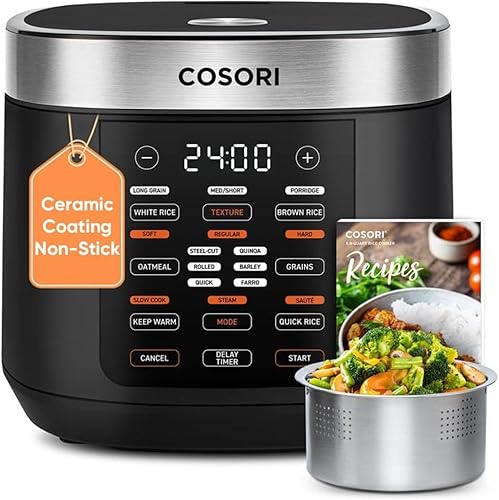
The Cosori Rice Cooker 10 Cup has a ceramic-coated inner pot and a stainless steel steamer basket. Its functions cover white and brown rice, grains, oats, steaming, sautéing and slow cooking.
Fuzzy logic adjusts its cooking process, and the cooker includes automatic keep warm and delay functions. The ceramic coating supports the easy-release side of this comparison, while the basket adds a separate stainless steel component.
This is a larger appliance than the Dash. Measure your counter and storage area before choosing a 10-cup cooker, especially if you want to leave it set up.
For another brand-specific material question, read do Zojirushi rice cookers have ceramic pots.
What helps if you choose stainless steel?
A stainless steel rice cooker setup benefits from a good washing and draining tool, plus a clear distinction between the exterior and inner pot. Stainless steel prep tools can support the workflow even when the cooker itself uses another surface.
The DOPMEP Rice Washer Strainer Bowl is not a rice cooker and does not replace an inner pot. Its slanted design and side drain holes are useful when you want to rinse rice without losing grains down the sink.
The bowl is dishwasher safe and made from stainless steel. It can be a practical addition to either a ceramic or stainless steel cooker because washing rice is separate from the material used for cooking.
If you are comparing compact cookers with metal interiors, see the best small rice cooker with stainless steel inner pot guide.
Is a stainless steel exterior the same as a stainless steel pot?
No. A stainless steel exterior only describes the outside of the cooker, not necessarily the inner cooking surface.
Read the material details for the pot itself before buying.
The AROMA Professional Digital Rice Cooker offers 6 modes, including rice cooking, steaming and slow cooking. Sensor Logic Technology adjusts heat while the cooker operates, and the steam basket lets you cook food above grains.
Its stainless steel exterior may appeal to buyers who want a metal appliance body. The nonstick inner pot means it should not be treated as a bare stainless steel inner-pot model.
The cooker calls for hand washing. That care difference may matter more than the exterior material if your priority is quick cleanup.
Our guide to the best stainless steel air fryer explains the same material distinction in another countertop appliance. For basket-specific comparisons, see the best stainless steel air fryer basket guide.
Which material should you choose for your cooking habits?
Pick ceramic if clean release and coated convenience come first; pick bare stainless steel if you want a metal cooking surface and are willing to manage sticking.
Choose capacity and care requirements before focusing on the material label, since the best fit depends on your serving size and washing habits.
Choose ceramic when:
- You serve rice soon after cooking and want the pot to release it cleanly.
- You cook oatmeal, quinoa or other foods that may cling to bare metal.
- You prefer a removable pot that needs a short soak and gentle cleaning.
- You want a compact option such as the Dash or a larger coated model such as the Cosori.
Choose bare stainless steel when:
- You want to avoid a nonstick cooking coating.
- You are comfortable soaking the pot when rice dries onto the surface.
- You prefer a metal inner pot that does not depend on coating care.
- You have confirmed that stainless steel describes the inner pot, not just the exterior or basket.
If your concern is material exposure rather than cooking performance, our guide asking is Cosori rice cooker non toxic explains why you should identify each food contact part instead of relying on the outside finish.
More guides on this topic
- Do Tiger Rice Cookers Have Ceramic Inner Pots?
- Use this related guide when you want to check whether a specific brand uses a ceramic pot or only a coated surface.
- It can help you compare a named model against the material details in this ceramic or stainless steel overview.
- Keep the inner pot, exterior and basket separate when you read product descriptions.
- Capacity and care instructions still matter, even when the material name looks clear at first glance.
Final choice: rice cooker ceramic or stainless steel?
Choose the Dash for small ceramic cooking, the Cosori for larger ceramic-coated batches, and a true stainless steel inner-pot model when avoiding a coating matters most.
The AROMA is a useful stainless steel exterior cooker, but its nonstick inner pot does not make it a bare stainless steel cooking-surface choice.
For most households, ceramic is the easier daily option because release and cleanup are simpler. A coated pot can help rice come out cleanly and reduce the need for hard scraping.
For buyers focused on a bare metal surface, confirm the inner-pot material before ordering. Accept that stainless steel may need more soaking after rice dries, especially if the pot sits before washing.
Capacity should still come first. The Dash suits small portions, while the Cosori suits larger batches and more varied grain meals.
Check the care guidance for each model too. Dishwasher use, utensil choice and hand washing can change how convenient a cooker feels day to day.
The best rice cooker ceramic or stainless steel decision is the one that matches your serving size, utensil habits and cleanup routine.
Frequently asked questions
Is ceramic or stainless steel better for a rice cooker?
Ceramic is usually the better fit if you want a coated surface that helps rice release cleanly, while stainless steel suits buyers who prefer a bare-metal cooking surface. Check the exact construction carefully because a stainless steel exterior does not always mean the inner pot is stainless steel.
Does rice stick more to stainless steel or ceramic?
Rice can stick to either material when water ratios, heat or resting time are off, but a ceramic nonstick coating is designed to help food release. Bare stainless steel may need more attention during serving and cleaning, especially when rice forms a cooked layer on the bottom.
Are ceramic rice cooker pots safer than stainless steel?
Neither material should be treated as automatically safer in every situation. Ceramic rice cookers often use a ceramic coating over another base material, while stainless steel may describe the exterior, basket or inner pot.
Check the exact parts and follow the care instructions for the model.
Can you use metal utensils in a ceramic rice cooker?
Use the utensil guidance for the exact cooker, but avoid metal tools when the ceramic surface is coated or described as nonstick. A plastic, silicone or wooden paddle is a safer everyday choice for serving without scratching the cooking surface.
What should I buy if I want a stainless steel inner pot?
Choose a model that clearly identifies the inner pot as stainless steel, not one that only mentions a stainless steel exterior or steamer basket. Capacity, cleanup and rice release still matter, so compare the cooking surface and care instructions alongside the material.


