What Is Philips Air Fryer Rapid Air Technology?
Philips air fryer Rapid Air technology is a system that circulates very hot air quickly around food to crisp and cook it with little or no added oil. It is Philips' name for air frying, with design details that aim to keep heat moving for even, fast results.
On this page (8 sections)
- How does Philips air fryer Rapid Air technology work?
- What does Rapid Air do differently from a regular oven?
- Which foods suit Philips Rapid Air cooking best?
- How do you use Rapid Air technology day to day?
- Can Rapid Air technology replace deep frying?
- What are the limits and trade-offs of Rapid Air?
- How do liners help with Rapid Air cooking and cleanup?
- How do you pick the right Philips model with Rapid Air?
Philips air fryer Rapid Air technology is a system that circulates very hot air quickly around food to crisp and cook it with little or no added oil.
It is Philips' name for air frying, with design details that aim to keep heat moving for even, fast results.
You will see the name on many Philips baskets, but exact controls differ by model. If you are comparing models, see which air fryer Jamie Oliver uses.
How does Philips air fryer Rapid Air technology work?
It works by heating air fast and moving it quickly around the food.
Moving hot air dries the surface, which helps it turn crisp, while heat moves inward to cook the center.
A heating element warms the chamber, and a fan drives air in a loop.
Philips marketed its version as Rapid Air, with a star-shaped or ribbed basket design on some models that helps air reach more of the food surface.
A raised basket lets air pass underneath, so the underside can crisp too.
Food sitting flat in its own fat or juices can steam on the bottom.
Basket shape and food spacing change results as much as the name on the box.
For the general idea behind every brand, see How Does An Air Fryer Work?.
What does Rapid Air do differently from a regular oven?
Rapid Air cooks in a much smaller space than an oven, so it heats up faster and focuses heat on the food.
A small chamber needs less time to get hot, and the fan keeps heat moving instead of letting it sit still.
In a conventional oven, heat rises and pools. You often wait for preheating, and food can cook unevenly.
An air fryer reaches cooking temperature in a few minutes, and moving air narrows the gap between top and bottom of the food.
That speed has a trade-off. A small basket holds less food, and crowding slows cooking.
You may need batches, which adds time even if each batch finishes quickly.
Think of Rapid Air as a fast, focused oven for small portions.
It suits reheating leftovers, crisping frozen items, and cooking for one to four people.
A large family meal still fits better in a full oven.
Which foods suit Philips Rapid Air cooking best?
Foods that benefit from a dry, crisp surface suit it best.
Frozen fries, chicken wings, breaded vegetables, and reheated pizza all gain from fast, dry heat. For everyday recipe ideas using another air fryer, see Cosori air fryer recipes.
Thin pieces work well because hot air reaches them quickly.
Boneless chicken pieces, vegetables cut to similar sizes, and fish fillets cook evenly when not stacked.
Thick cuts need more time, and the center can lag if the outside browns too fast.
Fatty foods are mixed. Wings and bacon render well in moving hot air, but dripping fat can smoke or splatter.
A liner can catch drips, and shaking the basket halfway helps fat escape.
Marinades and breading matter too. A wet marinade can steam before it browns, so pat the surface dry.
If you are new to air frying, start with How to Use an Air Fryer?.
How do you use Rapid Air technology day to day?
Preheat briefly, space the food, shake or turn it once, and check the center temperature.
Small habits make a large difference in a small basket.
Start by preheating for 3 to 5 minutes. For brand-specific steps, see how to use a Cosori air fryer.
The basket and air will be hot when food goes in, so the surface starts crisping right away.
Add food in a single layer with small gaps between pieces. Crowded food traps steam, and steam softens the crust you want.
Shake the basket or turn pieces about halfway through. That exposes fresh surface to hot air and breaks up hot spots.
For chicken, use a food thermometer and cook to a safe internal temperature, not just to a golden color.
For cleanup, let the basket cool, then wash with warm water and mild soap.
If you own a different brand too, our guide on how to use instant pot air fryer shows how the same principles apply in a combo unit.
Controls differ, but spacing and turning matter everywhere.
Can Rapid Air technology replace deep frying?
It can replace deep frying for many everyday foods, but it is not a one-to-one match for every recipe.
Texture is close for fries, wings, and breaded items, with far less oil to heat, store, and discard.
Deep frying submerges food in oil at a steady temperature. That bath transfers heat fast and coats the surface in a way air cannot fully copy.
Some batters and cheeses behave differently in air, so a deep-fried recipe may need less batter or a different coating.
Air frying wins on convenience and cleanup. There is no large pot of hot oil and no lingering smell of reheated oil.
The trade-off is smaller batches and a crust that can be drier and less rich.
For most home cooks, that trade-off is worth it.
What are the limits and trade-offs of Rapid Air?
The main limits are basket size, batch cooking, and foods that need wet heat.
Rapid Air is dry heat, so it cannot braise, simmer, or steam a dish the way a pot can.
Basket size sets a hard cap. Large cuts, big batches, and tall items may not fit, or may block airflow.
Splitting food into batches fixes fit, but adds time and can make serving temperatures uneven.
Wet batters are another limit. Thin, runny batter can drip through a basket before it sets.
Thicker coatings, a short rest in the fridge, or a light spray of oil can help coating hold.
Noise and heat are minor trade-offs. The fan is audible, and the outside can feel warm.
Keep it on a heat-safe counter with space around it, and keep children away from the hot basket.
For safety basics across brands, see Is an Air Fryer Safe to Use?.
How do liners help with Rapid Air cooking and cleanup?
Liners catch fat and crumbs so the basket needs less scrubbing.
They work best when they fit the basket bottom and leave airflow clear.
A well-fitting liner acts like a tray. Juices and crumbs land on the liner instead of the basket, and you can lift it out when food is done.
Size is key. A liner that is too large will fold up the sides and can block air or touch the heating element.
Measure the basket bottom before you buy.
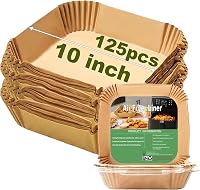
Who should choose the mutvle 10 Inch Largest Square Air Fryer liners?
Choose the mutvle 10 Inch Largest Square Air Fryer liners if you cook in a large square basket.
They measure 10 inches across the top with a 9 inch bottom, stand 1.8 inches high, and come in a 125-piece pack.
The liners use food grade parchment with a plant based oil treatment, and they are unbleached and BPA-free.
Mutvle says the parchment is 1.5 times thicker than ordinary parchment and resists tearing when lifted after cooking.
They suit baking, roasting, and serving as well as air frying, and can also go in a microwave or oven.
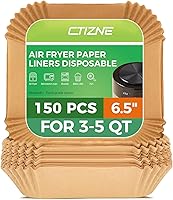
Who should choose the ctizne Air Fryer Liners Disposable?
Choose the ctizne Air Fryer Liners Disposable if you cook in a smaller 3 to 5 quart basket.
Each liner is 6.5 inches square, and the pack holds 150 pieces.
Ctizne says the liners are made of food grade parchment with a silicone oil coating, and they handle temperatures up to 428 degrees Fahrenheit.
The square bowl shape catches drips along the sides, which helps keep basket walls cleaner.
The liners come in a transparent box that is waterproof and dustproof, so you can see how many remain.
How do you pick the right Philips model with Rapid Air?
Pick by basket size, the presets you will actually use, and the controls you find clear.
The Rapid Air name is common across the range, so model details matter more than the label.
Start with capacity. A basket that is too small forces batch cooking for most meals.
A very large basket can be harder to clean and may cook small portions less evenly.
Match size to your typical meal for one to four people.
Next, look at presets and controls. Simple dials suit anyone who wants fewer choices.
A digital panel suits anyone who cooks the same foods often and wants them saved.
Check that temperature and timer ranges cover your usual recipes, and read the manual for exact functions.
Ease of cleaning deserves a look too. A basket that lifts out easily and a liner that fits well will matter more than a long feature list.
If you prefer simpler controls, our guide to the Best Air Fryer For Seniors explains what to look for in easy-to-read controls.
Finally, use the technology for what it does well. Rapid Air shines at crisping, reheating, and fast small meals.
If you move between brands, our notes on using cuisinart air fryer show how similar baskets work in another popular design.
Frequently asked questions
What is Philips air fryer Rapid Air technology?
It is Philips' name for its air frying system, which uses a strong heating element and fan to move hot air fast around food. The moving air helps surfaces dry and crisp while heat cooks the inside, often with less oil than deep frying.
Does Rapid Air technology make food healthier?
It can reduce the oil you need compared with deep frying, which lowers added fat for many foods. The overall result still depends on the food itself, the breading or marinade, and how much oil you add before cooking.
Can I use parchment liners with Rapid Air cooking?
Yes, disposable parchment liners can catch drips and make cleanup easier, as long as they fit the basket and do not block airflow. Measure the basket bottom first, since a liner that is too large can fold up and restrict the hot air flow.
Is Rapid Air technology the same on every Philips model?
No. Philips uses the name across models, and the exact basket size, presets, and controls differ by model.
Check your model's manual for its specific functions, temperature range, and care instructions before you rely on a feature.