Is Ninja Crispi Non Toxic?
Is Ninja Crispi non toxic? The glass containers used with Ninja Crispi are not the usual concern; the question is about cooking surfaces, coatings, and accessories that touch hot food. Check your exact model materials, avoid damaged nonstick surfaces, and use food-grade liners or glass where they fit.
On this page (10 sections)
- Is Ninja Crispi non toxic for everyday use?
- What parts touch food in a Ninja Crispi?
- How do glassware and cooking surfaces compare?
- What coating claims should you check?
- Can paper liners help with non toxic concerns?
- How should you clean glass and coated parts?
- What signs mean you should replace a part?
- How do fumes and ventilation fit the question?
- How do you choose safer options for your kitchen?
- Is Ninja Crispi non toxic: final check
Is Ninja Crispi non toxic? The glass containers used with Ninja Crispi are not the usual concern; the question is about cooking surfaces, coatings, and accessories that touch hot food.
Check your exact model materials, avoid damaged nonstick surfaces, and use food-grade liners or glass where they fit.
That short answer matters because shoppers often use non toxic to mean several things at once. Some people mean the main container, some mean the basket, and some mean any coating that can scratch over time.
We compared the materials buyers ask about and the parts that actually touch food during cooking.
Is Ninja Crispi non toxic for everyday use?
For everyday use, treat the glass parts and the heating parts as separate questions. Glass is easy to inspect, while a crisper plate or basket may have its own finish and care limits.
Check the glass rim, base, and lid for chips, cracks, or cloudy damage. A chip can grow under heat, so damaged glass should not return to cooking.
Then check the metal or coated parts. Scratches can collect burnt residue that is hard to remove and can affect taste.
If a surface is worn, rough, or peeling, replace it.
Your manual for your exact model is the source to trust for material and temperature limits. Models in the same family can differ, so do not copy care rules from another size or version.
What parts touch food in a Ninja Crispi?
The parts that touch food are the glass container, the crisper plate or rack, and any basket or tray you place inside. The lid and handle may only touch food when you stir, flip, or serve.
That distinction helps you focus your checks. Food usually sits in glass or on a raised plate, so those surfaces matter most.
A lid that touches steam is different from a plate that holds meat through a full cook.
Ask what each part is made of before you use it. Glass needs a chip check and its heat limit, while metal needs a check for whether it is bare or coated.
Plastic storage lids are a common trap. A lid for fridge leftovers may not be meant for roasting or air frying.
Keep lids off during high-heat cooking unless the manual says the lid belongs in the cycle.
How do glassware and cooking surfaces compare?
Glass and coated metal solve different problems. Glass is easy to inspect and clean, while coated metal often heats food faster and releases it with less sticking.
Glass is heavy and can break if dropped. It may also need a longer preheat than a thin metal tray.
It shows stains and chips plainly, which helps inspection.
Coated metal is light and often browns food well. Scratches can trap residue, and metal utensils or scouring pads can damage the finish over time.
Use the surface you can inspect and clean well. If you use a coated plate, retire it when wear shows.
For setup help, see how to use ninja crispi pro before your first cook. For recipes that suit glass, see ninja crispi pro recipe.
What coating claims should you check?
Check coating claims by asking what the coating covers, what temperature it allows, and how it should be cleaned. A broad claim does not tell you how to care for your exact part.
Look for the material name in your manual rather than a marketing phrase. If the manual names a ceramic-style coating, nonstick coating, or bare surface, follow the care rules for that type.
Ask about temperature limits in plain numbers. A surface fine for warming may not be fine for broiling or roasting at high heat.
Ask how the maker describes scratches and wear. Some makers say to replace a part when coating is damaged, while others give steps to protect the finish.
If you see exposed metal, peeling, or rough patches, do not keep cooking on that surface.
Can paper liners help with non toxic concerns?
Paper liners can help by keeping food off a basket surface and making cleanup easier, but they do not repair a damaged surface. Use them as a barrier for intact equipment, not as a fix for worn coating.
A liner also changes airflow and heat contact. Food may brown a little more slowly if paper covers holes in a crisper plate.
That can change timing for chicken, potatoes, and reheated leftovers.
Size matters more than most buyers expect. A liner that is too large can fold up near a heating element, and one that is too small leaves edges exposed.
Measure the basket bottom before you buy.
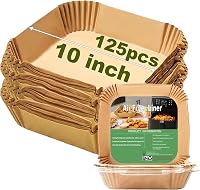
Check the stated heat limit and keep paper away from a hot element. The mutvle 10 Inch Largest Square Air Fryer option is a 10 inch square liner with a 9 inch bottom and 1.8 inch height, made for 8 qt or larger baskets.
It comes in a 125 count pack and uses food grade parchment with a plant based oil treatment, described as unbleached, BPA-free, and PFAs-free.
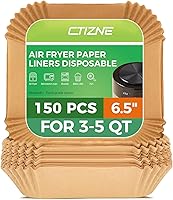
The ctizne Air Fryer Liners Disposable option is smaller at 6.5 x 6.5 inches and comes in a 150 count pack. It uses food grade parchment with a silicone oil coating and is described as unbleached, BPA-free, and PFAs-free.
The maker states a limit of 428°F and a square bowl shape that needs no folding.
Pick the larger mutvle liner if your basket bottom is close to 9 inches wide and you want a deep edge. Pick the smaller ctizne liner if your basket is in the 3 to 5 qt range and you want a shallower fit.
Either way, measure first and follow the heat limit for that liner.
How should you clean glass and coated parts?
Clean each part the way its material allows. Glass usually tolerates soaking and gentle scrubbing, while coated parts need soft tools and no harsh pads.
Let parts cool before you wash them. Hot glass can crack in cold water, and a hot coated plate can lose its finish if you plunge it into a sink.
Use a soft sponge or brush on coated surfaces. Avoid steel wool, abrasive powders, and metal utensils on any finish you want to keep intact.
For glass, a nonabrasive scrubber is usually enough.
Dry parts fully before you stack them. Trapped moisture can leave spots and make residue stick next time.
Store glass away from metal pans so rims do not chip.
If burnt residue stays after soaking, change your method. A liner, a light coat of oil on food, or a different rack position can reduce sticking.
What signs mean you should replace a part?
Replace a part when you see a chip, crack, peel, warp, rough patch, or residue that will not come off after a normal soak. Those signs affect safety, cleaning, and food quality.
Glass chips deserve special attention. A small chip on the rim can cut a lip and can grow when the glass heats and cools.
Do not use chipped glass for cooking, and do not use it for serving hot food.
Retire coated parts when the finish looks worn. Peeling or flaking means food can pick up coating fragments, and scratches can hold residue if cleaning is poor.
A warped plate can also sit unevenly and cook food in spots.
Check handles, racks, and lids at the same time. A loose handle can fail under load, and a warped rack can tip food or block airflow.
When you replace a part, match the model and size.
How do fumes and ventilation fit the question?
Ventilation matters because high heat can create smoke from food residue, oils, and burnt crumbs, even when the container is glass. Keep the appliance in a ventilated area and clean residue before it builds up.
Air frying can produce visible smoke when fatty food drips or old residue burns. That smoke is a sign to clean the basket, plate, and interior, not a sign that glass has failed.
For a broader look at smoke and fumes, see Does Air Frying Produce Toxic Fumes?. That guide separates food smoke from equipment damage and explains why cleaning matters.
Do not use the appliance with a damaged cord, a loose plug, or a new hot smell. Unplug it and check the manual for support steps.
Keep paper liners, towels, and packaging away from exterior vents.
How do you choose safer options for your kitchen?
Choose based on the part that touches food, the heat limit, and how easy the part is to inspect. Glass, bare metal, and intact coated surfaces can all work when you use them as directed.
If coating questions worry you, lean on glass for roasting and reheating. If you want fast browning, use an intact crisper plate and clean it with soft tools.
If cleanup is your main concern, use a correctly sized liner and accept a small change in browning.
Our roundup of the Best Non-Toxic Air Fryer options can help if you are comparing whole appliances. For glass-specific questions, see ninja crispi microwave before you move a container between appliances.
For general setup, see how to use ninja glass air fryer.
Is Ninja Crispi non toxic: final check
Is Ninja Crispi non toxic? Use glass where it fits, keep coated surfaces intact, and follow the heat and cleaning limits for your exact model.
That approach lets you cook with confidence without relying on vague claims.
Before your next cook, run a quick check. Inspect the glass rim, look at the crisper plate, and confirm that any liner fits the basket bottom.
If a part is chipped or worn, replace it before you add food.
Pick glass when you want a surface with no coating to maintain. Pick a liner when you want an easy cleanup on an intact basket.
Pick a coated plate when you want fast browning and you are willing to clean it with care.
Frequently asked questions
Is Ninja Crispi non toxic?
Glassware itself is generally treated as a stable food-contact material, but that does not settle the whole appliance question. Check the crisper plate, basket, lid, and any nonstick coating on your model, because those parts touch hot food directly.
Use glass or uncoated accessories when they fit, and replace parts that are scratched or damaged.
Does a paper liner make air frying safer?
A liner can keep food off a basket surface and reduce residue, but it does not fix a damaged coating or make an unsuitable pan safe. Use only liners made for food contact and rated for your temperature, and keep paper away from exposed heating elements.
Measure the basket first, because size affects airflow and fit.
What should you check before cooking in a Ninja Crispi?
Check the manual for the exact materials in your model, the temperature limits for each part, and which parts can go in an oven or microwave. Look for chips in glass, scratches in coating, warped trays, and loose handles.
If a part is damaged, stop using it for food until you replace it.
Is glass safer than a nonstick basket?
Glass is often chosen because it does not rely on a coating and is easy to inspect for chips or stains. It is heavier and can heat more slowly, so timing may change.
A clean, intact nonstick basket can still be used as directed, but glass is a useful option when you want fewer coating questions.