What Type of Pressure Cooker Can Fry Chicken?
A pressure fryer is the only pressure cooker designed to fry chicken under pressure. Household pressure cookers should not be used with deep oil, while air fryers create crisp chicken without pressure frying.
On this page (7 sections)
- What is the best pressure cooker for frying chicken?
- Can you use a household pressure cooker to fry chicken?
- Which home appliance gives chicken a crisp finish?
- What equipment do you need for true pressure-fried chicken?
- How should you prepare chicken in a pressure cooker and air fryer?
- Does the inner pot fry chicken?
- Pressure fryer, air fryer or pressure cooker: which should you choose?
A pressure fryer is the only type of pressure cooker made to fry chicken under pressure. A household pressure cooker should not be filled with deep-frying oil and sealed, because its lid, venting system and safety controls are not designed for that job.
That limit comes from how the appliance works, not from its quality. A pressure cooker cooks food with steam and liquid, while a pressure fryer cooks food in hot oil held under pressure.
Sealing a deep pool of oil in a household cooker changes the risks completely. Hot oil can splash, foam and ignite in ways that steam and water do not, and the vents are not made to handle that behaviour.
A blocked or overloaded vent is one concern, but the seal and lid are another. Those parts are tested for pressure cooking with moisture, not for holding hot oil under pressure during frying.
It also helps to separate the terms clearly. Pressure cooking steams food in a sealed vessel, air frying blows hot air around food, and pressure frying submerges food in oil under pressure.
Each method gives a different texture and needs different equipment. Calling all three frying simply because a lid seals would hide the safety difference that matters most.
If you want crisp chicken at home, choose between a purpose-built pressure fryer and an air fryer. A pressure fryer uses hot oil under pressure, while an air fryer uses circulating hot air with little or no oil.
For most home kitchens, the air fryer is the simpler path. It gives a browned, crisp outside without a deep oil bath and without putting hot oil under pressure.
A pressure cooker with an air-fry function can also work in stages. You can pressure-cook chicken for tenderness and then use dry heat to crisp the surface.
That two-stage result is tasty, but it is not pressure-fried chicken. The chicken is never cooked in oil under pressure, so the texture and flavour will be different.
A purpose-built pressure fryer suits cooks who specifically want that oil-under-pressure method. It also needs proper space, ventilation and cleaning, which is why it is less common at home.
Start by deciding which result you actually want. If crisp and tender is the goal, an air fryer route is often enough, while true pressure frying needs equipment made for it.
What is the best pressure cooker for frying chicken?
The best pressure cooker for frying chicken is a purpose-built pressure fryer, not an electric pressure cooker or multicooker. Commercial kitchens use them because they are designed for hot oil, pressure cooking, temperature control and safe release.
The whole system matters, not just the pot. The vessel, lid, seal, heating element, pressure controls and release system must all work together with hot oil.
A sealed lid alone does not make a standard pressure cooker safe for frying. Its controls are set for steam and liquid, not for frying temperatures and oil loads.
Household cookers are designed for foods that release moisture or cook with added liquid. That moisture creates steam and carries heat evenly.
Oil behaves differently in a sealed vessel. It can foam when wet food enters it and can create a serious burn or fire hazard if it erupts through a vent or seal.
Manuals therefore list approved uses narrowly. A small amount of oil for sautéing is allowed in some models, but that does not extend to deep frying under a sealed pressure lid.
Set-up also differs. A pressure fryer needs the correct oil level, basket and lid, plus a release method designed for oil.
A household cooker needs liquid, a clean seal and an unobstructed vent for steam. Putting oil where liquid belongs removes the principle the safety system depends on.
Care differs too. Oil leaves residue on every surface, and a pressure fryer is made to be cleaned and inspected for that task.
A multicooker with an air-fry lid solves a different problem. It pressure-cooks first and air fries second, in separate stages and conditions.
For general electric pressure cooker features, read our electric pressure cooker buying guide. It explains capacity, controls, safety features and cooking modes without treating a standard multicooker as pressure-frying equipment.
That guide can help if a combination appliance fits your everyday meals. It will not change the rule on pressure frying, because no household multicooker substitutes for that equipment.
Think about who the machine suits, plus counter space and storage. A busy family may value tender pressure cooking with a crisp finish, while a specialist may want the exact pressure-fried coating.
Choose based on the cooking you do most often. That avoids paying for a feature you cannot safely use.
Can you use a household pressure cooker to fry chicken?
You can brown chicken in a household pressure cooker, but you cannot safely pressure-fry it. The sauté setting may sear chicken in a small amount of oil before another step, but that is not deep frying under pressure.
Searing works openly, without the pressure lid sealed over oil. Heat and oil stay within the manual limits for sautéing, and steam and splashes escape more freely.
Deep frying under pressure removes that margin. The sealed lid traps heat and pressure around oil the appliance was not intended to cook that way.
Do not add a deep pool of oil and seal the pressure lid. The lid, seal and vent are not rated for that use.
Do not block, alter or remove safety parts to imitate a pressure fryer. Vents, locks and release valves manage steam pressure, and interfering with them makes the cooker less safe.
Follow the manual for the allowed amount of oil and the correct lid for each mode. It is the best guide to what your model can do, including which lid belongs on for pressure cooking and which for air frying.
Check the mode before cooking. Using the air-fry lid for dry heat differs from using the pressure lid for moist cooking, and swapping them can cause problems.
A safe household method is to pressure-cook chicken with liquid, then crisp the outside in an air fryer, oven broiler or other dry-heat appliance. The result is not pressure-fried chicken, but it can give tender meat and a browned coating.
That suits weeknight meals because it uses one cooker in two safe stages. The pressure stage cooks the chicken through, and the dry-heat stage adds colour and crunch.
Keep the stages separate. Finish pressure cooking, release pressure as directed, then move to dry heat with the correct setup for that appliance.
If you use a Ninja Foodi, our guide explains how to use a Ninja Foodi pressure cooker and separates pressure cooking from air frying. The same distinction applies to other combinations.
A lid that seals for pressure cooking does not turn the cooker into a fryer, whatever the brand. That principle applies across brands and models.
Which home appliance gives chicken a crisp finish?
An air fryer is the safer home alternative for crisp chicken. It circulates heated air around the food, so you can brown and crisp chicken without submerging it in oil or sealing hot oil inside a pressure vessel.
The Instant Pot VORTEX Plus 6QT XL Air is an air fryer with air fry, bake, roast, broil, dehydrate and reheat functions. Its 6-quart capacity is intended for up to 6 portions, and its temperature range is 95 to 400°F.
The VORTEX Plus uses EvenCrisp technology and 1700 watts. Its stainless steel body, touchscreen controls, non-stick basket and dishwasher-safe care make it a focused choice for air-fried chicken rather than pressure cooking.
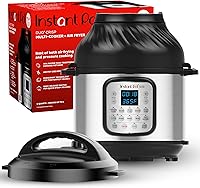
The Instant Pot Duo Crisp 8 Qt 11-in-1 is a combined electric pressure cooker and air fryer. It has pressure cook, slow cook, sauté, steam, sterilize, warm and rice functions, plus air fry, roast, bake and dehydrate modes.
The Duo Crisp includes separate pressure-cooking and air-frying lids, an air fryer basket, a broil and dehydrator tray, a steam rack and a stainless steel inner pot. Its air-fry range is 70 to 450°F, and its 8-quart capacity suits batch cooking for up to 8 servings.
You can use the pressure function to cook chicken with moisture, then use the air-fry lid to brown the outside. That workflow is different from pressure frying, but it may suit readers who want one appliance for both tender cooking and crisp finishing.
Our best pressure cooker and air fryer guide compares this type of combination appliance. For a closer look at the Duo Crisp format, read our Instant Pot Duo Crisp air fryer reviews.
What equipment do you need for true pressure-fried chicken?
True pressure-fried chicken needs a pressure fryer built for hot oil. Look for pressure-frying instructions, a compatible lid and basket, pressure and temperature controls, and safety systems designed for that appliance.
Those instructions are the clearest sign you have the right machine. If the manual does not describe pressure frying with oil, the appliance is not made for that job.
A pressure fryer is not simply a pressure cooker with more oil. Its vessel, lid, seal, heating system and pressure-release process must all work together for frying.
A basket holds the chicken below the oil level, while the lid and seal are shaped and rated for frying conditions. Each part helps keep oil and pressure contained.
Use only the oil type, food load and operating steps approved for that machine. Exceeding those limits can affect pressure and temperature control.
Set-up needs care before chicken goes in. Oil level, basket position and lid seating must match the manual, and the machine needs stable placement on a suitable surface.
Temperature control matters during cooking. Adding cold or wet chicken can drop the temperature, and the machine is designed to respond within its approved range.
Pressure release must also be planned. A pressure fryer releases in a way designed for hot oil, which differs greatly from releasing steam from a household cooker.
Commercial models can be large, expensive and demanding to clean. They suit restaurants or a dedicated setup, but are usually excessive for occasional home dinners.
Cleaning is more involved than wiping a pot after pressure cooking. Oil coats the vessel, lid and basket, and those parts need proper washing and inspection after each use.
For home cooking, an air fryer is easier to place and use. It needs counter space and a basket, but no deep oil bath or pressure-frying set-up.
A pressure cooker with an air-fry lid gives more modes, but still does not pressure-fry chicken. You can pressure-cook for tenderness and air fry for crispness, yet the methods stay separate.
That combination suits cooks who also make soups, rice and steamed dishes. If chicken is the only goal, a focused air fryer may be simpler.
Choose equipment that matches your kitchen and habits. True pressure frying needs dedicated kit, while crisp chicken at home usually does not.
How should you prepare chicken in a pressure cooker and air fryer?
Cook the chicken with the pressure function first, then crisp it with the air-fry function. Keep the two stages separate and use the correct lid for each mode.
Start with the pressure cooker's instructions for liquid, loading and pressure release. Once the chicken is cooked, follow the air-frying instructions for the basket, temperature and cooking time.
Avoid crowding the basket. Space around the chicken helps hot air reach more of the surface, while excess moisture can soften the coating.
The Duo Crisp's air fryer basket and separate lids support this two-stage approach. Before buying extra equipment, check which parts match your model.
Our guide to best Ninja Foodi pressure cooker accessories explains why model-specific fit matters.
For wings that are air fried from raw or precooked, see how long to air fry chicken wings for. The cooking time depends on the appliance, size and starting temperature, so use the appliance instructions and confirm the chicken reaches a safe internal temperature.
Does the inner pot fry chicken?
An inner cooking pot holds food during pressure cooking, but it is not a pressure fryer. It may support sautéing or pressure cooking when it matches the appliance, but the pot alone does not provide a safe pressure-frying system.
The Instant Pot Stainless Steel Inner Cooking Pot is a 6-quart stainless steel accessory with handles and a polished surface. It is made from food-grade 304 stainless steel, has a flat base for even heat distribution and is dishwasher safe.
This inner pot is designed for the 6-quart Pro 60, Pro Plus, Pro Max and Duo Evo Plus 60 pressure cookers. Check your exact model before ordering because an inner pot that fits one Instant Pot family may not fit another.
It can be useful for cooking chicken with pressure or sautéing ingredients, but it does not turn a compatible pressure cooker into a pressure fryer. The appliance, lid and safety system still determine which cooking methods are allowed.
If you need replacement parts for an older Presto model, see Presto pressure cooker parts 409A before choosing an accessory.
Pressure fryer, air fryer or pressure cooker: which should you choose?
Choose a pressure fryer if you specifically want chicken fried in hot oil under pressure and have equipment designed for that purpose. Choose an air fryer if you want crisp chicken with little or no oil and a simpler home setup.
Choose a pressure cooker and air fryer combination if you want to pressure-cook chicken first and crisp it afterward. The Instant Pot Duo Crisp offers both modes, while the Instant Pot VORTEX Plus focuses on air frying and related dry-heat functions.
Think about your normal meals, not just chicken. A combination suits soups, rice, steamed foods and roasted dishes, while a focused air fryer suits crisp sides and reheating.
Capacity matters in daily use. A larger cooker suits families and batch cooking, while a smaller air fryer suits a couple or small household.
Counter space is a real trade off. A combination takes more room for two lids and accessories, while a focused air fryer has a smaller footprint for one main job.
A replacement inner pot helps maintain a compatible pressure cooker, but it is an accessory rather than a frying appliance. It supports the cooker you own and does not change its approved uses.
Use a replacement pot only when it matches your exact model. Check the model name and size before ordering, because fit can vary across Instant Pot ranges.
An inner pot can help with pressure cooking, sautéing or keeping a spare ready for batch meals. It still needs the correct lid and safety system from the cooker to work as intended.
The key rule is never pressure-fry with a household pressure cooker unless it is specifically designed and labeled for pressure frying. For a crisp finish at home, use an air fryer or a cooker with a separate air-fry function.
Pressure cooking, air frying and pressure frying are three different methods, even when one appliance offers more than one. Keeping that clear protects you and sets expectations.
For tender chicken with a crisp outside, pressure cook first and air fry second. Use the correct lid for each stage and let the chicken rest briefly so the coating can set.
For raw or precooked wings, air frying alone can work well. Space pieces in the basket and turn them where needed so hot air reaches all sides.
If you want true pressure-fried flavour, look for a dedicated pressure fryer and read its manual carefully. Follow its oil and load limits, and keep it in a suitable cooking area.
Most home cooks will find the air fryer route easier to live with. It gives crisp chicken with less oil, simpler set up and easier clean up, so choose the appliance that matches the meals you cook most often.
Frequently asked questions
Can a regular pressure cooker fry chicken?
No. A regular household pressure cooker is designed for moist cooking with liquid, not deep-frying with hot oil under pressure.
Use a purpose-built pressure fryer for true pressure-fried chicken, or use an air fryer for crisp chicken without pressure.
What is the best pressure cooker for frying chicken?
The best pressure cooker for frying chicken is a commercial or purpose-built pressure fryer with the required safety controls. Household models such as electric pressure cookers and multicookers are not substitutes for pressure-frying equipment.
Can you fry chicken in an Instant Pot?
You can brown chicken in an Instant Pot using a sauté function, but you should not deep-fry chicken under pressure in it. For a crisp finish, use an air fryer function or transfer the chicken to a separate fryer.
Is air frying the same as pressure frying?
No. Air frying circulates hot air around food with little or no oil, while pressure frying cooks food in hot oil inside specialized pressure-frying equipment.
The two methods produce different textures and require different appliances.