9 Best Electric Pressure Cooker Deals (November 2026)
The best electric pressure cookers on sale include the Cosori Pressure Cooker 6QT for ceramic nonstick cooking, the Instant Pot Duo 6 Qt 7-in-1 Electric for a simple stainless steel pot, and the Instant Pot Pro 6 Qt 10-in-1 Electric for sous vide and extra programs.
On this page (8 sections)
- The best electric pressure cookers on sale for every kitchen size
- How the best electric pressure cooker on sale picks were compared
- What size electric pressure cooker is best for your household?
- Stainless steel, ceramic or nonstick: which pot is best?
- How many functions and presets do you actually need?
- Is delay start worth it on a discounted cooker?
- How do safety features differ between models?
- Final verdict: which discounted electric pressure cooker should you buy?
The best electric pressure cooker on sale for most buyers is the Cosori Pressure Cooker 6QT, because it pairs a 6QT family size with a ceramic pot and a broad function list. You can also get strong value from the Instant Pot Duo if you prefer stainless steel and a simpler panel.
This guide compares 9 discounted electric cookers by capacity, pot material, presets and safety features. Our score weighs specs, features and buyer feedback against what you are shopping for.
Use our electric pressure cooker buying guide if you are new to pressure cooking. It explains pressure levels, steam release and pot sizes in plain terms.
Our picks at a glance
-
1
-
2
 Best for a simple stainless steel pot
Instant Pot Duo 6 Qt 7-in-1 Electric
9.4/10 our score
See it on Amazon -
3
 Best for sous vide and extra programs
Instant Pot Pro 6 Qt 10-in-1 Electric
9.4/10 our score
See it on Amazon
- 4
 Check it
COMFEE' 12-in-1 Electric Pressure Cooker
Best for delay start and accessories - 5
 Check it
DUMOS 16-in-1 Electric Pressure Cooker
Best for 16-in-1 presets on a 6QT size - 6
 Check it
Sweetcrispy 16-in-1 Electric Pressure Cooker 8QT
Best for common 8QT family meals - 7
 Check it
Midea 12-in-1 Electric Pressure Cooker
Best for stainless steel on a budget - 8
 Check it
NEWBULIG 10-In-1 Electric Pressure Cooker
Best for a small 3 quart kitchen - 9
 Check it
KINGBULL 8QT Electric Pressure Cooker
Best for 8QT one-pot family meals
The best electric pressure cookers on sale for every kitchen size
The Cosori leads for everyday 6QT cooking with a ceramic pot. The Instant Pot models lead for stainless steel cooking and simple controls.
The 8QT picks lead for large families and meal prep.
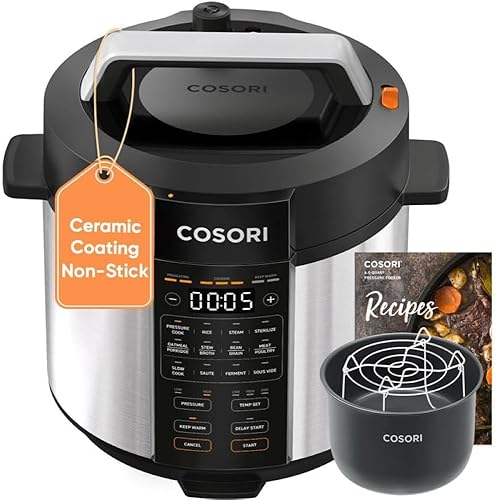
Cosori Pressure Cooker 6QT: Best for ceramic nonstick cooking
- 9-in-1 functions and 13-in-1 presets
- Ceramic coating inner pot
- 12 safety features
- Dishwasher-safe lid and accessories
- Steam rack and recipe book included
A 6QT mid-size pick with a ceramic pot for easy release and cleanup. It suits buyers who cook rice, beans, meat and slow-cooked meals in one appliance.
Pros
- Ceramic coating pot
- 12 safety features
- Fingerprint-resistant housing
- Includes steam rack
Cons
- 6QT may be tight for large batch cooking
- Ceramic coating needs care to avoid scratches
The Cosori suits households of 3 to 5 who cook rice, beans, stew and meat in one pot. Its 6QT capacity handles a family dinner without the footprint of an 8QT model.
The inner pot measures 8.66 inches across inside.
The ceramic coating pot releases food more easily than bare stainless steel. That helps with rice, oatmeal and porridge, where sticking is common.
Its 9-in-1 functions cover pressure cook, rice, steam, sterilize, stew, bean, meat, slow cook, saute, ferment, sous vide and keep warm. The 13 presets add one-touch shortcuts.
Cosori lists 12 safety features, including a double-layer anti-scalding lid and overheat protection. The angled steam release and Seal/Vent button placement keep venting away from your hand, and orange dots on lid and base show where to align for locking.
At 1100 watts and 11.9 pounds, it sits in the middle for power and weight here. The included steam rack and recipe book help with steamed vegetables and first recipes.
The trade-off is pot type. If you sear hard before pressure cooking, stainless steel may suit you better.
For easy release and cleanup, the ceramic pot is a clear plus for grains and porridge.
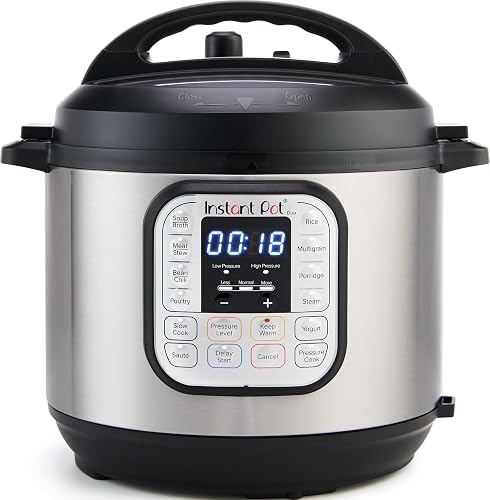
Instant Pot Duo 6 Qt 7-in-1 Electric: Best for a simple stainless steel pot
- 7-in-1 functions
- 13 one-touch smart programs
- 18/8 stainless steel pot with tri-ply bottom
- Easy-Release steam switch
- 1000 watts
The classic starter pick with a stainless steel pot for searing, sauteing and everyday pressure cooking. It suits buyers who want fewer functions and a proven simple layout.
Pros
- Stainless steel pot
- Simple 7-in-1 setup
- Tri-ply bottom for sauteing
- Easy steam release
Cons
- Fewer functions than 10-in-1 and 16-in-1 models
- No sous vide or baking function listed
The Instant Pot Duo suits first-time buyers who want a proven simple layout. Its 7-in-1 functions cover pressure cook, slow cook, saute, steam, rice, yogurt and keep warm, which covers most weeknight dinners.
The pot is 18/8 stainless steel with a tri-ply bottom. That bottom spreads heat well for searing and sauteing before you seal the lid, and it avoids coating wear over time.
The Easy-Release steam switch gives a clear way to vent steam fast or let pressure drop naturally. New cooks often learn faster with this simpler push button panel.
It has 13 one-touch smart programs for soups, cakes and everyday meals. The 1000 watt element is steady rather than fast.
At 14.6 pounds, it is heavier than several 6QT rivals here, despite a similar footprint at about 12.2 by 13.38 by 12.48 inches.
The trade-off is fewer extras. There is no sous vide or baking function here, and preheating is slower than the Pro model.
Choose it for simplicity and stainless steel, not for maximum functions.
Instant Pot Pro 6 Qt 10-in-1 Electric: Best for sous vide and extra programs
- 10-in-1 functions
- 28 one-touch options
- 1200 watts
- Extra sealing ring included
- Stainless steel steamer rack with handles
A step-up 6QT model with sous vide, baking and more one-touch programs. It suits cooks who want extra functions without moving to a larger size.
Pros
- 10-in-1 functions
- Sous vide and baking
- Extra sealing ring
- Faster preheat
Cons
- More complex control panel
- Same 6QT capacity as simpler models
The Instant Pot Pro suits cooks who want more functions in the same 6QT size. Its 10 functions add sous vide and baking to the core pressure, slow cook, saute, steam, rice and yogurt jobs.
The 1200-watt element preheats 20% faster than the Duo, according to Instant Pot. That helps when you want dinner started quickly on a weeknight.
It has 28 one-touch options, so you can pick a preset for grains, meals and desserts without setting time and pressure by hand. An extra sealing ring is included, which is useful when you cook savory and sweet dishes in the same week.
The stainless steel steamer rack has handles, which makes lifting hot vegetables out of the pot easier. The lid and inner pot are dishwasher safe for faster cleanup.
Easy grip inner pot handles and an auto-sealing safety lid lock add practical safety for daily lifting and closing. Overheat protection is also listed.
The trade-off is complexity. More presets mean more choices to sort through.
If you only need rice, soup and stew, the Duo may be the easier pick.
COMFEE' 12-in-1 Electric Pressure Cooker: Best for delay start and accessories
- 12-in-1 functions
- 14 programmable presets
- 24-hour delay timer
- 10 safety features
- 6 components including spoon, ladle and measuring cup
A 6QT model with a 24-hour delay timer and a full set of accessories in the box. It suits buyers who plan meals ahead and want rice, yogurt and steaming in one unit.
Pros
- 24-hour delay timer
- Many accessories included
- 14 presets
- 12-in-1 functions
Cons
- Nonstick pot rather than stainless steel
- Feature list overlaps heavily between presets and functions
The COMFEE' suits buyers who plan meals ahead with delay start. Its 24-hour delay timer lets you set rice or grains to start later in the day, which suits breakfast porridge and after work dinners.
The 6QT size fits most family meals, and the 12-in-1 functions cover pressure cooking, slow cooking, rice, steaming, saute, yogurt, cake, egg and warming.
It has 14 programmable presets for meat, broth, bean, oatmeal and more. The touch controls keep the panel flat for wiping.
Ten safety features include overheat protection, auto pressure release and a lid-safety lock. The nonstick pot helps food release and makes washing up faster after rice and steamed dishes.
The box includes six components, including a spoon, ladle, condensation cup, measuring cup, steam rack and power cord.
The trade-off is pot material. A nonstick pot is less suited to high-heat searing than stainless steel.
Choose this model for timer use and accessories, and choose stainless steel if searing is your main job.
DUMOS 16-in-1 Electric Pressure Cooker: Best for 16-in-1 presets on a 6QT size
- 16-in-1 functions
- 12 one-touch presets
- Ceramic inner pot
- 24-hour delay start
- Recipe guide included
A 6QT programmable model with 12 presets and delay start for weeknight planning. It suits households of 3 to 5 who want many presets without a 6QT footprint.
Pros
- 16-in-1 functions
- Ceramic inner pot
- Delay start up to 24 hours
- Recipe guide included
Cons
- 6QT limit for very large meals
- Preset count may be more than some cooks need
The DUMOS suits households of 3 to 5 who want many presets in a 6QT pot. Its 16-in-1 functions with 12 smart programs cover soup, steam, yogurt, rice and batch cooking in one unit.
Smart presets adjust time and pressure for each dish. That helps new cooks get consistent results without learning pressure cooking times first, and custom settings remain available for experienced cooks.
The ceramic inner pot resists sticking and scratching. The removable lid and sealing ring are dishwasher safe, which saves time after soups and stews, and the pot suits rice and porridge release.
Delay start up to 24 hours lets you schedule grains and other suitable foods. A lid indicator flashes if the lid is not properly secured, which helps prevent mistakes before cooking starts.
At 1000 watts and 11.9 pounds, it matches the middle of this group for power and weight. The included measuring cup, rice scoop and recipe guide cover basic serving and first use.
The trade-off is capacity. A 6QT pot is fine for most family meals, but very large whole chickens or big batch soups may need an 8QT model.
Pick DUMOS for preset variety at 6QT size.
Sweetcrispy 16-in-1 Electric Pressure Cooker 8QT: Best for common 8QT family meals
- 16-in-1 functions
- 12 preset programs
- 8QT ceramic pot
- 24-hour delay start
- Recipe book included
An 8QT pick for whole chicken, hearty soups and batch cooking. It suits larger households who want 16-in-1 functions with more room than a 6QT pot.
Pros
- 8QT capacity
- Ceramic pot resists scratches
- 24-hour delay start
- Recipe book included
Cons
- Larger counter footprint
- Heavier than 6QT models
The Sweetcrispy suits larger households that need an 8QT pot. Its 8-quart capacity handles whole chicken, hearty soups and meal prep for 3 to 5 people with room to spare for leftovers.
The 16-in-1 functions combine pressure cooking, slow cooking, rice cooking and steaming. Twelve preset programs adjust time and pressure for each dish, including a dedicated rice preset and a multigrain setting.
A 24-hour delay start lets you schedule rice and grains. Manual customization lets you change time or pressure when a recipe needs it, which helps with beans and tougher cuts.
The ceramic inner pot resists scratches and helps food release. The lid and sealing ring are dishwasher safe, and the outer body wipes clean.
At 1200 watts, it has strong power for bringing a large volume of liquid up to pressure. The recipe book includes soup, yogurt and meat recipes for first use.
The trade-off is size and weight. At 14.4 lb, this cooker needs counter space and storage planning, and it fills more cabinet height at 13.78 inches tall.
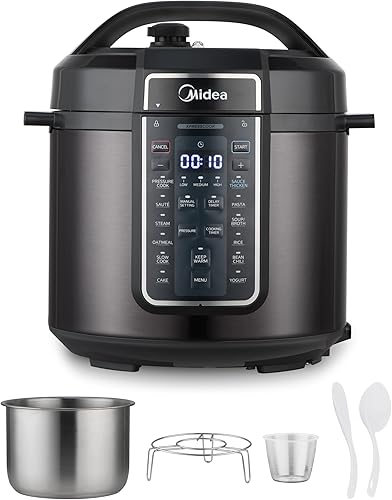
Midea 12-in-1 Electric Pressure Cooker: Best for stainless steel on a budget
- 12-in-1 functions
- 12 presets
- Stainless steel inner pot
- 9-in-1 safety protection
- 1000 watts
A 6QT stainless steel model with 12 presets for rice, soup, beans and yogurt. It suits buyers who prefer stainless steel but want a lower-cost feature set.
Pros
- Stainless steel pot
- 12-in-1 functions
- One-touch cooking
- Dishwasher-safe pot and lid
Cons
- No delay start listed
- Fewer presets than 16-in-1 models
The Midea suits buyers who want stainless steel at a lower feature tier. Its 6-quart stainless steel pot cooks evenly and keeps food flavors clean for rice, soup and beans.
The 12-in-1 functions cover pressure cook, saute, steam, slow cook, oatmeal, soup, rice, bean chili and yogurt. One-touch cooking helps novice cooks start common meals with less setup.
The large 6QT capacity makes it easy to cook enough food for a family of 6. The REALSAFE system lists 9-in-1 safety protection, including pressure limit and over-temperature response.
One-pot cooking is up to 70% faster than traditional methods, according to Midea. That claim applies to pressure cooking compared with slow methods, not to every dish.
The touchscreen display gives a flat panel for easy wiping. The dishwasher safe pot and lid reduce hand washing after weeknight meals.
At 1000 watts, preheating will be slower than 1200 watt models here, especially for full pots of soup. The trade-off is fewer extras, with no delay start listed.
NEWBULIG 10-In-1 Electric Pressure Cooker: Best for a small 3 quart kitchen
- 10-in-1 functions
- 3 quart capacity
- Ceramic nonstick inner pot
- 24-hour delay start
- 700 watts
A compact 3QT model for 1 to 2 people, side dishes and small-batch rice. It suits dorms, small kitchens and buyers who do not need family-size capacity.
Pros
- Compact 3QT size
- Lightweight at 7.9 lb
- 24-hour delay start
- Ceramic pot for easy cleanup
Cons
- Too small for family batch cooking
- 700 watts is slower than larger models
The NEWBULIG suits 1 to 2 people and small kitchens. Its 3-quart capacity is right for rice for two, a small stew or steamed vegetables without wasting space.
The 10-in-1 menu includes rice, meat, stew, yogurt, canning and steam. One-touch controls make small daily meals faster to start, and the digital push button panel is simple to learn.
The ceramic nonstick inner pot helps food release and quick cleanup. The stainless steel outer shell resists scratches in daily use.
A 24-hour delay start and keep-warm mode let you plan a small meal ahead. That combination suits oatmeal, rice and grains that can wait before cooking begins.
At 7.9 lb and 700 watts, it is lighter and slower than the 6QT and 8QT models here. The footprint at about 10.43 by 11.02 by 11.06 inches is the smallest in this group, so it fits under low cabinets more easily.
The trade-off is capacity. This cooker cannot handle a family batch or a large whole chicken.
Choose it for compact size and small portions.
KINGBULL 8QT Electric Pressure Cooker: Best for 8QT one-pot family meals
- 8QT capacity
- 12-in-1 functions
- 12 one-touch programs
- Nonstick inner pot
- 24-hour delay start
An 8QT model with 12 one-touch programs for soup, stew, rice and poultry. It suits larger families and meal prep who want an LED display and adjustable time and pressure.
Pros
- 8QT capacity for up to 8 people
- 12 one-touch programs
- Adjustable time and pressure
- LED display
Cons
- Nonstick pot rather than stainless steel
- Large footprint for small counters
The KINGBULL suits larger families and meal prep cooks. Its 8QT capacity cooks for up to 8 people, with room for soup, stew, rice, beans and poultry in one batch.
The 12-in-1 functions replace a pressure cooker, slow cooker, rice cooker, steamer, saute pan, yogurt maker and warmer. Twelve one-touch programs cover soup, meat, bean, poultry, rice, multigrain, porridge, steam, yogurt and canning.
The LED display shows the timer, pressure indicators and function keys. You can adjust cooking time, pressure level and mode to match different recipes and textures.
A 24-hour delay start helps you plan dinner or breakfast ahead. The nonstick inner pot helps food release after rice, soup and stew.
At 1200 watts and 14.3 pounds, it has strong power for a large pot but needs firm counter space. The stainless steel housing wipes clean after splashes.
The trade-off is pot material and footprint. A nonstick pot is easier to clean but less suited to searing than stainless steel.
The large body also needs more counter and cabinet space than a 6QT model.
How the best electric pressure cooker on sale picks were compared
We compared capacity, pot material, wattage, presets, delay start, safety features and included accessories for each model. We checked which size fits your household before counting extra functions.
We gave higher scores to models that match the most common search: a 6QT cooker for everyday family meals. That is why the Cosori, Instant Pot Duo and Instant Pot Pro rank at the top.
We scored 8QT models for large households and batch cooking. We scored the 3QT model for small kitchens and 1 to 2 people, not for family meals.
Pot material mattered in scoring. Stainless steel scored well for searing and durability.
Ceramic and nonstick scored well for easy release and cleanup.
Wattage also mattered, since 1200 watt models bring large pots to pressure faster than 700 watt and 1000 watt models. Delay start mattered only for dry foods, so we did not reward it as a safety feature.
How scores map to real use
A high score here means the cooker matches common needs at a clear size and pot type. It does not mean a model with more functions is better for every kitchen.
If you want a stainless steel pot, read our guide to the best electric pressure cooker with stainless steel pot. If you need a cooker for a cafe or catered kitchen, read our commercial electric pressure cooker guide.
What size electric pressure cooker is best for your household?
A 6QT cooker is best for most households of 3 to 5. It cooks rice, soup, stew and a whole chicken with room for leftovers.
Capacity affects more than servings. A larger pot takes longer to pressurize and uses more energy for small meals.
A smaller pot cooks rice faster but limits batch size.
6QT for everyday family meals
Choose 6QT if you cook for 3 to 5 people most nights. The Cosori, Instant Pot Duo, Instant Pot Pro, COMFEE', DUMOS and Midea all sit in this size.
This size also stores more easily than 8QT models in most cabinets. It is the safest middle choice if you are unsure between sizes.
8QT for meal prep and large families
Choose 8QT if you cook for 6 to 8 people or prep several meals at once. The Sweetcrispy and KINGBULL give you more room for soups, stews and whole birds.
An 8QT pot also helps when you want leftovers for lunches. The trade-off is counter space, storage height and longer preheat for small portions.
3QT for small kitchens and 1 to 2 people
Choose 3QT if you live alone or cook side dishes. The NEWBULIG fits small counters and uses less energy for small portions.
A 3QT pot is also easier to lift and store in a rental or dorm. It will not suit a whole chicken or a large batch of soup for guests.
Stainless steel, ceramic or nonstick: which pot is best?
Stainless steel is best for searing, sauteing and long-term durability. Ceramic and nonstick are best for easy food release and fast cleanup.
Pot choice changes how you cook, not just how you clean. Stainless steel lets you brown meat in the same pot before pressure cooking.
Ceramic helps rice and porridge release without sticking.
Stainless steel for searing and browning
Pick stainless steel if you brown meat or saute vegetables before pressure cooking. The Instant Pot Duo, Instant Pot Pro and Midea use stainless steel pots.
Stainless steel also resists scratches from utensils and harsh scrubbing. That durability matters if you cook daily and keep one pot for years.
Ceramic for easy release with a durable feel
Pick ceramic if you cook rice, oatmeal and porridge often. The Cosori, DUMOS, Sweetcrispy and NEWBULIG use ceramic pots that resist sticking.
Ceramic coatings still need care with metal utensils and sudden temperature changes. Gentle cleaning helps the coating last longer.
Nonstick for fast cleanup
Pick nonstick if cleanup matters most and you do less high-heat searing. The COMFEE' and KINGBULL use nonstick pots for easy release.
Nonstick pots work well for rice, steamed dishes and soups. They are less suited to hard searing, so plan your recipes around that limit.
How many functions and presets do you actually need?
Most cooks need pressure cook, rice, saute, steam, slow cook and keep warm. Extra functions add value only when you use them weekly.
Function counts can overlap, since a preset is not always a separate cooking method. A 16-in-1 label may list similar jobs under different names.
Core functions for weeknight cooking
Start with pressure cook, rice, saute, steam and slow cook. The Instant Pot Duo covers these core jobs with a simple 7-in-1 layout.
Keep warm and steam are also core for many homes. Those jobs help with leftovers, vegetables and reheating without a microwave.
Extra functions like sous vide, yogurt and baking
Choose 10-in-1 or 16-in-1 models if you make yogurt, sous vide or baked dishes regularly. The Instant Pot Pro adds sous vide and baking at 6QT size.
Sous vide needs stable low temperatures over time, so check that the function is listed clearly. Baking and canning also need specific recipes and accessories.
Presets for hands-off results
Choose presets if you want the cooker to set time and pressure for you. The DUMOS and Sweetcrispy use 12 presets to simplify soup, rice and yogurt.
Presets help new cooks, but they can limit control for experienced cooks. Look for manual adjustment if you like to fine tune texture.
Is delay start worth it on a discounted cooker?
Delay start is worth it for rice, grains and other dry foods you can set in the morning. It is not a safe way to leave perishable foods at room temperature.
Delay start differs from keep warm, since keep warm starts after cooking finishes. Delay start waits before cooking begins, which changes food safety rules.
Foods that work with delay start
Rice, grains and beans can wait in the pot before cooking starts. The COMFEE', DUMOS, Sweetcrispy, NEWBULIG and KINGBULL offer delay start up to 24 hours.
Oatmeal and breakfast grains also suit a scheduled start in many recipes. Check your manual for liquid ratios, since grains absorb water over time.
Foods to avoid with delay start
Meat, dairy and seafood should not sit uncooked for long periods. Follow your manual for safe times, and use delay start mainly for dry goods and breakfast grains.
Raw meat in a sealed pot still needs refrigeration if the wait is long. A timer does not make perishable food safe during a long delay.
How do safety features differ between models?
Safety features differ in lid locks, overheat protection, dry-boil monitoring and steam release design. More listed features do not always mean a safer cooker for your kitchen.
Steam release design matters in daily use, since you will vent steam often. A clear switch and a safe vent direction reduce burns and splashes.
Lid locks and steam release
A lid lock and clear steam release help you vent safely. The Cosori uses an angled steam release, and the Instant Pot Pro uses an auto-sealing safety lid lock.
The Cosori also uses orange dots to show lid alignment, which helps with closing. The DUMOS uses a lid indicator that flashes if the lid is not secured.
Overheat and dry-boil protection
Overheat protection helps when liquid runs low. The DUMOS and Sweetcrispy list dry-boil monitoring and overheat protection in their safety systems.
The Cosori lists 12 safety features, while COMFEE' lists 10 and Midea lists a 9-in-1 system. Counts differ by brand, so compare the specific protections, not just the total.
What to check before you buy
Check that the lid indicator, sealing ring and release switch are easy to use. Our best pressure cooker on sale roundup covers more models if you want a wider search.
For accessories that fit these cookers, see our guide to the best electric pressure cooker accessories. If you also want a grill for searing, compare our best smokeless indoor grills on sale picks.
If slow cooking is your main job, compare a dedicated slow cooker electric model before you choose a multi cooker.
Final verdict: which discounted electric pressure cooker should you buy?
Buy the Cosori Pressure Cooker 6QT if you want the best all-around deal, with a ceramic pot and broad functions at 6QT size. It is the top pick for most households in this best electric pressure cooker on sale guide.
Buy the Instant Pot Duo if you want stainless steel and simple controls. Buy the Instant Pot Pro if you want sous vide and baking in the same 6QT size.
Buy the Sweetcrispy or KINGBULL if you need 8QT capacity for large families. Buy the DUMOS if you want many presets without moving to 8QT size.
Buy the COMFEE' if delay start and included accessories matter most. Buy the Midea if you want stainless steel in a simpler 6QT model.
Buy the NEWBULIG only if you cook for 1 to 2 people in a small kitchen. Its 3QT size is a strength only for small portions.
Start with capacity and pot material, then add functions you will use weekly. That order will help you pick the right cooker without paying for features you do not need.
Our top 3 picks at a glance
-
1
-
2
Best for a simple stainless steel pot
Instant Pot Duo 6 Qt 7-in-1 Electric
9.4/10 our score
See it on Amazon -
3
Best for sous vide and extra programs
Instant Pot Pro 6 Qt 10-in-1 Electric
9.4/10 our score
See it on Amazon
Frequently asked questions
What size electric pressure cooker should I buy?
A 6QT cooker suits most households of 3 to 5 for rice, soup, stew and a whole chicken. Choose 8QT for families of 6 or more, meal prep and batch cooking.
Choose 3QT for 1 to 2 people or side dishes.
Is stainless steel or nonstick better for the inner pot?
Stainless steel suits searing and sauteing and resists scratches. Ceramic and nonstick pots release food more easily and clean up faster.
Pick based on how you cook most often, since both types work for pressure cooking.
How many functions do I really need?
Most cooks use pressure cook, rice, saute, steam, slow cook and keep warm. Extra functions like sous vide, yogurt and baking add value only if you will use them weekly.
A simple 7-in-1 model can be easier to learn.
Can I use delay start safely with all foods?
Delay start up to 24 hours suits dry foods like rice and grains. Perishable foods such as meat and dairy should not sit at room temperature for long periods.
Check your manual for food-specific guidance before scheduling a delayed start.


