Air Fryer Liners With or Without Holes: Which to Choose? (October 2026)
Choose liners with holes for airflow and drainage; choose solid liners to catch more crumbs and drips. Match the liner to your food and basket, and keep it weighed down by food during cooking.
On this page (7 sections)
- Air fryer liners with or without holes: what is the difference?
- Which liner gives food better airflow?
- Which liner helps food crisp and brown?
- Which liner catches grease and crumbs?
- Can you use parchment liners safely?
- How do you choose between perforated and solid liners?
- Which air fryer liner should you choose?
Choose perforated air fryer liners when airflow and drainage matter most, and solid liners when catching crumbs and drips matters more. For air fryer liners with or without holes, the best choice depends on the food, cleanup you can accept and how the liner fits your basket.
A perforated sheet lets more air reach food from below and gives grease a route into the basket. A solid sheet catches more residue but can reduce direct airflow under the food.
Neither shape is right for every meal. Keep a liner flat and weighed down by food, with no loose edge near the heating element.

Air fryer liners with or without holes: what is the difference?
Perforated liners have openings for air and drips; solid liners cover the basket base. That changes how heat reaches the underside of food and where grease and crumbs collect.
An air fryer moves hot air around the food, so an unblocked basket helps the air circulate. For a Philips model’s steam option, see Philips air fryer steaming.
A solid liner creates a surface between the food and the basket, while holes allow some airflow and drainage through that surface.
A liner never replaces the appliance's cooking instructions. Keep water away from the appliance, and see whether air fryers are waterproof for more on moisture and air fryer care.
Follow the temperature limits and safety guidance for both the liner and the air fryer.
What do holes change in an air fryer liner?
Holes let hot air reach more of the food's underside and let some fat drain away. That can make perforated liners a practical choice for foods where browning and grease runoff are priorities.
The openings also let small crumbs and seasoning fall into the basket. If keeping the basket clean matters more than drainage, a solid liner may be easier to manage.
Which liner gives food better airflow?
A perforated liner usually leaves more of the basket's airflow path open than a solid liner. It still matters how large the holes are, how much of the basket they cover and how closely food is packed.
Air fryers cook by circulating hot air around food. Learn how an air fryer works to see why space around the food and an open route through the basket matter.
A sheet with holes doesn't guarantee crisp food. For another moisture-related case, see soggy air fryer bread dough.
Wet coatings, thick pieces and a crowded basket can still slow browning, so leave space between pieces and turn food when the recipe calls for it.
Do solid liners block air completely?
No. Air still moves above and around food in a solid liner, but the liner covers the basket surface beneath it.
That can reduce airflow directly under food and can keep drips from draining into the basket.
Solid liners are useful for saucy foods, crumbly coatings and meals that leave a mess. For basket cleanup, see air fryer scraper cleaning.
If the bottom needs more browning, use a perforated liner or cook directly on the clean basket when the appliance manual allows it.
Which liner helps food crisp and brown?
Choose perforated liners for better access to heat beneath food, then leave room for air to move around each piece. A liner can't make crowded or wet food crisp on its own.
For one example, see foil-wrapped air fryer sweet potatoes.
Perforations can help when the underside needs direct heat or greasy food benefits from drainage. Check the food during cooking and adjust the time or position based on your recipe and appliance instructions.
A solid base may suit soft foods that could fall through the basket or dishes that need to hold juices. It can also make a barrier between food and the basket, which may mean a softer underside.
Are holes always better for crisping?
No. The food matters as much as the liner.
A solid liner may be more convenient for sticky or delicate foods, while a perforated surface can suit fries, vegetables or other foods that benefit from air reaching the bottom.
For crisp results, avoid covering more of the basket than necessary. Choose a liner that fits without folding up the sides, and don't layer food so tightly that hot air can't pass between pieces.
Which liner catches grease and crumbs?
A solid liner generally catches more grease, crumbs and sauce than a perforated one. The trade-off is that less residue drains through to the basket and airflow under food may be reduced.
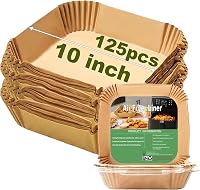
A bowl-shaped liner can also cover the basket sides and help catch splashes. The mutvle liner is 10 inches wide, with a 9-inch bottom and 1.8-inch sides, so measure your basket bottom and available height before choosing it.
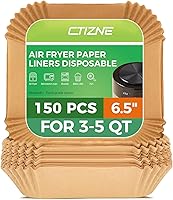
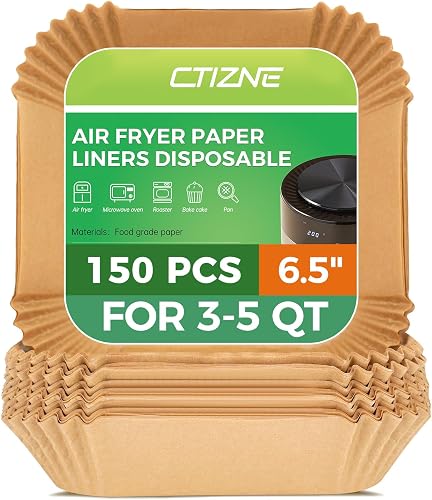
For a smaller basket, the ctizne liner measures 6.5 inches square. Its bowl shape can catch food residue, but check how it fits your basket.
If cleanup is the deciding factor, compare the fit and shape before buying. Our guide to choosing the right air fryer liner size explains what to measure.
Can you use parchment liners safely?
Use a cooking liner only when it fits the basket and stays held down by food. A loose sheet can move in the hot air and reach the heating element.
Don't preheat with an empty paper liner. Place it in the basket with enough food to weigh it down, and keep its edges below the basket rim.
Follow your appliance manual if it restricts liners or specifies how to use them. For a step-by-step setup, see how to line an air fryer basket.
When is a solid liner a poor fit?
A solid liner may be a poor fit when the food needs direct browning underneath or when the liner covers much of the basket's open area. Choose a perforated sheet, reduce the liner size or cook without one if your manual permits.
For Ninja baskets, follow the model-specific steps in how to use air fryer liners in a Ninja. Don't assume every basket shape or liner size works across models.
How do you choose between perforated and solid liners?
Choose by the cooking result and mess you want to manage. Favor holes for airflow and drainage, and a solid base for catching residue.
| Your priority | Better fit | Why |
|---|---|---|
| Browning underneath | Perforated | More air and heat can reach the bottom |
| Draining grease | Perforated | Some grease can pass through into the basket |
| Catching crumbs | Solid | The base catches more small pieces |
| Keeping sauce contained | Solid | A continuous surface holds more drips |
| Lifting delicate food | Solid bowl shape | The raised sides can help hold food together |
Match the liner dimensions to the basket's flat base, not just the air fryer's advertised capacity. For another accessory that needs a precise fit, see air fryer skewer sizing.
A liner that's too wide can fold, while one that's too small can expose areas you wanted to protect.
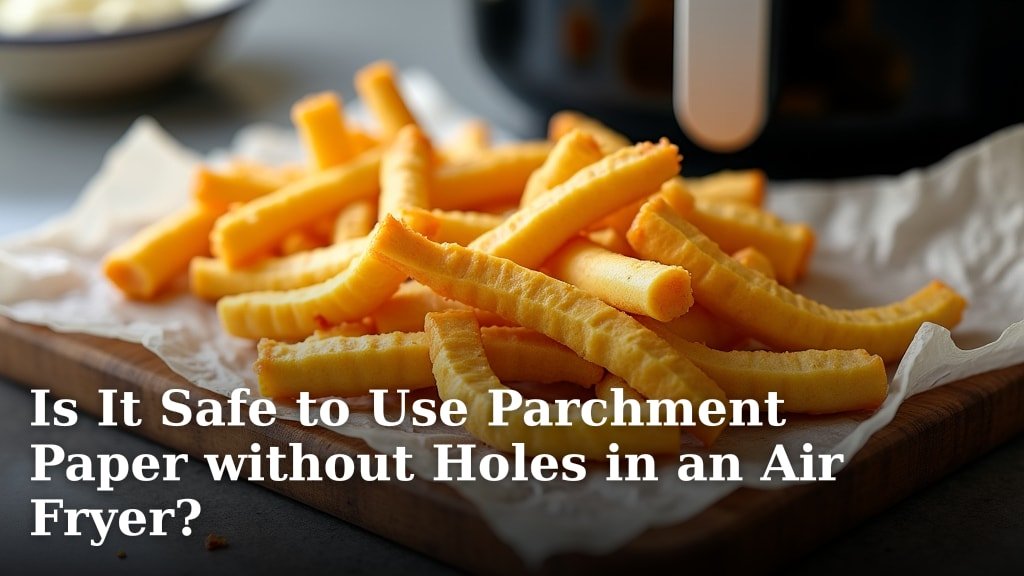
For more options, browse air fryer basket liners. If you're still weighing the safety of a sheet without holes, review whether parchment without holes is safe in an air fryer.
Which air fryer liner should you choose?
Pick perforated liners for airflow and drainage; pick solid liners for catching food mess. Choose a size that lies flat in your basket and stays anchored under food.
The mutvle liner suits a larger basket, while the ctizne option is a 6.5-inch square liner. Neither is perforated, so consider a purpose-made perforated liner if browning below the food is your main goal.
The AceSubli metal blanks are for sublimation crafts, not cooking or air fryer use. Don't substitute craft materials for a food liner.
Frequently asked questions
Do air fryer liners need holes?
No. Solid liners can catch crumbs and drips, while perforated liners let more air and grease pass through.
Choose based on the food and result you want, and follow your air fryer manual.
Keep a paper liner weighted down by food so it can't lift toward the heating element.
Do liners with holes make food crispier?
Perforations let more hot air reach the underside of food than a solid sheet can. That can help with browning, but the result also depends on spacing, food moisture and the appliance.
Avoid crowding the basket, since packed food blocks airflow even when the liner has holes.
Can you use a solid liner in an air fryer?
A solid liner can be used if its material and temperature limit suit your appliance and it fits without blocking too much of the basket. Use it only with food on top, never during preheating by itself.
Check your manual for liner guidance and keep the heating element clear.
Are perforated liners better for greasy food?
Perforated liners let some grease drain through to the basket, which may help food avoid sitting in pooled fat. They catch fewer drips than solid liners, so expect more cleanup below.
For less mess, choose a solid liner and accept that the food may sit closer to its drippings.
Can you cut holes in parchment for an air fryer?
You can cut holes in parchment made for cooking, but keep the sheet smaller than the basket and make sure food holds it down. Don't use it loose or during preheating.
For guidance on a solid sheet, read our advice on safe use of parchment without holes.