
What Is the Difference Between an Air Fryer and a Deep Fryer?
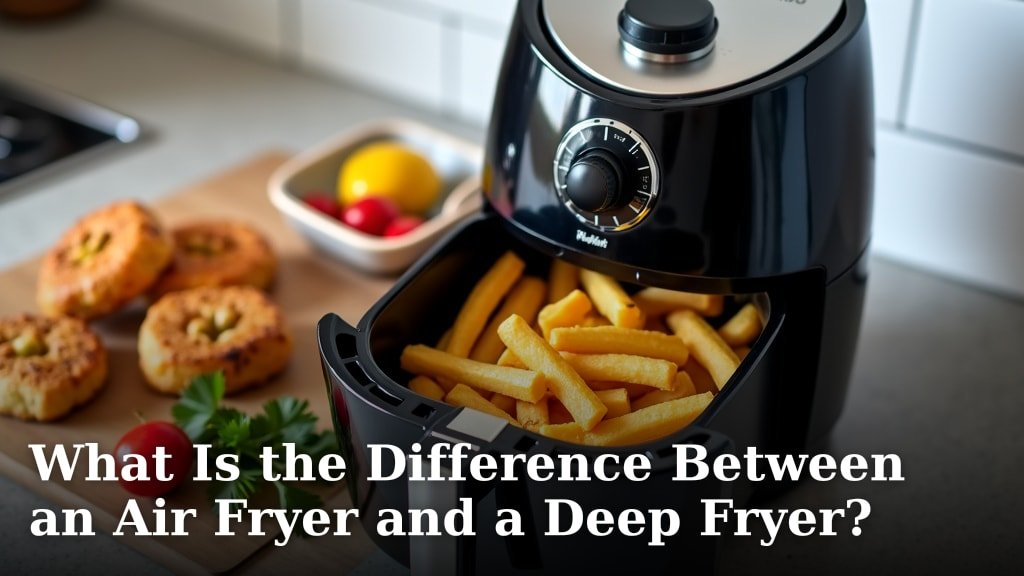
The main difference between an air fryer and a deep fryer is how they cook food: an air fryer uses circulating hot air to create a crispy texture with little to no oil, while a deep fryer submerges food in hot oil for cooking.
You want to cook delicious, crispy food, but which kitchen gadget is right for you? We understand the confusion; both promise amazing results. We found that choosing depends on your cooking style and how much oil you want to use.
- Air fryers use hot air; deep fryers use hot oil.
- Air fryers are generally healthier due to less oil.
- Deep fryers offer a classic, rich fried taste.
- Cleaning an air fryer is often easier.
- Each has pros and cons for different foods.
Let’s walk through everything you need to know to decide which fryer best fits your kitchen and your cravings.
Understanding the Core Differences Between Fryers
You’re trying to figure out if an air fryer or a deep fryer is best for your kitchen. The main distinction comes down to how they cook and the amount of oil they use.
How Each Fryer Works: A Culinary Contrast
Let’s peel back the layers and see what makes these two kitchen gadgets tick. It’s all about the cooking method.
The Air Fryer: Hot Air’s Crispy Magic
An air fryer works a lot like a small convection oven. It has a heating element and a powerful fan. This fan circulates superheated air around your food at high speed. This process creates a crispy, golden-brown exterior, much like traditional frying. Think of it as a mini wind tunnel for your food. We found this method relies on the Maillard reaction for browning, just like baking (Cook’s Illustrated).
You typically use very little oil with an air fryer, often just a tablespoon or two, or even a light spray. This tiny bit of oil helps with browning and flavor. The hot air cooks the food evenly and quickly. Many people love the convenience and speed.
The Deep Fryer: Submersion in Sizzling Oil
A deep fryer, on the other hand, is a much simpler concept. It heats a large reservoir of cooking oil to a high temperature. You then completely submerge your food in this hot oil. The oil cooks the food quickly and creates that classic fried texture and flavor. This method relies on hot oil to transfer heat efficiently. We found that the hot oil also helps to prevent water from escaping too quickly, keeping the food moist inside.
This technique gives food its signature golden-brown crust and moist interior. However, it requires a significant amount of oil, usually several cups or even quarts. This oil needs to be maintained at a specific temperature. The amount of oil used is a key difference.
Health Considerations: Oil Intake and Nutrition
When you’re thinking about your diet, the health aspect often comes up. How do these two fryers stack up?
Air Fryers: The Lighter Option
Because air fryers use so little oil, they can significantly reduce the fat content of your meals. Many studies suggest that air frying can cut calorie and fat intake by 70-80% compared to deep frying (USDA). This means you can enjoy many of your favorite “fried” foods with less guilt. You’re getting a similar texture without the saturated fat. We found that this makes air fryers a popular choice for those watching their weight or heart health.
It’s important to remember that “healthier” doesn’t mean “healthy” if you’re air frying French fries every day. But it’s generally a better alternative to deep frying for many foods. It allows you to crisp up foods without drenching them in oil.
Deep Fryers: Indulgent and Rich
Deep-fried foods are famous for their rich taste and satisfying texture. This comes from the high fat content absorbed during the frying process. While delicious, regularly consuming deep-fried foods can contribute to higher calorie and fat intake. Many health organizations, like the American Heart Association, recommend limiting deep-fried foods to maintain a healthy diet. The oil absorption is unavoidable with this method.
This doesn’t mean deep-fried foods are “bad,” but they are an indulgence. You should consume them in moderation. When you choose deep frying, you’re opting for a specific taste and texture that comes with a higher oil content. It’s a trade-off for flavor.
Taste and Texture: The Culinary Experience
Ultimately, it often comes down to how your food tastes and feels in your mouth. Do you prefer classic fried food or a close imitation?
Air Fryer Results: Crispy, But Different
Air-fried foods are wonderfully crispy on the outside and tender on the inside. They often mimic the texture of oven-baked items that have been crisped up. You’ll get a great crunch, especially with things like chicken wings or frozen French fries. However, the taste profile is often described as closer to oven-baked than deep-fried. It might lack the specific richness that comes from oil immersion. We found that some people miss the “fried” flavor that only comes from oil.
For many, this difference is minor, and the convenience and health benefits outweigh it. You can achieve a very satisfying crisp. If you’re looking for a good crunch with less oil, the air fryer delivers. It’s a great compromise.
Deep Fryer Results: The Authentic Fried Taste
Deep frying creates that unmistakable, classic fried taste and texture. The food is often incredibly juicy inside with a truly golden, shatteringly crisp exterior. The oil contributes a unique richness and a certain “mouthfeel” that’s hard to replicate. Think of a perfect doughnut or a piece of southern-fried chicken; that’s the deep-fried standard. The taste is deeply ingrained in our culinary memories.
If you’re craving that traditional, indulgent fried food experience, a deep fryer is the way to go. There’s no real substitute for the way oil transforms food. It provides a distinctive flavor profile that many love.
Ease of Use, Cleaning, and Maintenance
Beyond how food tastes, consider the practical side: how easy are these machines to live with?
Air Fryer Convenience and Cleanup
Air fryers are generally very user-friendly. You typically preheat them for a few minutes, add your food, and set the timer. Many models have presets for common foods. Cleanup is often quite simple. The basket and drawer are usually non-stick and often dishwasher-safe. Because you use so little oil, there’s less mess to deal with. You won’t have large quantities of oil to dispose of. We found that this is a big selling point for busy households.
The biggest cleanup task is usually wiping down the inside of the unit and cleaning the basket. This makes them a great option for everyday use. You can quickly whip up a meal without a huge mess.
Deep Fryer Process and Maintenance
Deep fryers require a bit more attention. You need to fill them with oil, heat it to the correct temperature, and then carefully add food. Oil management is a key part of deep frying. After cooking, you have to deal with a large volume of hot oil. This means waiting for it to cool, filtering it, and storing it properly, or disposing of it. This can be a messy and time-consuming process. We found that many people find the oil disposal to be the most challenging part.
Cleaning a deep fryer involves draining the oil and cleaning the reservoir, heating element, and basket. It’s a more involved cleanup than an air fryer. If you deep fry often, you’ll need to change your oil regularly for best results and safety. This adds to the cost and effort.
Cost and Space: What Fits Your Budget and Kitchen?
Both initial cost and how much space they take up are important factors for any kitchen appliance.
Air Fryer Investment and Footprint
Air fryers vary widely in price, from budget-friendly options around $50 to more advanced models over $200. There’s a wide range to choose from. They come in various sizes, from compact models for one or two people to larger, oven-style units. You can usually find one to fit your counter space. They are generally more affordable upfront than a quality deep fryer. We found that the long-term cost is also lower due to less oil usage.
Consider how much counter space you have. Some air fryers can be bulky. But many are designed to be relatively compact. You’ll also save money on cooking oil over time. This makes them a cost-effective choice for many.
Deep Fryer Costs and Kitchen Space
Deep fryers also range in price, often starting around $30-$40 for basic models and going up for larger, more feature-rich units. However, the ongoing cost of cooking oil can add up quickly. You’ll be buying oil more frequently. A good quality deep fryer that holds a decent amount of oil can also be a significant purchase. We found that the operational cost, mainly oil, is often overlooked.
Deep fryers tend to be fairly large and require a dedicated space, both for use and storage. You need enough room to safely operate them. They are not appliances you want to be moving around a lot. This makes them more of a commitment in terms of space and ongoing expense.
Comparing the Fryers: A Quick Look
Here’s a snapshot to help clarify the main points we’ve discussed.
| Feature | Air Fryer | Deep Fryer |
|---|---|---|
| Cooking Method | Circulating hot air | Submerging in hot oil |
| Oil Usage | Little to no oil (1-2 tbsp) | Large quantities of oil (cups/quarts) |
| Health Impact | Generally healthier (less fat/calories) | Higher fat/calorie content |
| Taste/Texture | Crispy, like oven-baked; less “fried” taste | Classic rich, authentic fried taste; very crisp |
| Cleanup | Usually easy; often dishwasher-safe parts | More involved; oil disposal/filtering |
| Typical Cost | $50 – $200+ (lower ongoing) | $30 – $200+ (higher ongoing oil cost) |
| Safety Concerns | Burns from hot surfaces; generally low fire risk | Burns from hot oil; higher fire risk from oil |
When to Choose Which Fryer: A Decision Guide
So, how do you make the right choice for your kitchen and your cravings?
Opt for an Air Fryer If…
- You want to cut down on fat and calories in your diet.
- You prefer quick and easy cleanup after cooking.
- You typically cook for one to four people.
- You enjoy crispy textures without the heavy oil taste.
- You often cook frozen foods like fries, chicken nuggets, or fish sticks.
- Your kitchen counter space is limited.
Choose a Deep Fryer If…
- You crave the authentic, rich taste of traditionally fried foods.
- You’re not overly concerned about the extra oil and calories.
- You don’t mind a more involved cleanup process.
- You often entertain or cook for a larger family.
- You frequently make foods like doughnuts, tempura, or true fried chicken.
- You have ample kitchen space and are prepared for oil management.
Ultimately, your decision should align with your lifestyle, dietary goals, and culinary preferences. Both appliances offer unique benefits. What kind of cook are you?
Conclusion
Choosing between an air fryer and a deep fryer truly comes down to your priorities. If you value healthier meals, easier cleanup, and everyday convenience, an air fryer is likely your best bet. It delivers satisfying crispiness with far less oil. But if you crave the authentic, rich taste and texture of traditional fried foods and don’t mind the cleanup, a deep fryer remains unmatched.
Consider your cooking habits and how often you’ll use each appliance. Think about your kitchen space and budget for cooking oil too. Once you weigh these factors, you’ll easily discover which fryer is the perfect fit for your culinary adventures.
Frequently Asked Questions
Can I use an air fryer to deep fry foods?
No, an air fryer cannot deep fry. It cooks with circulating hot air, creating a crispy texture similar to baking or convection cooking. Deep frying requires submerging food entirely in hot oil, a method an air fryer simply isn’t designed to do.
Is one fryer safer to use than the other?
Generally, air fryers are considered safer because they don’t involve large quantities of hot oil. Deep fryers carry a higher risk of oil burns and potential fire hazards if not used carefully. Always follow safety instructions for either appliance.
Do air-fried foods taste exactly like deep-fried foods?
While air-fried foods are deliciously crispy, they don’t taste exactly like deep-fried foods. Air frying mimics oven-baked crispiness, offering a lighter flavor. Deep frying imparts a distinct richness and mouthfeel that comes from oil immersion.
How much maintenance does each fryer need?
Air fryers typically require less maintenance. You mostly clean the basket and drawer after use. Deep fryers, however, need more involved care, including filtering and properly storing or disposing of large amounts of cooking oil, and cleaning the reservoir.
Can I use an air fryer for baking or roasting?
Yes, many air fryers can effectively bake or roast small items. Since they are essentially compact convection ovens, they excel at tasks like roasting vegetables, baking small cakes, or crisping up cookies. Always check your specific model’s capabilities.
