
What Is the Difference Between an Air Fryer and a Convection Oven?
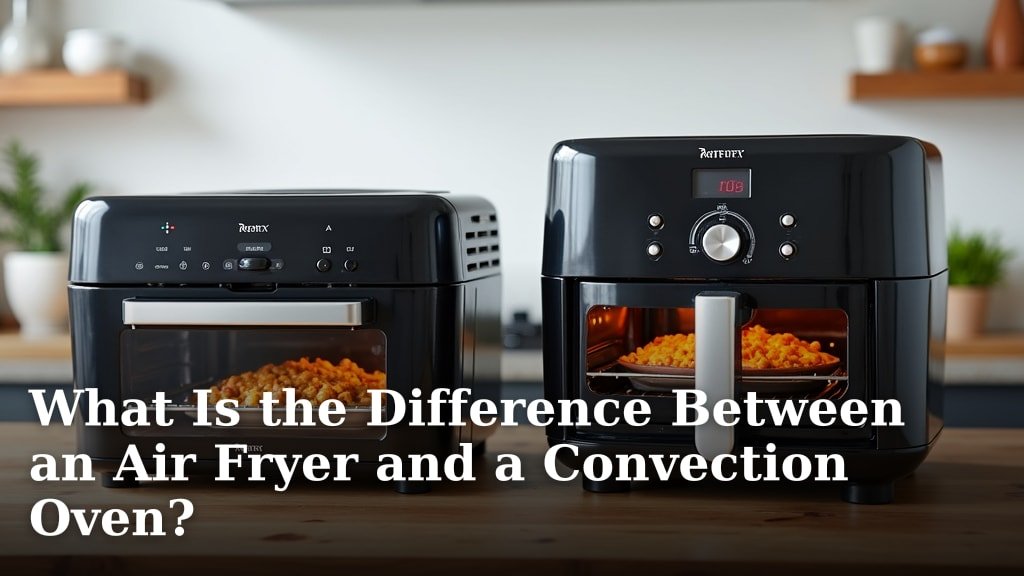
The main difference between an air fryer and a convection oven is their size, design, and primary use. Air fryers are essentially compact, powerful countertop convection ovens designed for crispier results with less oil. Convection ovens are often full-sized appliances, baking and roasting larger items.
Both appliances use circulating hot air to cook food faster and more evenly than traditional ovens. We found that air fryers excel at smaller, fried-like dishes, while convection ovens handle larger meals and baked goods. Think of an air fryer as a specialized mini-oven for specific cooking tasks.
- Air fryers are smaller, countertop units.
- Convection ovens are usually full-sized kitchen appliances.
- Air fryers are optimized for crisping small portions.
- Convection ovens are great for baking, roasting, and larger items.
- Both use circulating hot air to cook food.
Are you trying to decide which one is right for your kitchen? We’ll help you break down the key features, pros, and cons of each, so you can make the best choice for your cooking needs.
Comparing Air Fryers and Convection Ovens: What You Need to Know
Air fryers and convection ovens both use circulating hot air to cook your food, but they are designed for different kitchen tasks and offer distinct advantages.
How They Work: The Science of Hot Air
Have you ever wondered how these appliances make your food so crispy and delicious? It all comes down to how they move hot air.
The Convection Principle
Both air fryers and convection ovens operate on the principle of convection cooking. This means they use a fan to circulate hot air around the food. This constant movement of air cooks food more evenly and often faster than a traditional oven (U.S. Department of Energy).
The circulating hot air strips away moisture from the food’s surface. This process leads to that desirable crispy texture we all love. It also helps to brown food more effectively.
Heating Elements and Airflow
Air fryers typically have their heating element located very close to the food, often directly above it. A powerful fan then rapidly circulates this superheated air around a small cooking chamber. This creates a very intense, focused cooking environment.
Convection ovens also have a heating element and a fan, but the setup is usually more spread out. The fan is often in the back wall. This design allows for a more even heat distribution across a larger space. It’s built for consistent cooking of multiple items.
Key Design and Size Differences
When you look at an air fryer next to a convection oven, the size difference is usually the first thing you notice. This difference impacts where you put them and what you cook in them.
Air Fryer Design and Footprint
Most air fryers are compact, countertop appliances. They come in various shapes, but the most common are basket-style or oven-style. Basket air fryers have a pull-out drawer with a perforated basket. Oven-style air fryers look more like a mini-oven, often with shelves and a rotisserie option.
Their small size means they heat up very quickly. It also means they take up valuable counter space. Think about your kitchen layout before buying one. Do you have room for another appliance?
We found that their smaller capacity is perfect for one to two servings. They’re great for making a quick snack or a side dish for a few people.
Convection Oven Design and Footprint
Convection ovens can be full-sized range ovens, built-in wall ovens, or larger countertop toaster oven models. The full-sized versions are integrated into your kitchen. They don’t take up extra counter space. Countertop convection ovens are larger than air fryers but still portable.
Their larger capacity makes them ideal for cooking for families or during holidays. You can roast a whole chicken, bake multiple trays of cookies, or cook a casserole. They offer much more versatility for larger meals.
Many traditional ovens now include a convection setting. This gives you the best of both worlds: a regular oven and a convection oven in one appliance.
Cooking Performance and Results
Both appliances promise delicious results, but they excel at different things. What kind of food are you hoping to cook?
Air Fryer Cooking Strengths
Air fryers are king when it comes to getting things super crispy. Think about foods you’d normally deep-fry: French fries, chicken wings, tater tots, or fish sticks. An air fryer can mimic that texture with very little oil.
The intense, concentrated heat and rapid air circulation create a perfect environment for browning and crisping small, uniform pieces of food. We found that air fryers often cook these types of foods faster than a convection oven, due to their smaller cavity and direct heat.
They are also fantastic for reheating leftovers. Pizza slices and spring rolls come out perfectly crispy, not soggy, like in a microwave.
Convection Oven Cooking Strengths
Convection ovens are incredibly versatile. They are excellent for roasting larger cuts of meat, like a turkey or a leg of lamb. The circulating air helps to create an even roast and a beautiful crust.
Baking is another area where convection ovens shine. Cookies, cakes, and pastries cook more evenly and often brown better. Many bakers swear by their convection ovens for consistent results. Just remember to adjust your baking time and temperature down slightly when using convection (USDA Food Safety and Inspection Service).
They are also great for sheet pan dinners, where you cook a protein and vegetables all on one pan. The large capacity means you can feed a crowd with ease.
Power Consumption and Efficiency
Are you thinking about your energy bill? There are some differences in how much power these appliances use.
Air Fryer Efficiency
Air fryers generally consume less electricity per use than a full-sized convection oven. This is because their small size means they heat up faster and require less energy to maintain temperature. They don’t need to heat a large oven cavity.
If you’re only cooking a small portion, an air fryer is often the more energy-efficient choice. You avoid heating up a large oven for a small task. This can save you money over time if you frequently cook small batches.
Convection Oven Efficiency
A full-sized convection oven, while more energy-intensive per hour, is often more efficient for cooking larger quantities of food. You wouldn’t try to roast a whole chicken in an air fryer, right? For bigger jobs, the convection oven is the clear winner.
However, running a full-sized oven for a small batch of fries is less efficient than using an air fryer. It’s all about matching the appliance to the task. Many modern convection ovens are designed with energy efficiency in mind, but their larger size means they’ll always use more power than a small air fryer.
Ease of Use and Cleaning
Nobody wants a kitchen appliance that’s a nightmare to clean or complicated to operate. Let’s look at how these stack up.
Air Fryer User Experience
Air fryers are often very user-friendly. Most have straightforward digital controls or simple dials for temperature and time. The basket design makes it easy to load and unload food. Many models also include preset functions for common dishes like fries or chicken.
Cleaning an air fryer is generally pretty simple. The basket and drawer are often non-stick and dishwasher safe. A quick wipe down of the interior is usually all it takes. This ease of cleaning is a big plus for busy households.
One downside can be the smell. Since the cooking chamber is small and enclosed, strong cooking odors can sometimes linger. Good ventilation helps!
Convection Oven User Experience
Using a convection oven isn’t much different from a traditional oven. You set the temperature and time. If it has a convection setting, you just turn it on. Many models automatically adjust the temperature for convection baking.
Cleaning a convection oven can be more involved, especially if it’s a full-sized range. You have a larger interior to wipe down. Self-cleaning functions are common in full-sized ovens, which can help a lot. However, countertop convection ovens require manual cleaning, similar to a regular toaster oven.
Cost and Value
Price is always a factor, right? Let’s compare the general cost ranges.
Air Fryer Price Points
Air fryers are generally more affordable than full-sized convection ovens. You can find basic models for under $100, with more advanced or larger capacity models costing $150-$300. This makes them an accessible kitchen gadget for many budgets.
When considering value, think about how often you’ll use it. If you love crispy foods and cook for one or two people, an air fryer offers excellent value for its price.
Convection Oven Price Points
The cost of a convection oven varies widely. A countertop convection toaster oven might range from $100-$300, similar to higher-end air fryers. However, a full-sized range with a convection feature can cost anywhere from $700 to several thousand dollars. Built-in wall ovens are often in the higher price range as well.
The value of a convection oven comes from its versatility and capacity. It’s a foundational kitchen appliance that can handle all your cooking needs, from everyday meals to holiday feasts. It’s an investment in your kitchen.
Air Fryer vs. Convection Oven: A Quick Comparison Table
To help visualize the differences, here’s a side-by-side look.
| Feature | Air Fryer | Convection Oven |
|---|---|---|
| Size | Compact, countertop | Full-size or large countertop |
| Primary Use | Crisping small batches, “fried” textures, reheating | Roasting, baking, large meals, general oven tasks |
| Heating Speed | Very fast | Faster than conventional oven, but slower than air fryer |
| Results | Extremely crispy exterior, often drier interior | Evenly cooked, good browning, retains moisture well |
| Capacity | Small (1-6 quarts) | Large (0.5 to 6+ cubic feet) |
| Typical Cost | $50 – $300 | $100 – $3000+ (depending on type) |
| Energy Use (per use) | Lower for small tasks | Higher for small tasks; efficient for large tasks |
Choosing the Right Appliance for Your Kitchen
So, which one is right for you? It really depends on your cooking style, family size, and kitchen space. Consider these points:
- How much counter space do you have? Air fryers need a dedicated spot.
- How many people do you usually cook for? Small batches? Or family meals?
- What types of food do you make most often? Crispy snacks, or roasts and baked goods?
- Do you already have a conventional oven with a convection setting? If so, you might not need a separate convection oven.
- What is your budget? Air fryers are typically a lower upfront cost.
- How important is quick clean-up to you? Air fryers generally win here for small jobs.
Think about these questions carefully. Many homes even benefit from having both! An air fryer can handle your weekday snacks and sides, while your full-sized convection oven takes care of bigger meals and weekend baking. It’s all about complementing your existing tools.
Conclusion
You’ve seen that both air fryers and convection ovens harness the power of circulating hot air, but they serve different purposes. Air fryers are your go-to for quick, crispy results on smaller portions, saving energy and counter space. Convection ovens, whether full-sized or countertop, offer greater capacity and versatility for roasting, baking, and feeding a crowd.
Ultimately, the best choice for your kitchen depends on your cooking habits, available space, and budget. Consider what dishes you make most often and how many people you typically cook for. By understanding their unique strengths, you can confidently select the appliance that truly enhances your culinary journey.
Frequently Asked Questions
Can I use my convection oven as an air fryer?
Yes, to a certain extent, you can. A convection oven has the fan technology to circulate hot air, similar to an air fryer. However, a dedicated air fryer typically has a more powerful fan and a smaller cooking chamber, leading to faster, crispier results for foods like fries or wings.
Do air fryers make food taste like it’s deep-fried?
Air fryers aim to replicate the crispy texture of deep-fried foods using much less oil. While they achieve a very satisfying crunch, the flavor and texture won’t be identical to traditional deep-frying. Many people find the difference negligible and prefer the healthier air-fried option.
Is it worth buying an air fryer if I already have a convection oven?
It can be! An air fryer heats up much faster and is more energy-efficient for small portions. If you frequently cook snacks, sides, or meals for one or two people, an air fryer offers convenience and super-crispy results without heating up your larger oven.
Do convection ovens require special cookware?
Generally, you can use most oven-safe cookware in a convection oven. However, for best results with the circulating air, opt for bakeware with lower sides, like sheet pans or roasting racks. This allows the hot air to reach all sides of your food evenly.
Which appliance is better for health-conscious cooking?
Both appliances promote healthier cooking compared to deep-frying, as they use hot air instead of large amounts of oil. Air frying specifically excels at achieving “fried” textures with minimal oil. Convection ovens also contribute to healthy cooking by roasting vegetables and meats efficiently without excessive fats.
