Why Does My Air Fryer Leave Brown Marks on the Wall?
An air fryer can leave brown marks when hot exhaust carries grease or cooking residue onto a nearby wall. Check the appliance manual for clearance, move it away from the wall, and clean the area after the appliance cools.
On this page (8 sections)
- Why does an air fryer put brown color on the wall?
- What should you check before using the air fryer again?
- Where should you place an air fryer to reduce wall marks?
- Can a liner help prevent grease residue?
- How should you clean brown marks from the wall?
- When should you stop using the air fryer?
- Could a wall guard solve the problem?
- What is the best way to prevent air fryer wall marks?
An air fryer can leave brown marks when hot exhaust carries grease or cooking residue onto a nearby wall. Check the appliance manual for clearance, move it away from the wall, and clean the area after the appliance cools.
Brown color alone doesn't identify the cause. Cooking oil, crumbs, food splatter, or heat-sensitive paint can all be involved, so inspect the wall and appliance before deciding on a fix.
Why does an air fryer put brown color on the wall?
The most likely cause is residue reaching the wall from the air fryer's exhaust or nearby cooking splatter. The exhaust can carry warm air, and grease or fine food particles may settle on surfaces close to its outlet.
Look for the pattern. A mark directly behind or above the exhaust points toward airflow, while scattered spots around the cooking area may come from splatter or handling a greasy basket.
Heat can also change the appearance of some finishes over time. If the paint feels sticky, looks bubbled, or has changed color beyond the area where residue wipes away, ask the paint maker or appliance manufacturer for guidance.
Could air fryer exhaust cause brown marks on the wall?
Yes, exhaust may carry cooking residue toward a nearby wall. Check where your model vents and whether the wall is in the path of hot air.
Don't cover or redirect the vent with a board, towel, paper, or improvised shield. The appliance needs the airflow and clearances specified in its manual.
What should you check before using the air fryer again?
Let the fryer cool, unplug it, and check the basket, exterior, exhaust area, cord, and nearby outlet. Clean only the parts the manual says you can clean, and make sure the exhaust opening is clear.
Check for built-up grease or crumbs around the basket and cooking chamber. Avoid spraying cleaner into vents or electrical parts.
If you notice a damaged cord, persistent smoke, a burning odor, or unusual heat, stop using the appliance and contact its manufacturer. For ordinary wall residue with no warning signs, improve the placement before the next cooking session.
Does ventilation around an air fryer matter?
Yes, the air fryer needs open space around its vents. Follow your model's manual for clearance and keep the exhaust from blowing directly onto a wall or cabinet.
Our guide to whether an air fryer needs ventilation around it explains why open space matters. Keep the appliance on a stable surface and don't block the airflow with a backsplash accessory.
Where should you place an air fryer to reduce wall marks?
Place it on a stable, heat-safe countertop with the manual's recommended space around it. If the exhaust faces a wall, turn or move the appliance only if the cord can reach without stretching and the new position remains safe.
A mat can protect a counter from drips, but it won't solve a wall mark if the exhaust still points toward the wall. Read whether you can use an air fryer on a countertop before adding a surface protector.
Avoid pushing the fryer beneath low cabinets unless the manual permits that location. If space is limited, consider another open counter area rather than squeezing it into a tight corner.
Can a window or small kitchen affect air fryer placement?
A window may help with room airflow, but it doesn't replace the clearances required around the appliance. Keep the fryer away from curtains and avoid placing it where wind could interfere with safe operation.
See whether you can use an air fryer near a window for placement details. In a cramped kitchen, air fryer use in a small enclosed kitchen can help you assess the available space and ventilation.
Can a liner help prevent grease residue?
A correctly sized liner may catch some food residue inside the basket, but it won't stop exhaust from reaching a nearby wall. Use liners only as your air fryer manual allows, and never place one in an empty preheating basket where it could lift toward the heating element.
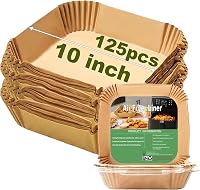
The mutvle square liners are 10 inches wide with 1.8-inch sides, intended for air fryers of 8 qt or larger. Measure your basket bottom first, because the liner needs to fit without obstructing airflow.
For measuring guidance, see air fryer liner sizes.
A liner works best when food weighs it down and the size suits the basket. It is disposable, so it can reduce scrubbing after messy foods, but it won't prevent exterior grease or fix poor placement.
Would smaller disposable liners fit a compact basket?
The ctizne liners are 6.5-inch squares described for 3–5 qt air fryers. Check the basket's bottom dimensions before using them, and make sure the paper doesn't cover ventilation openings.
These liners are disposable and have a bowl shape, which may help catch food residue at the basket's bottom and sides. They won't block the appliance's exhaust or protect a wall from airflow.
Skip liners if your manual advises against them or if they shift during cooking. Don't use an oversized sheet that rises above the basket or can touch a heating element.
How should you clean brown marks from the wall?
First identify whether the mark is residue or a change to the wall finish. After the fryer is cool and unplugged, test a small hidden spot with a soft cloth and mild soapy water.
Don't scrub hard or use strong cleaners before checking the paint's care instructions. If the finish lifts, softens, or changes sheen, stop and ask the paint maker about a suitable cleaner.
For grease on a washable surface, wipe gently and dry the area. Clean the air fryer exterior only as its manual allows, and keep moisture away from openings, plugs, and outlets.
When should you stop using the air fryer?
Stop using it if you see smoke, smell burning, or find damage to the appliance or outlet. Unplug it if you can do so safely, then contact the manufacturer for advice.
A new wall mark without smoke or abnormal heat may be a placement or residue issue. Let the fryer cool, clean accessible areas, give the exhaust more space, and watch it closely during the next use.
If you need to leave the kitchen, review whether you can leave an air fryer on unattended. Don't leave it running overnight; see whether it's safe to leave an air fryer on overnight for the practical safety considerations.
Could a wall guard solve the problem?
A guard may make a washable area easier to protect, but it must be heat-safe and must not block airflow. Check the fryer manual before adding anything behind or beside the appliance.
The AceSubli round blanks are aluminum craft blanks for sublimation projects, not air fryer heat shields. They aren't described as kitchen guards, so don't use them behind a hot appliance.
Choose a purpose-made kitchen surface guard only if its maker gives clear heat-use directions and it can sit outside the fryer’s required clearance. A removable, washable option is easier to clean than attaching a permanent material to the wall.
What is the best way to prevent air fryer wall marks?
Start with the manual's clearance, a clear exhaust path, and a clean basket. If the wall still gets brown marks, move the appliance farther away or change its direction while keeping it on a stable, heat-safe surface.
A compatible liner may catch crumbs and grease inside the basket, but it cannot solve marks caused by exhaust or a sensitive wall finish. Don't cover vents or add an improvised barrier.
If marks appear with smoke, burning odor, unusual heat, or appliance damage, stop using the fryer and contact its maker. Otherwise, adjust the setup and monitor the next cooking session.
Frequently asked questions
Why is my air fryer making the wall brown?
Brown marks near an air fryer can come from grease or cooking residue carried toward the wall by hot exhaust. The exact cause depends on the food, appliance, and placement.
Unplug the fryer, let it cool, then check its exhaust direction, nearby surfaces, and manual for clearance guidance.
How far should an air fryer be from a wall?
There isn't one clearance that fits every air fryer, so follow the distance in your model's manual. Leave the exhaust unobstructed and avoid placing the appliance directly against a wall, cabinet, or other heat-sensitive surface.
If the manual is unavailable, contact the manufacturer before using a tight setup.
Can I put a mat behind my air fryer to stop wall marks?
A heat-safe, washable guard may make cleanup easier, but it must not block the exhaust or sit where the manual warns against placing objects. Don't attach paper, fabric, or a flammable shield behind a hot appliance.
First create the recommended clearance and see whether marks continue.
Should I keep using an air fryer that leaves brown marks?
Pause use if you see smoke, a burning smell, unusual heat, or damage to the cord, plug, or outlet. Otherwise, let the appliance cool, clean accessible grease as the manual allows, increase clearance, and monitor the next cooking session.
Contact the manufacturer if marks persist or the unit behaves abnormally.