
How Much Counter Space Does an Air Fryer Need?
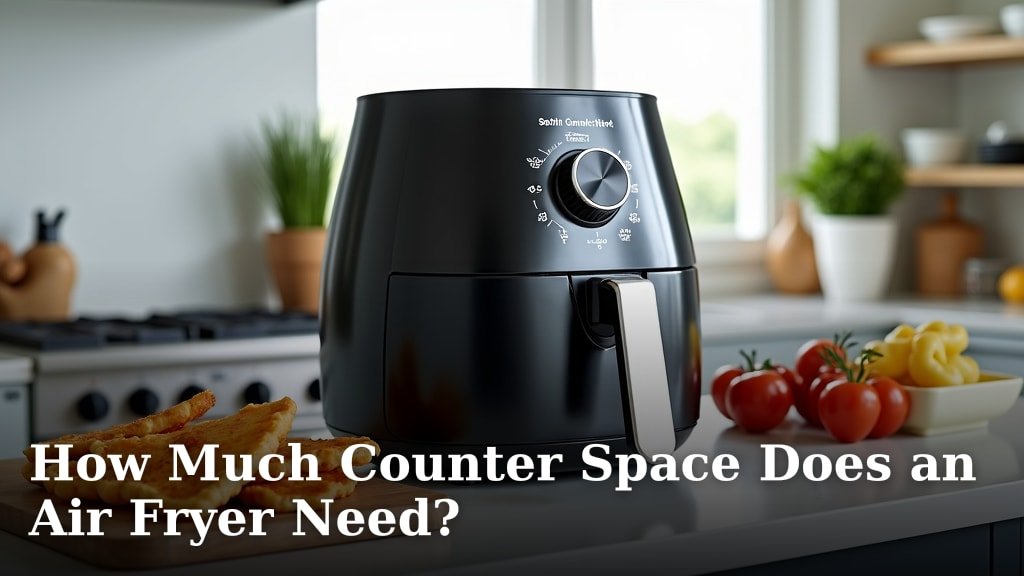
When wondering how much counter space an air fryer needs, plan for about 1.5 to 2 times its base footprint. This gives you room for proper air circulation and safe operation. You’ll want to ensure there’s enough space around it for both safety and convenience.
Most air fryers require a minimum of 4-6 inches of clearance on all sides, including above. This prevents overheating and allows for hot air to escape. Considering these dimensions helps you find the perfect, safe spot in your kitchen.
- Air fryers need 1.5 to 2 times their base size in counter space.
- Allow 4-6 inches of clearance on all sides for safety.
- Measure your specific air fryer’s dimensions.
- Think about ventilation to prevent overheating.
- Factor in space for opening the basket or door.
Let’s walk through all the essential details to help you figure out the ideal spot for your air fryer and keep your kitchen safe.
Understanding the Air Fryer’s Space Requirements
You’ve got your new air fryer, or perhaps you’re thinking about getting one. That’s exciting! But before you plug it in, let’s talk about its footprint. How much room does this handy appliance truly need on your kitchen counter? It’s more than just the base size. If you’re still deciding on the right appliance, our comparison of an air fryer and a deep fryer can help clarify your choice.
We found that most air fryers require a surprising amount of surrounding space. This isn’t just for aesthetics; it’s mostly about safety and optimal performance. Think of it like a personal space bubble for your appliance.
Why Air Fryers Need Room to Breathe
Air fryers work by circulating very hot air. This process means they generate a lot of heat. If that heat gets trapped, it can cause problems. We want to avoid overheating at all costs.
Proper ventilation is key. Your air fryer needs to expel hot air and draw in cooler air. Without this, it could become a fire hazard. Many experts say giving it space is non-negotiable for kitchen safety (National Fire Protection Association).
The Science Behind the Clearance
Ever notice the vents on the back or sides of your air fryer? Those aren’t just for show. They’re critical for heat exchange. When these vents are blocked, heat builds up inside the unit. This can damage the appliance itself. It can also pose a risk to nearby surfaces or objects.
Think of it as your air fryer taking a deep breath. It exhales hot air and inhales fresh, cooler air. Without enough clearance, it’s like trying to breathe through a pillow. It just won’t work efficiently or safely.
Measuring Your Air Fryer’s Footprint
First things first, you need to know the actual size of your air fryer. Grab a tape measure! Jot down its width, depth, and height. Don’t forget to include any handles or protrusions. These often add an extra inch or two.
This “base footprint” is your starting point. Remember, the total space needed will be larger. It’s like buying a rug for a room. You measure the room, but you want a rug that fits within those measurements, not wall-to-wall.
Typical Air Fryer Dimensions
Air fryers come in all shapes and sizes. A compact model might be around 10x10x12 inches. A larger, oven-style air fryer could be 15x15x14 inches or even bigger. The capacity usually dictates the size.
For example, a 2-quart air fryer will naturally take up less space than a 6-quart model. Consider your cooking needs. If you’re only cooking for one or two, a smaller unit might be ideal. If you have a family, you’ll likely need a bigger one, and thus, more counter space.
The All-Important Clearance Zone
Once you know your air fryer’s dimensions, it’s time to add the “clearance zone.” This is the empty space you need around it. We consistently find that 4 to 6 inches on all sides is the recommended minimum.
This includes the back, sides, and especially the top. Why above? Because many air fryers vent hot air upwards. Placing it directly under a cabinet can cause heat damage. It’s like putting a hot pot lid directly against wood. Not a good idea!
The “6-Inch Rule” Explained
Many manufacturers, and safety organizations like Underwriters Laboratories (UL), recommend a minimum of 6 inches of clearance. Why this specific number? It provides enough distance for heat to dissipate safely.
It also accounts for the type of materials around your air fryer. Some countertops and backsplashes are more heat-resistant than others. Six inches offers a good buffer regardless of your specific kitchen materials.
Factors Influencing Your Clearance Needs
While 6 inches is a good guideline, some factors might make you want even more space. Think about where your air fryer’s vents are located. If they’re predominantly in the back, you might prioritize more space there.
Also, consider what’s near your air fryer. Is it next to a plastic container? A stack of papers? These items are highly flammable. Give them extra breathing room. Your kitchen’s layout also plays a role. A cramped corner will need more thought than an open counter.
Beyond Clearance: Practical Space Considerations
It’s not just about safety; it’s also about convenience. Your air fryer isn’t just a static box. You’ll be using it! This means you need extra space for day-to-day operations.
Think about how you use it. Do you pull out a basket? Does it have a door that swings open? These actions require additional working room. We want your cooking experience to be smooth, not a struggle.
Space for Opening and Loading
Most air fryers have either a pull-out drawer/basket or a front-opening door. Either way, you need space for this. If you have a drawer model, you’ll need at least another 6-10 inches in front of it to pull the basket out fully. This lets you add or remove food easily.
For oven-style air fryers, consider the door swing. Will it hit a wall? Will it block another appliance? These small details make a big difference in daily use. Nobody wants to awkwardly maneuver hot food.
Room for Prep and Serving
Where will you put the plate when you’re dishing out those crispy fries? You’ll often need a small area right next to the air fryer for prep. This might be for a cutting board, a bowl of ingredients, or simply a landing spot for hot food.
Having this dedicated space avoids frantic shuffling. It prevents accidents, like spilling hot oil or dropping food. A little extra counter next to your air fryer makes cooking much more enjoyable.
Finding the Perfect Air Fryer Spot: A Checklist
To help you solidify your decision, here’s a quick checklist. Use this when scouting potential locations in your kitchen. This ensures you cover all the bases.
- Does it have at least 6 inches of clearance on all sides (back, sides, top)?
- Is it on a stable, heat-resistant surface?
- Is there enough room to fully open the basket or door?
- Is it near an accessible power outlet, avoiding extension cords?
- Is there clear space above it (no overhead cabinets too close)?
- Is there a small area nearby for food prep and serving?
When Counter Space is a Challenge
What if your kitchen is small? Many people face this common challenge. Don’t despair! There are still ways to enjoy your air fryer, even in a compact kitchen.
We’ve seen clever solutions. It just requires a bit more planning. The goal is always to prioritize safety first, then convenience.
Portable Carts and Dedicated Stations
If permanent counter space is limited, consider a portable kitchen cart. These can be wheeled out when you need to use the air fryer and then tucked away. Just make sure the cart is sturdy and has a heat-resistant top.
Some people create a “appliance station” in a pantry or a less-used corner. The key is to ensure proper ventilation in that spot. Don’t just stick it in a cabinet and close the door while it’s running!
Considering a Smaller Model or Alternative
If you genuinely can’t find safe, adequate space for a standard air fryer, perhaps a smaller model is in order. Compact air fryers take up less space and might fit better. You might also look into multi-function appliances.
Some toaster ovens now come with air frying capabilities. These can be a good compromise if you’re short on space, as they often combine two appliances into one footprint. Just remember, they still need clearance.
The Consequences of Insufficient Space
Ignoring the space requirements isn’t just an inconvenience; it can be dangerous. We consistently find that improper placement leads to various issues. You want to protect your home and your appliance.
It’s better to be safe than sorry when dealing with heat-generating appliances. A few extra inches of space can prevent a lot of headaches, or worse.
Potential Hazards and Risks
The most serious risk is fire. Overheating can cause internal components to fail. It can also ignite nearby flammable materials like paper towels, curtains, or even kitchen cabinetry. Many house fires start in the kitchen (Federal Emergency Management Agency).
Beyond fire, you risk damaging your countertops or cabinets. High heat can warp wood, melt plastic, and discolor surfaces. It can also shorten the lifespan of your air fryer. It’s an expensive mistake to make.
Reduced Performance and Appliance Lifespan
An air fryer that can’t vent properly won’t cook as efficiently. It might take longer for food to crisp up. The internal components will also be under more stress from the trapped heat. This can lead to premature wear and tear.
Think of it as running a car in a sauna. It might work for a while, but it’s not ideal for its longevity. Give your air fryer the space it needs to perform its best, and it will serve you well for years.
Conclusion
Ensuring your air fryer has enough counter space is about more than just fitting it on the counter. You need to give it room to breathe, typically 4-6 inches of clearance on all sides, including above. This prevents overheating and protects your kitchen surfaces. Remember to also factor in space for opening the basket or door, and a small area for prep.
By taking a few extra minutes to measure and plan, you’ll create a safe and efficient cooking station. Protect your home and your appliance by offering it the space it truly needs. Go ahead, grab that tape measure and find your air fryer’s perfect spot today!
Frequently Asked Questions
Can I put my air fryer under a cabinet?
It’s generally not recommended to place your air fryer directly under a cabinet. Air fryers release hot air upwards, which can damage your cabinets over time, causing warping or discoloration. Always ensure you have at least 4-6 inches of clearance, especially above the unit.
Does the size of the air fryer affect how much space it needs?
Yes, larger air fryers, especially oven-style models, will naturally require more overall counter space. While the minimum clearance recommendations (4-6 inches) remain consistent, a bigger base footprint means a larger total area will be occupied. Always measure your specific model.
Can I use an extension cord with my air fryer?
It’s best to plug your air fryer directly into a wall outlet. Extension cords can overheat, especially if they are not rated for the high wattage of an air fryer, creating a fire hazard. If you must use one, ensure it’s a heavy-duty appliance cord rated for more watts than your air fryer uses.
What kind of surface should I put my air fryer on?
You should always place your air fryer on a stable, heat-resistant surface. Kitchen countertops made of granite, quartz, or tile are generally safe. Avoid placing it directly on stovetops or plastic surfaces that could melt or be damaged by heat.
How far should an air fryer be from a wall?
Your air fryer should be at least 4-6 inches away from any wall. This distance allows for proper air circulation and prevents heat from building up against the wall surface. Check your specific air fryer’s manual, as some manufacturers might recommend slightly more distance.
