Do I Need an Air Fryer If I Have a Convection Oven?
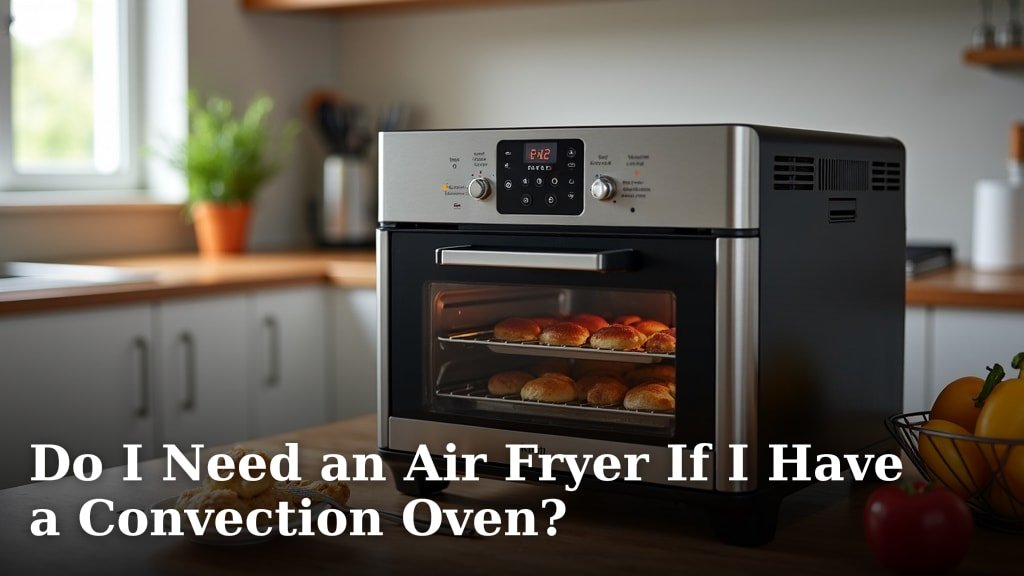
No, you probably do not need an air fryer if you already have a convection oven. While they use similar cooking methods, a convection oven can perform all the functions of an air fryer, and often more.
Many people wonder about the differences between these two kitchen appliances. You might be surprised to learn how similar their cooking processes are. We found that most air fryers are essentially just compact convection ovens.
TL;DR:
- Air fryers and convection ovens use similar technology.
- A convection oven can do everything an air fryer does.
- Air fryers are often smaller and heat up faster.
- Consider your kitchen space and cooking habits.
Let’s walk through the key differences and help you decide if an air fryer is truly a necessary addition to your kitchen.
Convection Oven vs. Air Fryer: Do You Really Need Both?
You probably don’t need a separate air fryer if you already own a convection oven. While they serve similar purposes, your convection oven is likely the more versatile appliance.
Many people assume an air fryer uses unique technology. We found that the core principle is actually quite similar. Both appliances circulate hot air.
Understanding the Core Technology: Hot Air Circulation
Let’s dive into how these machines actually cook your food. It’s simpler than you might think. Both use fans to move hot air around.
How Convection Ovens Work
A convection oven has a fan, usually located in the back. This fan circulates hot air evenly around your food. This process helps food cook faster and more uniformly. It also creates a crispy texture, which is a big plus for many dishes.
Traditional ovens rely on radiant heat. This means heat radiates from the heating elements. Convection ovens add that crucial airflow. This makes a big difference in cooking results.
How Air Fryers Work
An air fryer is essentially a compact convection oven. It has a heating element and a powerful fan. This fan circulates superheated air at very high speeds. This intense airflow is what mimics deep frying.
The small size of most air fryers also contributes to their efficiency. The hot air has less space to travel. This means it hits your food quickly and intensely. That’s how you get that desired crispy exterior.
Key Differences: Size, Speed, and Versatility
While the technology is similar, there are some practical differences. These mostly come down to their design. Consider your kitchen and your cooking style.
Size and Footprint
This is often the most obvious difference. Air fryers are typically much smaller than convection ovens. They sit on your countertop. This can be great if you have limited kitchen space.
Convection ovens are usually part of your main range or a dedicated wall oven. They take up more space overall. But they also offer much larger cooking capacity.
Heating Speed
Air fryers tend to heat up very quickly. Because they are small, they reach target temperatures fast. This makes them convenient for quick meals or snacks.
Convection ovens, especially full-sized ones, take longer to preheat. They have a larger area to warm up. However, once preheated, they are very efficient cooks.
Cooking Versatility
A convection oven offers greater versatility. You can bake, roast, broil, and use the convection setting for air frying. It handles everything from large roasts to delicate pastries.
Air fryers are more specialized. They excel at “frying” foods with hot air. While some have other settings, their primary function is crisping. They are generally not ideal for baking a cake or cooking a large turkey.
Can a Convection Oven Really Replace an Air Fryer?
Yes, for most tasks, your convection oven can easily replace an air fryer. You can achieve similar results. You just need to know a few tricks.
Many convection ovens even have a specific “air fry” setting now. If yours does, you’re all set. If not, don’t worry. You can still make crispy food.
Tips for “Air Frying” in Your Convection Oven
To get that air-fried crispness, remember a few key things. Proper air circulation is paramount. Use the right type of pan.
- Use a perforated pan or rack: This allows air to circulate all around the food. Don’t use a solid baking sheet.
- Don’t overcrowd the pan: Give your food space. This ensures each piece gets direct hot air.
- Flip your food: Just like in an air fryer, turning your food helps even cooking and browning.
- Increase temperature slightly: Air fryers often cook at higher temperatures. You might need to bump up your oven temp by 25°F (about 14°C).
- Reduce cooking time: Convection ovens cook faster than traditional ovens. Keep an eye on your food to prevent overcooking.
Comparing Appliances: A Quick Look
Here’s a simple breakdown of how these two appliances stack up. This might help you visualize the differences. We focused on common user experiences.
| Feature | Air Fryer | Convection Oven |
|---|---|---|
| Primary Function | “Frying” (crisping) small batches | Baking, roasting, broiling, “air frying” |
| Size | Countertop, compact | Built-in, larger capacity |
| Preheat Time | Very fast (2-5 minutes) | Moderate (10-20 minutes) |
| Batch Size | Small, 1-4 servings | Large, family-sized meals |
| Versatility | Limited to specific tasks | Highly versatile |
| Cost | Generally less expensive | Part of a larger appliance, higher overall cost |
When an Air Fryer Might Still Be a Good Idea
Even if you have a convection oven, an air fryer isn’t always redundant. There are specific situations where it shines. Think about your daily routine.
- Small kitchens: If your main oven is very small or you don’t have a convection setting.
- Quick snacks: For heating up small portions like fries or chicken nuggets quickly without heating a large oven.
- Energy efficiency for small jobs: An air fryer uses less energy for small tasks than a large oven (Energy Star).
- During summer: It won’t heat up your whole kitchen like a large oven does.
- You cook for one or two people often: Its capacity is perfect for smaller households.
Do You Need an Air Fryer? Consider These Factors
Before you buy another appliance, ask yourself a few questions. Your answers will guide your decision. Think about your habits.
Cooking Habits and Family Size
Do you frequently cook for a large family? A convection oven’s capacity will be more useful. Do you only need to crisp up a single serving of leftovers? An air fryer is faster.
Consider what types of food you prepare most often. If it’s mostly oven-roasted meals, your convection oven is sufficient. If you love crispy chicken wings daily, an air fryer might be handy.
Kitchen Space and Budget
Do you have precious countertop space? An air fryer will take up some of it. If you’re already short on space, another gadget might be a hassle. Budget is also a factor. Air fryers are an additional expense.
Weigh the convenience against the cost and space. Sometimes, simplicity is best. You might already have what you need.
The Verdict: Optimize What You Have
For most households, a convection oven can handle all the tasks of an air fryer. You likely already have the capability. Learning to maximize your existing appliances is smart.
If you’re still debating, remember the core function. Both circulate hot air. Your convection oven just does it on a larger scale. Save your money and counter space if you can.
Your Air Fryer Checklist: Is it Right for You?
Here’s a quick way to check if an air fryer makes sense for your kitchen.
- Do you lack a convection setting on your main oven?
- Is your main oven often occupied with other dishes?
- Do you frequently cook small, crispy items (e.g., fries, wings)?
- Is quick meal prep a top priority for you?
- Do you have extra counter space and budget for another appliance?
- Do you want to avoid heating up your kitchen with a large oven?
If you answered “yes” to most of these, an air fryer might be a useful addition. Otherwise, enjoy your versatile convection oven!
Conclusion
Ultimately, your existing convection oven is a remarkably versatile appliance. For most home cooks, it capably handles nearly all “air frying” tasks. You don’t necessarily need another gadget cluttering your counter.
Before buying an air fryer, consider your specific needs. If you cook for a small household, value quick snacks, or lack a convection setting, it might be a useful addition. Otherwise, embrace the full capabilities of your convection oven and save both space and money!
Frequently Asked Questions
Can I use an air fryer basket in my convection oven?
Yes, absolutely! Using an air fryer basket or any perforated rack in your convection oven is a great idea. It allows for better hot air circulation around your food. This helps achieve that desirable crispy texture more effectively.
Do air-fried foods taste different than convection oven-fried foods?
The taste is very similar because both methods rely on circulating hot air. Air fryers often produce a slightly crispier result due to their smaller size and more intense airflow. However, with proper technique, your convection oven can yield nearly identical results.
Is an air fryer healthier than a convection oven?
Neither appliance is inherently “healthier” than the other in terms of cooking method. Both reduce the need for excessive oil compared to deep frying. The healthiness of your meal depends more on the ingredients you use, not the cooking device.
Does using the convection setting increase my electricity bill significantly?
Using the convection setting in your oven can be more energy-efficient than a traditional bake setting. The fan helps cook food faster and at lower temperatures. For small batches, an air fryer uses less energy than a full-sized convection oven.
My convection oven doesn’t have an “air fry” button. Can I still air fry?
Yes, you can! The “air fry” button is often just a marketing term for using the convection function. Simply turn on your convection setting. Use a perforated pan and follow the tips for maximizing air circulation and crispiness.