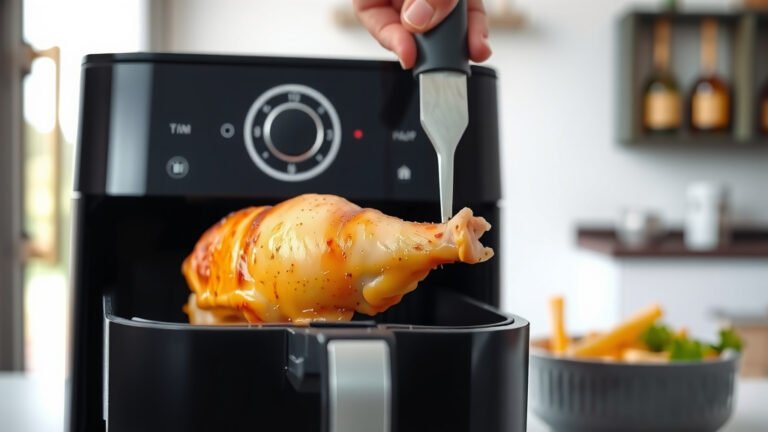
How Long To Air Fry Prime Rib?
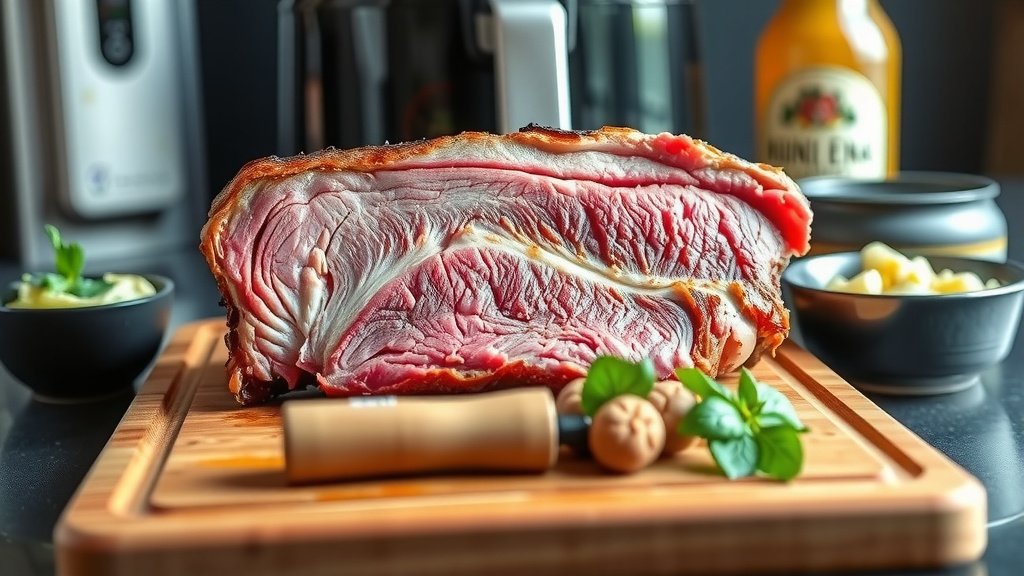
For how long to air fry prime rib, aim for approximately 10-15 minutes per pound for a beautiful medium-rare, adjusting based on your roast’s thickness and desired doneness.
Always rely on a meat thermometer; target an internal temperature of 120-125°F for medium-rare prime rib after air frying, letting it rest to reach its final perfection.
TL;DR: How to Air Fry Prime Rib Right Now!
- Preheat your air fryer to 375-400°F (190-200°C) for best results.
- Season your prime rib well and let it come to room temperature for about an hour.
- Air fry for 10-15 minutes per pound for medium-rare, checking often with a meat thermometer.
- Remove when internal temperature is 5-10°F below your target, then let it rest for 10-15 minutes.
- Resting is critical for juicy, tender prime rib, allowing the juices to redistribute throughout.
How Long To Air Fry Prime Rib?
The time you spend air frying your prime rib depends on its size, your air fryer model, and how you like your meat cooked. Generally, you’ll look at about 10-15 minutes per pound for a juicy medium-rare finish, which is a popular choice for prime rib lovers.
Think of the air fryer as a powerful mini-oven. It surrounds your prime rib with hot, circulating air, cooking it quickly and evenly. This method helps create a fantastic crust while keeping the inside tender.
Why Air Frying Prime Rib Works
You might wonder if an air fryer can handle a prime rib. The answer is a resounding yes! We found that the air fryer’s compact size and intense heat make it a perfect tool for achieving a great roast.
It’s not just for small batches of fries anymore. This appliance excels at cooking meats, including larger cuts, if your basket size allows. It’s all about harnessing that circulating hot air.
The Magic of Convection
An air fryer is essentially a compact convection oven. It uses a fan to move hot air around your food. This airflow cooks food faster and more evenly than a traditional oven. We found this convection effect gives your prime rib a beautifully browned exterior and a tender interior.
This method means you spend less time cooking and more time enjoying. Plus, it can be a great way to avoid heating up your entire kitchen, especially on warmer days. Who doesn’t appreciate that?
Getting Your Prime Rib Ready
Preparation is key for any great roast, and prime rib is no exception. A little effort upfront makes a big difference in the final taste and texture.
Don’t just pull it from the fridge and toss it in. Giving your prime rib some care before cooking ensures it reaches its full delicious potential.
Choosing the Right Cut
When selecting your prime rib, look for a well-marbled piece. Marbling, the streaks of fat throughout the meat, adds tremendous flavor and keeps the roast moist. We found that a good bone-in roast often cooks more evenly and tastes richer.
Consider the size that fits your air fryer basket. A single rib portion is ideal for most standard air fryers. If your roast is too large, it won’t cook correctly. Be realistic about what your appliance can handle.
Seasoning for Success
Prime rib needs a simple but robust seasoning. Think salt, black pepper, garlic powder, and maybe a little onion powder or dried herbs like rosemary and thyme. Rub it generously all over the roast.
Many culinary experts say to let the seasoned prime rib sit at room temperature for about an hour before cooking. This step helps the meat cook more evenly and the flavors to meld beautifully. You want it to relax before its big moment.
Air Fryer Setup: Preheat is Key!
Just like with a conventional oven, preheating your air fryer is a non-negotiable step. It ensures that when your prime rib enters the basket, it starts cooking immediately at the correct temperature.
Preheating helps create that desirable crust quickly. For prime rib, we found that preheating to 375-400°F (190-200°C) for about 5-10 minutes works best. Don’t skip this, or you might end up with uneven cooking.
Temperature Settings for Prime Rib
For air frying prime rib, consistency is key. We found that a cooking temperature of 375°F (190°C) is often ideal. This temperature allows the exterior to brown nicely while the interior cooks through without drying out.
Some people like to start with a higher temperature for a quick sear, then reduce it. While this can work, we prefer a consistent temperature to avoid overcooking the outside before the inside is ready. Keep it simple and steady.
The Air Frying Timeline
This table offers a general guide for how long to air fry prime rib based on your desired doneness. Remember, these are estimates, and a meat thermometer is your ultimate guide.
| Doneness Level | Internal Temperature (after rest) | Approx. Air Fry Time (per lb at 375°F) |
|---|---|---|
| Rare | 125°F (52°C) | 8-10 minutes |
| Medium-Rare | 130-135°F (54-57°C) | 10-15 minutes |
| Medium | 135-140°F (57-60°C) | 15-18 minutes |
| Medium-Well | 140-145°F (60-63°C) | 18-20 minutes |
Medium-Rare Perfection
Many prime rib connoisseurs aim for medium-rare. For this doneness, you’ll typically cook your prime rib until it reaches an internal temperature of 120-125°F (49-52°C) in the thickest part. After resting, it will climb to the perfect 130-135°F (54-57°C).
This stage gives you a beautiful pink center and a wonderfully juicy texture. It’s truly a delight for the taste buds. That slight give when you press it lightly is what you’re looking for.
Medium Doneness
If you prefer your prime rib a bit less pink, medium doneness is your target. You’ll pull the roast from the air fryer when it hits 125-130°F (52-54°C). After resting, it will settle around 135-140°F (57-60°C).
This means a light pink center with a firmer texture than medium-rare. It’s still incredibly flavorful and tender, just a touch less rosy. It’s a great option if you have guests who prefer this level of doneness.
Well-Done (If You Must!)
While not the traditional way to enjoy prime rib, some prefer it well-done. For this, you would cook until the internal temperature reaches 140-145°F (60-63°C) before resting, aiming for 150-155°F (66-68°C) after resting. We often find that this can make prime rib less tender.
Just be aware that cooking it to this level might result in a drier roast. If you’re going this route, consider basting it occasionally to help maintain some moisture. We want you to love your meal, whatever your preference.
Checking for Doneness (Meat Thermometer is Your Best Friend)
You absolutely need a reliable meat thermometer for prime rib. Guessing is a gamble you don’t want to take with such a beautiful cut of meat. Insert the thermometer into the thickest part of the roast, avoiding bones.
Check the temperature every 5-10 minutes as you near the end of the cooking time. Remember, the internal temperature will rise by about 5-10°F during resting. So, pull it out slightly before your target final temperature.
Don’t Skip the Rest!
This step is non-negotiable for a juicy prime rib. Once your prime rib reaches its target internal temperature, remove it from the air fryer and tent it loosely with foil. Let it rest for 10-15 minutes.
During this rest, the juices redistribute throughout the meat, making every slice incredibly tender and moist. If you slice it too soon, those delicious juices will spill out, leaving you with a dry roast. Patience is a virtue here.
Troubleshooting Your Air Fryer Prime Rib
Even seasoned cooks run into snags. Here are a couple of common issues you might encounter and how to fix them, so your air-fried prime rib turns out perfectly every time.
Don’t get discouraged if something doesn’t go exactly as planned. Cooking is an art, and every appliance has its quirks. We’re here to help you get fantastic results.
Uneven Cooking?
If you notice one side of your prime rib cooking faster than the other, it might be due to overcrowding or inconsistent air circulation. To fix this, ensure your prime rib isn’t pressed against the sides of the basket.
Also, flip or rotate the roast halfway through cooking. This simple action helps ensure all sides get even exposure to that hot, circulating air, promoting uniform doneness. Think of it as giving your roast a little turn in the spotlight.
Not Browning Enough?
Sometimes, the crust might not be as golden brown as you’d like. This could happen if your air fryer wasn’t fully preheated or if the temperature was a little too low. To achieve a beautiful sear, ensure you preheat properly.
You can also try rubbing a thin layer of butter or oil mixed with your seasoning on the exterior before cooking. This helps promote browning. Many experts say a little fat on the surface always helps develop that delicious crust.
Tips for the Juiciest Roast
- Bring to Room Temp: Let your prime rib sit out for an hour before cooking.
- Don’t Overcrowd: Ensure good airflow around the roast in the basket.
- Use a Rack: If your air fryer has one, a rack helps lift the meat for better circulation.
- Check Often: Start checking internal temperature earlier than you think you need to.
- Resting Time: This is paramount! Don’t skip it for perfect juiciness.
Conclusion
Air frying prime rib is a fantastic way to achieve a perfectly cooked, juicy, and tender roast with a delightful crust. While the exact cooking time for how long to air fry prime rib varies, remember the key principle: it’s all about internal temperature, not just the clock.
By following these steps – from proper seasoning and preheating to diligent temperature checks and that essential resting period – you’re well on your way to a show-stopping meal. So go ahead, give your air fryer a chance to shine with this impressive cut of meat. You’ll be amazed at the results!
Can I air fry a frozen prime rib?
We do not recommend air frying a prime rib from frozen. For best results and food safety, always thaw your prime rib completely in the refrigerator before cooking. Cooking from frozen can lead to uneven cooking and can take significantly longer, often resulting in a less desirable texture.
Do I need to flip prime rib in the air fryer?
Yes, it’s a good practice to flip or rotate your prime rib halfway through the air frying process. This helps ensure even cooking and browning on all sides, thanks to the circulating hot air. It prevents one side from becoming overcooked while the other is still catching up.
What side dishes go well with air-fried prime rib?
Air-fried prime rib pairs beautifully with classic side dishes. Think creamy mashed potatoes, roasted asparagus, glazed carrots, or a simple green salad. For something a little different, consider air-fried Brussels sprouts or sweet potato fries, cooked after your prime rib has rested.
How do I get a crispy crust on my prime rib in the air fryer?
To achieve a crispy crust, ensure your air fryer is thoroughly preheated. You can also pat the prime rib very dry with paper towels before seasoning. A generous rub of salt, pepper, and a thin layer of oil or butter before cooking can also help. Some experts suggest a quick blast at a slightly higher temperature (e.g., 400°F) for the last few minutes, but watch it closely.
Can I air fry a smaller prime rib roast?
Absolutely! A smaller prime rib roast, like a single rib portion (around 2-3 pounds), is perfect for air frying. It will cook faster than larger roasts, so monitor the internal temperature carefully. The same principles of seasoning, preheating, and resting still apply, just with a shorter cooking duration.