
Can You Use An Air Fryer On A Boat?
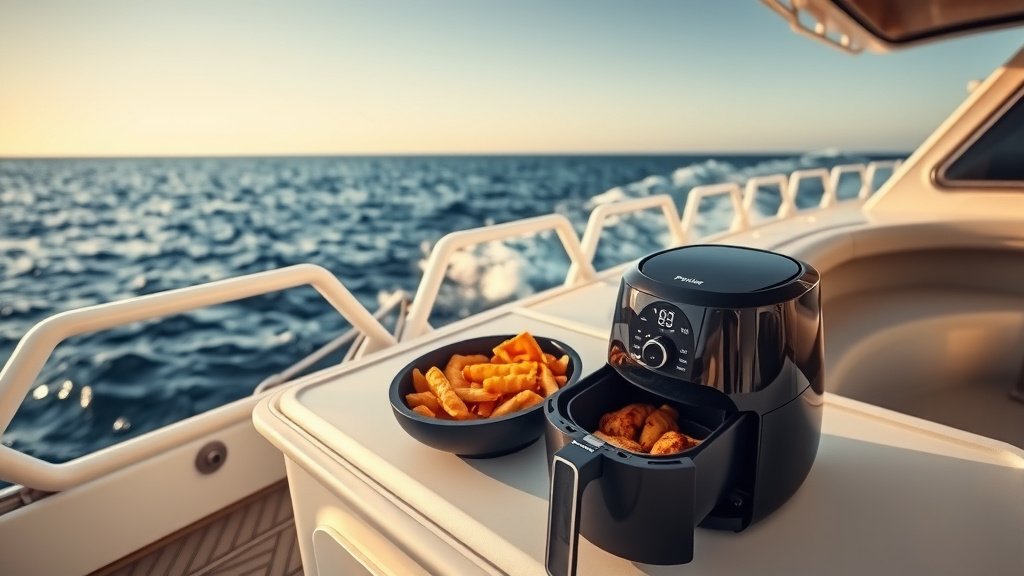
Yes, you can absolutely use an air fryer on a boat, but you’ll need to carefully consider your vessel’s power capabilities and crucial safety measures.
Ensuring you have adequate electrical supply and proper ventilation are the most important factors for air frying safely while enjoying your time on the water.
TL;DR: Here’s the rundown on using an air fryer on a boat:
- Your boat needs enough power; check its inverter size and battery bank.
- Safety is paramount, focusing on ventilation and stable placement.
- Choose a compact, lower-wattage air fryer model to manage power use.
- Enjoy healthier meals and less cleanup, but be mindful of space.
- Always prioritize fire safety and secure your appliance properly.
Can You Use An Air Fryer On A Boat?
Using an air fryer on a boat is indeed possible, offering a fantastic way to cook delicious meals while at sea or docked.
However, it requires thoughtful planning concerning your boat’s electrical system and safety protocols.
Understanding Your Boat’s Power System
Before you even think about bringing an air fryer aboard, you must understand your boat’s power situation.
Air fryers draw a significant amount of electricity, often more than other kitchen gadgets.
Shore Power vs. Inverter Power
When you’re connected to shore power at a marina, running an air fryer is generally straightforward, much like using it at home.
But out on the water, you’ll rely on your boat’s inverter, which converts DC battery power to AC power for appliances.
Many experts say your inverter must be appropriately sized to handle the air fryer’s wattage (Marine Surveyors Association).
Checking Your Amperage Limits
Each air fryer has a wattage rating, usually between 1200-1800 watts.
Your boat’s wiring and circuit breakers have amperage limits.
We found that exceeding these limits can trip breakers or, worse, pose a fire hazard (BoatUS Foundation for Boating Safety).
Always check your appliance manual and your boat’s electrical panel for these crucial numbers.
Choosing the Right Air Fryer for Marine Use
Not all air fryers are created equal, especially when it comes to boat life.
Your choice can make a big difference in convenience and power management.
Compact Models Are Your Friends
Space is often at a premium on a boat, so opt for a compact air fryer model.
Smaller units not only save counter space but typically have lower wattage requirements too.
Think about how easily it can be stored when not in use, perhaps in a locker or cabinet.
Wattage Matters Greatly
Look for air fryers on the lower end of the wattage spectrum, perhaps 1000-1200 watts, if possible.
This will reduce the strain on your inverter and conserve your battery bank when you are away from shore power.
High-wattage appliances can quickly deplete your batteries, cutting your cooking time short.
Safety First: Air Frying on the Water
Safety is not something you can compromise on a boat, especially with a high-heat appliance.
A few simple precautions can prevent major problems.
Ventilation is Key
Air fryers produce hot air and sometimes odors and steam.
Good ventilation prevents heat buildup and keeps your boat smelling fresh, not like yesterday’s dinner.
Open hatches, portlights, or use a fan to ensure proper airflow while cooking.
Stability and Placement
Imagine your boat rocking and an air fryer sliding across the counter – not a good scene.
Always place your air fryer on a stable, flat, and heat-resistant surface.
Consider using non-slip mats or even securing it with bungee cords during use, especially in choppier waters.
Fire Safety Precautions
Fire is a severe risk on any vessel, and cooking appliances add to that concern.
Being prepared is your best defense against potential issues.
- Keep a fully charged fire extinguisher nearby.
- Never leave the air fryer unattended while it’s operating.
- Ensure no flammable materials are close to the appliance.
- Regularly check the power cord for damage or fraying.
- Clean the air fryer regularly to prevent grease buildup.
Benefits of Air Frying on Your Boat
Despite the considerations, bringing an air fryer onto your boat offers some fantastic advantages.
You can enjoy healthier, quicker meals with less fuss, making your time on the water even more pleasant.
- Healthier Cooking: Uses less oil than traditional frying.
- Quick Meals: Cooks food faster than a conventional oven.
- Less Heat: Doesn’t heat up the entire cabin like an oven.
- Easy Cleanup: Many parts are dishwasher safe.
- Versatile: Roasts, bakes, fries, and reheats with ease.
Potential Challenges You Might Face
While appealing, air frying on a boat does come with its own set of challenges.
Knowing these upfront helps you prepare and prevent frustration.
| Challenge | Impact on Boat Life | Practical Solution |
|---|---|---|
| Power Consumption | Drains batteries quickly when off-grid. | Use lower-wattage model, cook while on shore power or running engine. |
| Limited Space | Takes up valuable counter and storage space. | Choose a compact model, plan storage carefully. |
| Ventilation | Can create heat and odors in a small cabin. | Use fans, open hatches/portlights during cooking. |
| Stability | Unit can slide or tip in rough conditions. | Secure with non-slip mat or bungee cords. |
Practical Tips for Successful Boat Air Frying
Once you’ve got your setup sorted, a few tricks can make your air frying experience truly enjoyable.
From meal prep to managing energy, these tips will smooth your sailing.
Many experts suggest preparing ingredients beforehand to minimize onboard chopping and mess.
Consider pre-cutting veggies or marinating meats at home, ready to pop into the air fryer.
Also, prioritize cooking when your engine is running, or you are connected to shore power to reduce battery drain.
This approach helps preserve your battery bank for other essential boat systems.
Conclusion
Using an air fryer on your boat is a fantastic idea, adding convenience and healthier cooking options to your marine adventures.
The trick lies in carefully matching the appliance to your boat’s power capacity and always putting safety first.
By choosing a suitable model, ensuring good ventilation, and securing it properly, you can enjoy crispy, delicious meals while enjoying the open water.
So, go ahead and plan for those air-fried shrimp tacos or golden chicken wings on your next voyage!
Can an air fryer run off a boat’s 12V system?
No, an air fryer typically requires 120V AC power. You would need a sufficiently powerful inverter to convert your boat’s 12V DC battery power into the necessary AC current.
How much battery power does an air fryer use?
Air fryers use a lot of power, typically between 1000-1800 watts. This means they can quickly deplete a boat’s battery bank if used frequently or for extended periods without recharging.
What size inverter do I need for an air fryer on a boat?
You need an inverter rated higher than your air fryer’s maximum wattage. For example, if your air fryer is 1500 watts, a 2000-watt pure sine wave inverter is a common recommendation to handle the surge and continuous draw efficiently.
Are there any specific air fryer models recommended for marine use?
Look for compact air fryer models with lower wattage (around 1000-1200W) to conserve power and space. Brands like Cosori or Ninja often have smaller, efficient options that could work well, but always check individual specifications.
How do I prevent my boat from smelling like food after air frying?
Good ventilation is key. Always open hatches, portlights, or use an exhaust fan while cooking. Cleaning the air fryer immediately after use and wiping down surfaces will also help prevent lingering food odors in your cabin.