
Is Teflon in Air Fryers Safe?
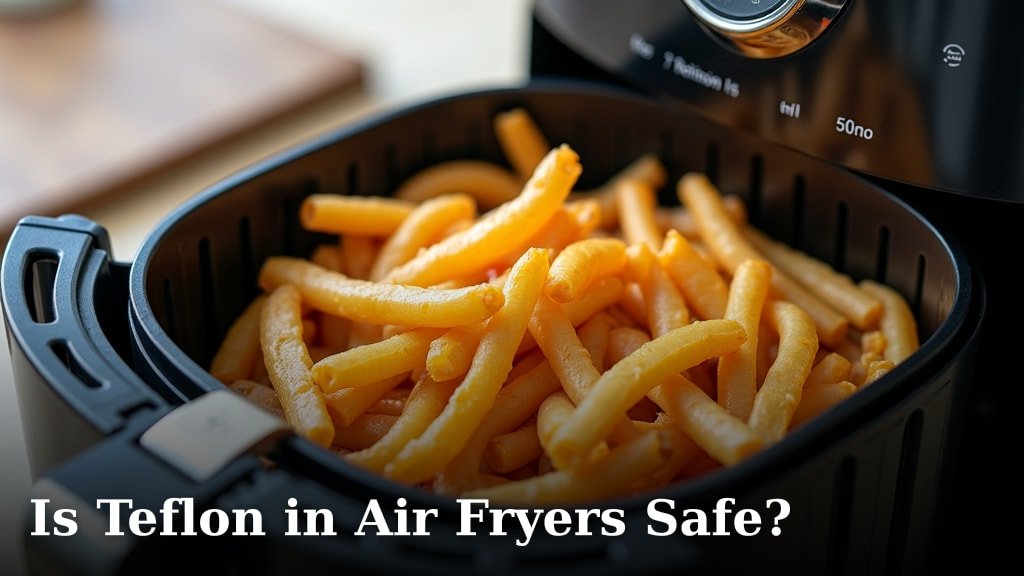
Yes, Teflon in air fryers is generally safe for everyday use when you follow the manufacturer’s directions. The main concern with Teflon, also known as PTFE, comes from overheating. However, air fryers don’t typically reach temperatures high enough to cause a problem.
You might worry about chemicals, but modern non-stick coatings are designed to be stable and safe. We found that the dangers often discussed apply to extremely high heat, far beyond normal air frying. So, for your daily cooking, there’s usually nothing to fear.
- Most air fryers won’t get hot enough to release harmful chemicals from Teflon.
- Modern non-stick coatings are generally safe when used correctly.
- Always follow your air fryer’s instructions for best results.
- Scratched coatings are more of a food safety issue than a chemical one.
Below, we break down everything you need to know about Teflon and air fryer safety, helping you cook with peace of mind.
Understanding Air Fryer Non-Stick Coatings
You’re probably here because you love the convenience of your air fryer. Who doesn’t? But when it comes to the non-stick coating, especially Teflon, you might have a few nagging questions. Let’s tackle those head-on. Most air fryer baskets and trays have a non-stick surface. This makes cooking and cleaning so much easier. The most common type of non-stick coating is Polytetrafluoroethylene, or PTFE, which is often known by the brand name Teflon.
PTFE is incredibly slick. It’s why your food slides right off. It’s also chemically stable. This means it doesn’t react with most chemicals. That stability is key to its safety. However, the concern often arises when PTFE is exposed to very high heat. You might wonder if your air fryer gets hot enough to cause issues.
What is PTFE (Teflon) and How Does it Work?
Think of PTFE as a super-smooth plastic layer. It’s applied to metal cookware. This layer prevents food from sticking. It also makes cleanup a breeze. When you cook, the heat transfers through this layer to your food. Because it’s so non-stick, you use less oil. That’s a big win for healthier cooking.
The magic of PTFE comes from its chemical bonds. These bonds are very strong. They don’t easily break down. This is why PTFE is so durable in normal cooking conditions. It’s designed to withstand typical kitchen temperatures without changing. This design is what makes it a popular choice for cookware around the world.
The Science Behind Non-Stick Safety
Scientists have studied PTFE for decades. They found that PTFE itself is an inert substance. This means it doesn’t react with the human body. If you accidentally ingest a tiny flake, it passes through your system. It won’t cause harm. The real concern isn’t the PTFE itself. It’s what happens when it gets extremely hot.
At very high temperatures, PTFE can break down. It might release fumes. These fumes are what people worry about. But, how hot is “very high”? We’ll get into that in a moment. For now, know that PTFE is safe under its intended use. That’s a core principle of material science (Environmental Protection Agency).
The Truth About High Temperatures and Air Fryers
The biggest question about Teflon’s safety in air fryers boils down to temperature. You’ve probably heard that overheating non-stick pans can be dangerous. This is true. But what does “overheating” really mean for an air fryer? Let’s clear up this common confusion.
PTFE coatings are very stable up to around 500°F (260°C). Beyond that, they can start to degrade. If temperatures reach 600°F (315°C) or higher, the coating can release fumes. These fumes can cause flu-like symptoms, often called “Teflon flu.” This is rare in home cooking, especially with air fryers.
Air Fryer Temperature Ranges
Most air fryers operate within a specific temperature range. You typically set them between 300°F and 400°F (150°C and 200°C). Some models can go a bit higher, up to 425°F (218°C) or even 450°F (232°C). This is well below the point where PTFE starts to break down. We found that air fryers are designed to cook food quickly with hot air, not to reach extreme surface temperatures like a stovetop burner left on high without a pan.
Think about it this way: your oven probably goes up to 500°F. Air fryers generally don’t reach that level. They rely on circulation, not just raw heat. So, your air fryer is highly unlikely to hit the danger zone for PTFE. This means you can generally relax when using your appliance.
When Does PTFE Become a Concern?
PTFE becomes a concern when pans are left on a high burner, empty, for extended periods. Imagine forgetting a non-stick pan on the stove’s highest setting. That’s when temperatures can soar past 500°F. Air fryers don’t work that way. They have internal thermostats and heating elements that regulate the temperature much more precisely. The heating element heats the air, not the basket directly to extreme temperatures. This helps prevent localized hotspots that can be a problem with stovetop cooking.
For example, cooking a chicken breast at 375°F in your air fryer won’t push the coating anywhere near its breakdown point. The internal temperature of the food will be much lower, and the circulating air keeps the basket’s surface temperature regulated. It’s a controlled environment, not a runaway heat situation.
PFOA and PFOS: What You Need to Know
You might have also heard about PFOA and PFOS. These are different chemicals entirely. They were once used in the manufacturing process of some non-stick coatings. However, things have changed significantly over the years. This is an important distinction to make when considering the safety of your air fryer.
PFOA (Perfluorooctanoic acid) and PFOS (Perfluorooctane sulfonate) are part of a larger group known as “forever chemicals.” These chemicals raised health concerns because they could accumulate in the body and the environment. Many studies linked them to various health issues (National Institute of Environmental Health Sciences).
Modern Non-Stick Cookware is PFOA and PFOS-Free
Here’s the good news: PFOA and PFOS have been largely phased out of non-stick cookware manufacturing. Major manufacturers stopped using PFOA in 2013, and PFOS has also been eliminated. So, if you’ve bought an air fryer in the last decade, it almost certainly does not contain PFOA or PFOS. This is a huge step forward for consumer safety.
When you see “PFOA-free” on a product label, it’s a reassurance. It means the manufacturer adheres to current safety standards. Always check product descriptions if you’re unsure. This information is usually easy to find. It’s a standard feature for most reputable brands today.
Maintaining Your Air Fryer’s Non-Stick Coating
Even though modern non-stick coatings are safe, proper care is essential. It helps your air fryer last longer. It also keeps your cooking experience pleasant. A well-maintained coating is a happy coating. Neglecting it can lead to frustrating issues like food sticking.
Tips for Extending Coating Life
Taking care of your air fryer basket is simple. Small habits make a big difference. You want to avoid anything that could scratch or damage the non-stick surface. Scratches don’t usually release harmful chemicals. But they can make food stick. Plus, a scratched coating just isn’t as effective.
- Use silicone, wood, or plastic utensils. Metal can scratch the coating.
- Wash by hand with warm, soapy water and a soft sponge. Avoid abrasive scrubbers.
- Do not use aerosol cooking sprays. Many contain propellants that can degrade non-stick surfaces over time.
- Let the basket cool down before washing it. Extreme temperature changes can stress the coating.
- Store carefully to prevent scratching from other kitchen items.
- Avoid using harsh chemicals or oven cleaners on the non-stick parts.
What if Your Air Fryer Coating is Scratched?
So, you’ve noticed some scratches. Is it time to panic? Not usually. A few minor scratches are unlikely to cause a safety issue. The material underneath the coating, usually aluminum, is not harmful in small amounts. The main problem is performance. Food will start to stick more easily in those areas. This can make cleaning a nightmare.
If the coating is heavily scratched or flaking, it might be time to replace the basket or even the air fryer. Small flakes aren’t toxic if ingested. However, a heavily damaged coating means your air fryer isn’t performing as it should. It’s more about usability and hygiene at that point. If flakes are coming off, you don’t want them in your food.
Comparing Air Fryer Basket Materials
While PTFE non-stick is common, it’s not your only option. Many air fryers now offer different basket materials. Understanding these can help you choose the right appliance for your peace of mind. Each material has its own benefits and drawbacks.
| Material Type | Pros | Cons | Common Use |
|---|---|---|---|
| PTFE (Teflon) Coated | Excellent non-stick, easy to clean, widely available. | Can scratch, potential fume release at extreme temps (rare). | Most common air fryer baskets. |
| Ceramic Coated | Often PFOA/PTFE-free, good non-stick, scratch-resistant. | Can lose non-stick properties over time, may chip if dropped. | Popular alternative for those avoiding PTFE. |
| Stainless Steel | Very durable, long-lasting, no coating to worry about. | Food can stick more, harder to clean. | Some premium air fryers, accessories like racks. |
| Silicone (Baking Liners) | Flexible, heat-resistant, easy to clean, no sticking. | Not usually for main basket, can get stained. | Used as inserts or liners for easier cleanup. |
As you can see, each material offers a different experience. PTFE is still a very reliable choice for most people. But if you have strong concerns, ceramic or stainless steel options are available. The best material depends on your personal preferences and priorities in the kitchen.
Conclusion
When it comes to Teflon in your air fryer, you can cook with confidence. Our research shows that modern non-stick coatings are safe for everyday use, especially since air fryers operate at temperatures well below the point where PTFE could degrade. You’re far more likely to get great food than harmful fumes!
Remember to maintain your air fryer properly by using the right utensils and cleaning methods. This will keep the non-stick surface working effectively for years. So, enjoy those crispy fries and perfectly cooked chicken knowing your appliance is safe. Just follow the manufacturer’s care instructions, and you’re good to go!
Frequently Asked Questions
Are ceramic air fryers safer than Teflon?
Ceramic-coated air fryers are often marketed as a PTFE-free alternative, and they are generally considered safe. They offer good non-stick properties, though sometimes these can diminish faster than traditional PTFE coatings. Your choice depends on personal preference, as both are safe when used as directed.
Can a scratched air fryer basket be dangerous?
A few minor scratches on your air fryer basket usually aren’t dangerous from a chemical perspective. The main issue is that food will start to stick more, making cooking and cleanup more difficult. If the coating is heavily flaking or peeling, it’s best to replace the basket for hygiene and performance.
Do air fryer liners prevent chemical exposure?
Using air fryer liners, such as parchment paper or silicone inserts, can add an extra barrier between your food and the non-stick coating. While not strictly necessary for safety due to the inherent safety of modern coatings, they can help protect the basket from wear and tear, extending its life and making cleanup even easier.
How can I tell if my air fryer is PFOA-free?
Most air fryers manufactured in the last decade are PFOA-free. You can usually find this information clearly stated on the product packaging, in the instruction manual, or on the manufacturer’s website. Look for labels like “PFOA-free” for reassurance.
What are the signs of an air fryer overheating and releasing fumes?
It’s extremely rare for an air fryer to overheat to the point of releasing fumes from its non-stick coating under normal use. If it were to happen, you might notice a strong, unpleasant chemical smell or see visible smoke coming from the unit. If you ever experience this, immediately turn off and unplug the appliance, and ensure the area is well-ventilated.
