
Can You Dehydrate Food In An Air Fryer?
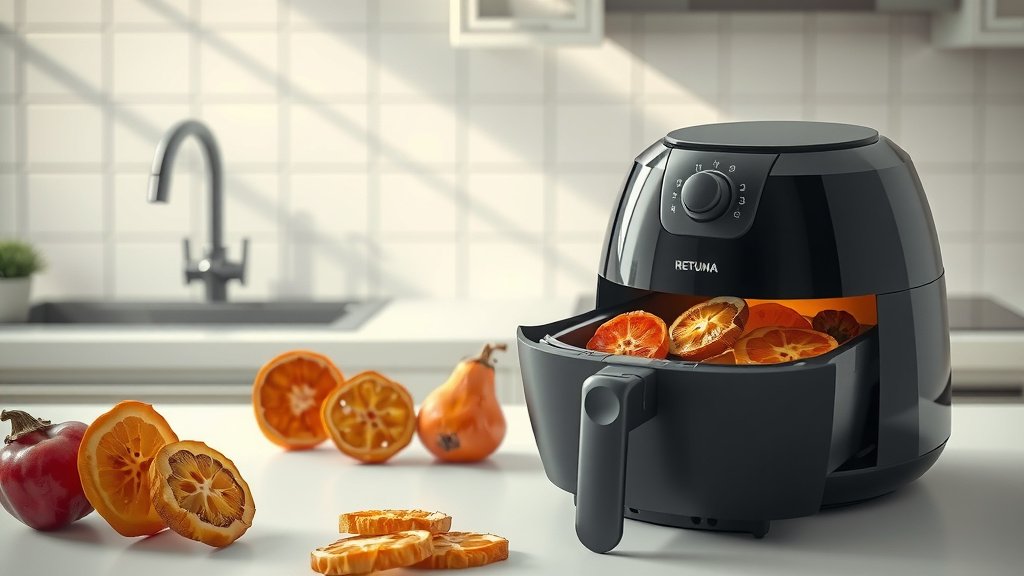
Yes, you can absolutely dehydrate food in an air fryer, making it a versatile kitchen tool beyond just frying and roasting.
While not a dedicated dehydrator, your air fryer can effectively remove moisture from fruits, vegetables, and even meats using its low-temperature, circulating air settings.
TL;DR:
- Your air fryer can dehydrate foods, but it’s best for smaller batches.
- Look for a “dehydrate” setting or use the lowest temperature setting (often 120-150°F or 50-65°C).
- Slice foods thinly and uniformly for best results and even drying.
- Expect longer cooking times compared to traditional air frying, often several hours.
- Flip food regularly for even drying and to prevent sticking.
- It’s a great option for quick snacks like fruit chips or jerky when you don’t own a dedicated dehydrator.
Can You Dehydrate Food In An Air Fryer?
The short answer is yes, you can use your air fryer to dehydrate various foods. It might not be its primary function, but the way an air fryer works makes it suitable for drying.
Think of it as a mini convection oven with powerful airflow. This setup is key for slowly drawing moisture out of food items.
How Your Air Fryer Works for Dehydration
Air fryers use a heating element and a fan to circulate hot air around your food. For dehydration, this means setting a low temperature and a long cook time.
The consistent airflow helps evaporate water from the food’s surface, slowly drying it out. This process stops spoilage and concentrates flavors.
Understanding the “Dehydrate” Setting
Some newer air fryer models come with a specific “dehydrate” button. If yours has this, you are in luck!
This setting usually runs at a low, steady temperature, often around 120-150°F (50-65°C), for an extended period. It takes away the guesswork for you.
What if Your Air Fryer Lacks a Dehydrate Button?
No dedicated button? No problem! You can still dehydrate effectively.
Simply use the lowest temperature setting available on your air fryer. Many air fryers can go down to 150-180°F (65-80°C), which is usually low enough to start.
Remember, the goal is to dry, not cook, so lower is always better when trying to dehydrate food in an air fryer.
Why Would You Dehydrate Food in an Air Fryer?
Using your air fryer for dehydration offers several perks. Maybe you don’t have space for a dedicated dehydrator.
Perhaps you only want to make a small batch of dried apples. It’s an economical and convenient option for occasional use.
Air Frying vs. Dedicated Dehydrator: The Differences
While both can dry food, they aren’t identical. A dedicated dehydrator is designed purely for this task, offering very low, precise temperatures and multiple racks.
Your air fryer is a jack-of-all-trades. Here’s a quick comparison:
| Feature | Air Fryer (for Dehydration) | Dedicated Dehydrator |
|---|---|---|
| Temperature Control | Good (lowest setting is key) | Excellent (very precise low temps) |
| Capacity | Small batches only | Large batches with multiple trays |
| Time Efficiency | Longer due to smaller capacity | More efficient for large quantities |
| Cost | Already owned (no extra cost) | Additional kitchen appliance purchase |
| Versatility | Many cooking functions | One primary function (dehydrating) |
| Airflow | Strong, focused fan | Gentle, even circulation |
Best Foods to Dehydrate in Your Air Fryer
You can dehydrate a surprising range of foods. The key is to choose items that are not too watery or thick.
Remember, uniform slicing is your secret weapon for even drying and happy snacking.
Fruits Perfect for Air Fryer Dehydration
Fruits become wonderfully chewy and sweet when dried. We found that apples, bananas, and strawberries work especially well.
Pineapple and mango slices also turn into delicious, concentrated treats (NIH). Think of them as natural candy!
Vegetables that Shine When Dehydrated
For savory snacks or additions to stews, try dehydrating vegetables. Many experts say that sweet potato slices, zucchini, and bell peppers are great choices.
Onions and mushrooms can also be dehydrated for later use in cooking, adding deep flavor.
Step-by-Step Guide to Dehydrating Food
Ready to try it? It’s a straightforward process, but patience is a virtue here. Follow these steps for the best results.
Preparing Your Food for Dehydration
Good prep makes all the difference. Start with fresh, ripe produce.
Here’s a quick checklist to guide you:
- Wash all fruits and vegetables thoroughly.
- Peel skins if desired (e.g., apples, bananas) or leave them on.
- Slice foods into thin, uniform pieces (1/8 to 1/4 inch thickness is ideal).
- For apples or pears, you can pre-treat them in lemon juice to prevent browning.
- Pat food dry with a paper towel to remove surface moisture.
- Avoid overcrowding the air fryer basket or racks.
Setting Up Your Air Fryer for Success
Arrange your sliced food in a single layer in the air fryer basket or on racks if your model has them. Do not stack them.
Set your air fryer to the lowest possible temperature, typically 120-150°F (50-65°C). If your air fryer doesn’t go that low, use its lowest setting.
Monitoring and Flipping During Dehydration
Start with a few hours of dehydration time. Many types of food will take anywhere from 4 to 12 hours, or even longer.
Check your food every hour or so. You will want to flip the pieces to ensure even drying. Some research suggests this helps avoid moisture pockets (Food Safety Guidelines).
The food is done when it’s leathery and pliable, or crispy and brittle, depending on the item and your preference. It shouldn’t have any soft spots or moisture.
Common Challenges and How to Overcome Them
You might run into a few hurdles. One common issue is uneven drying. This usually means you need to slice foods more uniformly or flip them more often.
Another challenge is food cooking instead of drying. This indicates your temperature is too high. Try to find a lower setting or periodically turn the air fryer off for a short break to let it cool slightly.
Food Safety Tips for Dehydrated Snacks
Safety is super important when dehydrating food. We found that proper storage is key to preventing spoilage.
Always ensure your dehydrated foods are completely dry before storing them (USDA). Any residual moisture can lead to mold growth.
Store your finished products in airtight containers, like mason jars or vacuum-sealed bags, in a cool, dark place. Many guidelines point to checking for moisture condensation in the jar after a few days as a good first step (Mayo Clinic).
Conclusion
So, can you dehydrate food in an air fryer? Absolutely! While it might not replace a dedicated dehydrator for large-scale projects, your air fryer is a fantastic alternative for small batches.
It opens up a world of healthy, homemade snacks, from apple chips to veggie crisps. With a little patience and the right settings, you can transform fresh produce into delicious, shelf-stable treats right in your kitchen.
Give it a try; you might just discover a new favorite way to use your trusty air fryer.
What kind of air fryer is best for dehydration?
Air fryers with a dedicated “dehydrate” setting or those that can reach very low temperatures (120-150°F or 50-65°C) are best. Larger, oven-style air fryers with multiple racks also offer more capacity.
How long does it take to dehydrate food in an air fryer?
Dehydration times vary significantly depending on the food type, thickness, and your air fryer’s specific temperature. It can range from 4-6 hours for thin fruit slices to 10-12+ hours for denser items.
Do I need to pre-treat foods before dehydrating in an air fryer?
Pre-treating, like soaking apples in lemon juice, helps prevent browning in some fruits. It’s not strictly necessary for all foods but can improve appearance and shelf life for certain items.
Can I dehydrate meat in an air fryer to make jerky?
Yes, you can make jerky in an air fryer. Ensure meat is sliced very thinly and uniformly. For safety, many experts advise pre-heating meat to 160°F (71°C) before dehydrating to kill bacteria, then drying at a low temperature until brittle (Food Safety Guidelines).
How do I know when dehydrated food is ready?
Food is ready when it feels dry and leathery (for fruits/vegetables) or brittle (for very dry items like chips). It should not feel sticky or have any soft spots. For jerky, it should bend without breaking but not snap.
