
Does Air Fryer Affect Food Water Content?
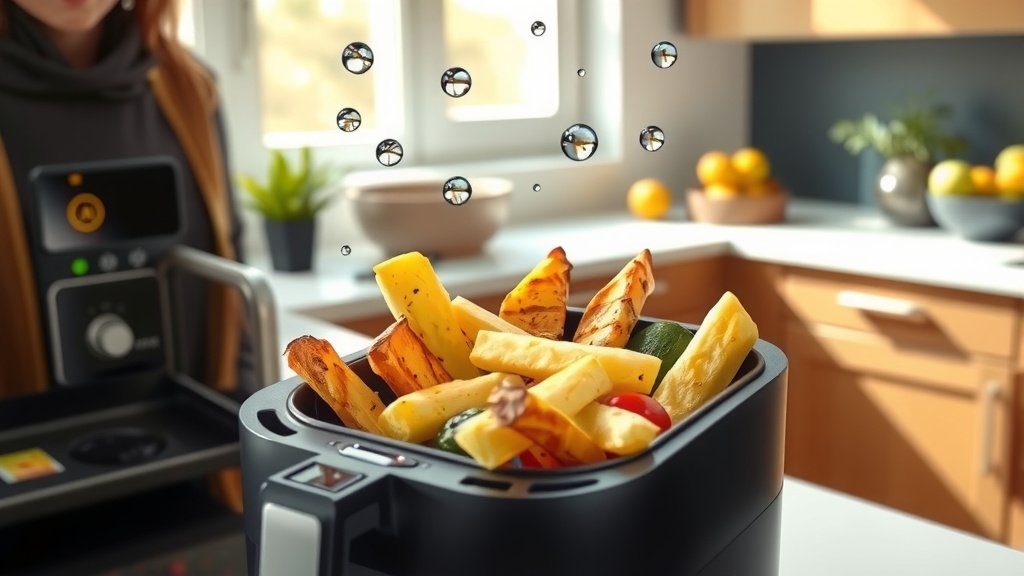
Yes, an air fryer generally reduces the water content in foods, especially on the surface, creating that appealing crispy texture you love.
This dehydration effect helps to brown foods quickly and achieve a satisfying crunch without deep-frying in oil.
TL;DR: Air Fryers and Food Water
- Air fryers circulate hot air to cook food, which can naturally draw out moisture.
- While surface moisture is reduced for crispiness, the interior often stays tender.
- Overcooking can lead to significant dehydration and a dry result.
- Proper cooking times and temperatures help maintain desirable moisture levels.
- Adding marinades or coatings can also help protect food from excessive drying.
Hey there, fellow food explorer! Have you ever pulled out a batch of perfectly crispy fries or juicy chicken wings from your air fryer and wondered about the magic inside? It’s truly amazing how these gadgets work. But perhaps a thought has crossed your mind: does air frying change the actual water content of your food?
It’s a really good question, especially when you’re trying to keep your meals both delicious and healthy. Let’s peel back the layers and understand exactly what happens to your food’s moisture when it takes a spin in the air fryer.
Does Air Fryer Affect Food Water Content?
An air fryer absolutely affects food water content by using hot, circulating air to cook and crisp items, which naturally pulls moisture from the surface.
This process creates the coveted crispy exterior while ideally keeping the interior moist.
The Science of Air Frying
Think of your air fryer as a powerful, compact convection oven. It blows extremely hot air around your food at high speed. This heated air immediately begins to evaporate moisture from the food’s surface, just like wind dries your laundry.
This rapid evaporation is key to achieving that fantastic crunch without needing vats of oil. It’s not magic, it’s just very efficient airflow and heat.
Evaporation vs. Dehydration
While an air fryer *dries* the surface of your food, it’s not the same as full dehydration. True dehydration aims to remove most of the water for preservation, like making jerky. Air frying, however, seeks to reduce surface moisture while retaining moisture inside the food for a tender bite.
The goal is a delightful contrast in textures: crispy outside, tender inside. This balance is what we all crave from perfectly air-fried dishes.
How Moisture Loss Happens
When you place food in the air fryer, the intense heat and airflow target the exposed surfaces. Water molecules on these surfaces heat up rapidly and turn into steam. This steam then gets carried away by the circulating air. We found that this surface drying process is quite quick, often happening within the first few minutes of cooking.
This action creates a drier, firmer outer layer. It’s what transforms soft potato sticks into crispy French fries, for example.
The Role of Temperature and Time
The cooking temperature and duration play a huge part in how much water your food loses. Cooking at a very high temperature for too long will inevitably draw out more moisture. Many experts say that finding the right balance is crucial for optimal results.
You want enough heat to brown and crisp, but not so much that you end up with a dry, unappetizing meal. It’s a delicate dance, isn’t it?
Maintaining Moisture: Our Best Tips
Nobody wants a dried-out meal. The good news is, you have some control over how much moisture your food retains. With a few simple tricks, you can enjoy all the benefits of air frying while keeping your food wonderfully succulent. It’s all about being a smart air fryer user!
- Don’t overcrowd the basket: Give your food space! Overcrowding blocks airflow, leading to uneven cooking and often steam, which can make things soggy. Research often connects proper spacing with better crisping and less moisture loss (Cleveland Clinic).
- Use a light oil spray: A tiny bit of oil can help create a barrier, sealing in some moisture while still allowing for browning. It’s like giving your food a little shield.
- Flip your food halfway: Turning food ensures even exposure to the hot air. This helps both sides get crispy without one side drying out too much.
- Marinate or brine: For meats like chicken, marinating beforehand adds flavor and helps them retain moisture during cooking. It’s a fantastic secret weapon!
- Check doneness regularly: Use a meat thermometer for proteins. Pull food out as soon as it reaches the safe internal temperature to prevent overcooking.
Food-Specific Moisture Management
Different foods react differently to air frying. Vegetables often release more water, while some meats can dry out quickly. Understanding your food helps you adjust your technique. For example, thicker cuts of meat need lower temperatures and longer times to cook through without drying the outside. Thin vegetables might need a quick toss and high heat.
Consider this quick guide:
| Food Type | Moisture Tendency | Tips for Success |
|---|---|---|
| Chicken Breast | Dries out easily | Marinate, cook to 165°F (74°C) only, light oil. |
| Frozen Fries | Retains well, surface crisps | Cook as directed, don’t overcrowd, shake often. |
| Broccoli/Cauliflower | Can dry out, steam initially | Toss with oil, don’t overcook, a little water in basket helps. |
| Salmon Fillets | Can dry quickly | Cook skin-side down first, short cooking time, remove promptly. |
| Potatoes (Fresh) | Needs pre-soak, can dry | Soak in water 30 mins, pat dry, toss with oil, high heat. |
When is Moisture Loss Desirable?
Sometimes, moisture loss is exactly what we want! Think about making crispy vegetable chips or dehydrating fruit for snacks. In these cases, the air fryer acts as a super-fast dehydrator. We found that the more moisture you remove, the crispier or chewier the result.
It’s all about your culinary goal. For things like kale chips, removing almost all the water is the entire point. Just watch them carefully!
Achieving the Perfect Crisp
The air fryer excels at creating that coveted crisp texture. This is directly related to moisture removal from the food’s exterior. Many guidelines point to drying the food surface completely before air frying as a good first step (NIH). This initial dryness helps prevent steaming and encourages browning.
So, for truly crispy results, sometimes a little pat-down with a paper towel is your best friend!
Preventing Over-Drying: A Checklist
To avoid a culinary mishap, keep this handy checklist in mind. It’s simple, practical advice that makes a big difference in your air frying success. You’ll be a pro in no time!
- Use the correct temperature settings.
- Set a timer and stick to recommended cooking times.
- Preheat your air fryer for even cooking.
- Pat wet foods dry before cooking.
- Don’t forget to shake or flip your food.
- Apply a light coating of oil or marinade.
The Trade-Off: Speed vs. Moisture
Air frying offers speed and convenience, which is why we love it. The rapid cooking, however, does come with the potential for moisture loss. It’s a trade-off, but one we can largely control. Some people say that slow cooking methods retain more moisture. Others prefer the speed and crispness of air frying. Here’s the trade-off:
Air frying means faster meals and great texture. But you need to be mindful and proactive to keep your food from getting too dry. You are the master of your kitchen, so you get to decide the balance!
Conclusion
So, does your air fryer affect food water content? Absolutely, it does. It’s designed to reduce surface moisture, giving you that delightful crispiness without excessive oil. However, it’s a tool that requires a little understanding to use optimally. By managing temperatures, cooking times, and using smart prep techniques like marinating or light oiling, you can enjoy all the benefits of air frying without sacrificing the tenderness and juiciness of your favorite dishes.
Embrace your air fryer’s power, learn its quirks, and you’ll be creating perfectly balanced, delicious meals every time. Happy air frying!
Are air-fried foods healthier because of less water?
Air-fried foods aren’t necessarily healthier just because of reduced water. Their health benefits mainly come from using less oil compared to deep-frying, which lowers calorie and fat intake. The change in water content itself isn’t the primary health factor.
Can I add water to my air fryer to prevent drying?
Adding water directly to the air fryer basket is generally not recommended as it can damage some models or cause dangerous steam to build up. Instead, focus on strategies like marinades or cooking at proper temperatures to retain moisture.
Does air frying make food taste different due to water loss?
Yes, the reduction in surface water content can make food taste different, often enhancing flavors through browning and crisping. This process concentrates some flavors, much like roasting, resulting in a more intense and satisfying taste for many foods.
Is an air fryer good for reheating leftovers without drying them out?
An air fryer is excellent for reheating many leftovers, especially those that benefit from crisping, like pizza or fries. To prevent drying, use a slightly lower temperature and shorter cooking time than you would for fresh food, and consider covering delicate items with foil for part of the cooking.
Do all foods lose the same amount of water in an air fryer?
No, the amount of water lost varies greatly depending on the food’s initial water content, density, and fat content. Vegetables with high water content might lose more, while fatty meats might lose less overall moisture, though surface browning will still occur.
